|
|
|
"...[T]hese records were at the time
compiled for strictly internal use, i.e. for in-house consideration, and
were not intended for public consumption, [so that] one may be
reasonably safe in declaring the evidence obtained thusly as
incontestable."
Vahakn Dadrian was not entirely on the mark when he referred to
internal German-government reports as "incontestable" (in his
"signal facts"
article from 2003); the people who prepare such reports could, after
all, be mistaken from time to time. However, what is incontestable is
that internal reports are prepared largely with honest intent, and may
be generally accepted as trustworthy.
The TAT site has stressed Western and Armenian sources to turn the
genocide myth on its ear, since these parties were raised with
anti-Turkish sentiments, and had no reason to defend the Turks — very
much opposed to the sources demonstrating a genocide, who had every
reason to be untruthful, or conned by beloved Armenians whispering in
their ears. Now, however, it is time for a change.
It would be absurd to write about a nation's history by exclusively
relying upon what the enemies of a nation had to say. Yet that is
exactly how the "facts" for the "Armenian genocide"
have been compiled. Now we can understand with better clarity why
Armenian and genocide scholars can be such frauds.
Prof. Justin McCarthy exposes the likes of these propagandists:
Why rely on Ottoman archival accounts to write history? Because they
are the sort of solid data that is the basis of all good history. The
Ottomans did not write propaganda for today's media. The reports of
Ottoman soldiers and officials were not political documents or public
relations exercises. They were secret internal reports in which
responsible men relayed what they believed to be true to their
government. They might sometimes have been mistaken, but they were never
liars. There is no record of deliberate deception in Ottoman documents.
Compare this to the dismal history of Armenian Nationalist deceptions:
fake statistics on population, fake statements attributed to Mustafa
Kemal, fake telegrams of Talat Pasha, fake reports in a Blue Book,
misuse of court records and, worst of all, no mention of Turks who were
killed by Armenians.
What you will be reading below, time after time after time, clearly
demonstrate Armenian treachery and belligerence, and the Ottomans'
attempts to perform their governmental duty to preserve order. The
reports also demonstrate, far from having it in for the Armenians, that
the Ottomans attempted to safeguard Armenian lives and properties. In
short, they demonstrate that the concept of "genocide" has no
basis in reality.
These documents come courtesy of the Turkish "Military History
Documents Magazine," and were compiled into three separate
volumes by the Turkish "Directorate General of Press and
Information," translated into English and French, for distribution
on the world stage (wonder how far that effort got?). The names of these
books were "Documents I," "Documents on Ottoman
Armenians - II" and "...III," and published in
1982, 1983 and 1986, respectively. The Ottoman originals were also
included in these books, where they may be accessed in the .PDF file
version of these books, made available on the University of Louisville's
web site: Vol. 1, Vol. 2, and Vol. 3.
An average of a quarter-century has passed since these volumes first
appeared, and yet it appears no Turkish person, governmental or
civilian, has taken the trouble to make these very valuable documents
available on the Internet. Isn't that incredible?
What is below has been faithfully reproduced for the most part (for
example, retaining the quaint British spelling), but some errors in
English have been corrected.
|
| |
DOCUMENTS ON OTTOMAN-ARMENIANS
PRIME MINISTRY
DIRECTORATE GENERAL
OF PRESS AND INFORMATION
|
|
|
| TABLE
OF CONTENTS |
NO. DATE OF DOCUMENT
SUBJECT
1) 1893 (89) 18
September 1914 Resolutions of Armenian strategists in pre-First World War days
2) 1894 (90) 24 September 1914 Coded message from
Third Army Commander on promises of independence by Russians to Armenians.
3) 1895 (91) 7 October 1914 Report by Intelligence
Officer Ahmet from Russia on Armenian activities.
4) 1896 (92) 20 October 1914 Report by Eleskirt Border
Battalion on assembly of Armenian Army deserters in Kagizman.
5) 1897 (93) 23 October 1914 Report from Third Army
Command to the Supreme Command on assembly of Armenians in Kagizman.
6) 1898 (94) 24 October 1914 Report from Erzurum
province on capture of Armenian mail raiders.
7) 1899 (95) 31 October 1914 Letter by Erzurum
Provincial authority on the formation of gangs by Armenian army deserters.
8) 1900 (96) 9/10 November 1914 Letter by 3rd Army
Communications Zone Inspectorate on Armenian raid on the mail.
9) 1901 (97) 31 January 1915 Report by General
Directorate for security on secret communications of the Armenian Patriarch with foreign
sources through the Italian Embassy.
10)1902 (98) 19 February 1915 Coded message from Elazig on
armed clash between Armenians and Gendarmerie in a follow-up operation for deserters in
which two gendarmes were killed
11)1903 (99) ( ) 1915 Report on meeting of Armenian
Ottoman Parliament members Papasian and Viremian in Erzurum with Dashnak delegates from
Caucasia, their resolutions, and provocations by officers, doctors and enlisted men of
Armenian origin in the Ottoman Army.
12)1904 (100) 27 March 1915 Coded message from 10th Army
Corps Command on attacks by Armenians on the gendarmerie in Bafra, Tokat and Susehri, and
ammunition and arms captured from Armenians.
13)1905 (101) 30 March 1915 Coded message received by
Ministry of Defence on clashes between Armenian gangs and a military detachment sent from
Silvan to Mus and arms and money seized.
14)1906 (102) 6 April 1915 Report by Special Organisation
Volunteer Battalion on Armenian activities in Ulukisla, Sivas and Erzincan and on the
Armenians' possession of 30,000 weapons.
15) 1907 (103) 20 April 1915 Order from the Ministry of
Defence to the Third Army Command on capturing Armenian and Greek army deserters.
16) 1908 (104) 20 April 1915 Coded message from 10th Army
Corps command on arms and ammunition captured in Armenian villages of Horasan and Hafik.
17)1909 (105) 21 April 1915 Urgent emergency coded message
from Governor of Van on Armenians' preparations for revolt.
18)1910 (106) 22 April 1915 Affidavit statements of
parents of an Armenian army deserter from the 5th Army Corps.
19)1911 (107) 22/23ApriI 1915 Coded Message from the
Governor of Sivas on Armenians arming against Ottoman rule.
20)1912 (108) 27 April 1915 Coded message from the
Governor of Diyarbakir on arms, ammunition, explosives and military uniforms captured from
Armenians.
21)1913 (109) 28 April 1915 Cable from 11th Army Corps
Command seizure on the capture of arms and explosives from a concealed cache at the house
of Armenian Artin in Diyarbakir.
22)1914 (110) 30 April 1915 Coded message received by the
Fourth Army Command on imports of arms by the Armenian Charity Association and its
political affiliations.
23)1915 (111) 13 May 1915 Letter to requesting Hunchak
Committee Secretary Negyazarian, on trail before Martial Law Court, to be sent to Kayseri
to help uncover hidden arms and ammunition.
24)1916 (112) 30 May 1915 Regulation on housing,
accommodation and lodging of Armenians being settled in other places because of the state
of war, emergency situation and political necessity.
25)1917 (113) 28 June 1915 Coded message from 10th Army
Corps Command and massacres by Armenians in Karakus subdistrict.
26)1918 (114) 16 July 1915 Report by the Gendarmerie
detachment on the protection of Armenian convoys against attacks by Kurdish gangs.
27)1919 (1 15) 23/24 July 1915 Cable by Konya Conscription
Office on crimes and destruction by a 300-strong Armenian gang in Bogazliyan.
28)1920 (116) 27 July 1915 Letter from 1st Army Corps
Command on measures against 300-strong Armenian Gang which raided Bogazliyan.
29)1921 (117) 30/31 July 1915 Coded message of Third Army
Command repeating instructions for the protection of the Armenians transferred to inner
regions and order not to allow any insult or humiliation to them.
30)1922 (118) 29 September 1915 Coded cable from Urfa
local authority requesting assistance from the 4th Army Corps Command against rebelling
Armenians who wounded three gendarmes.
31) 1923 (119) 21 January 1916 Correspondence related to a
$100,000 donation by Armenians living in the United States through the Permanent Mutual
Assistance Committee of Philadelphia for Armenians in need.
32) 1924 (120) 9 April 1916 Cable from the 5th Army
Corps Conscription Office on abduction of four Moslem women of Caykapu village of Tosya by
armed Armenian gangs.
33) 1925 (121) 10 February 1917 Coded cable from
Adana Gendarmerie Command of armed clash between a 3C-strong Armenian gang and the
gendarmerie.
34) 1926 (122) ( ? ) 1917 Report on Armenian
cruelties and atrocities to the local population in Ottoman lands evacuated by Russian
occupation forces.
35) 1927 (123) 24 May 1917 Correspondence related to
attacks on Moslem Population by Armenian gang in 1915 on Adana-Maras Road.
36) 1928 (124) 2 February 1918 Letter from Third Army
Commander General Mehmed Vehib to Commander-in-Chief of Russian Caucasian Armies General
Perjovalsky on Armenian cruelties and atrocities to the Moslem population in territories
evacuated by Russian Occupation forces.
37) 1929 (125) 3 February 1918 Army reports on
Armenian cruelty to Turkish population and information received from refugees and
deserters.
38) 1930 (126) 6 February1918 Coded message from 1st
Caucasian Army Corps Command to Third Army Command on indiscriminate murdering of Moslems
the aged, women and children alike, by Armenians in Erzincan and gun-fire on villages.
There will be no living human being left, if no help arrives within days, said the
message.
39) 1931 (127) 7 February 1918 Translation from
Russian of the affidavit statement of Russian Captain Kazmir from 13th Turkistan Snipers
Regiment who witnessed Armenian murders, plunder, destruction and atrocities.
40)1932 (128) 7 February 1918 Orders from Third Army
Commander General Vehib to attached army corps on fair and humanitarian treatment of all
populations without discrimination, to comply with the "Geneva Convention" for
hospitals and patients and strictly abide by laws and regulations in all applications to
the local people in the advance operation following the agreement with the Russians.
41)1933 (129) 8 February 1918 Information on Armenian
cruelties in Erzincan given by four Turks who escaped.
42)1934 (130) 1918 Report by 13th Caucasian Regiment
Commander on Armenian cruelties in Bayburt.
43)1935 (131) 23 February 1918 Third Army Command Report
on the murder and burning of 300 defenceless Moslem Turks by Armenians.
44)1936 (132) 27 February 1918 Summaries of cables from
the Third Army Command to the National News Agency, foreign and local newspapers, on
Armenian cruelties.
45)1937 (133) 1918 Statement of Ali from Hospiya on
Armenian cruelties he witnessed as prisoner of war at Ahilkelek.
46)1938 (134) 21 April 1918 Report from Group Command to
Third Army Command on repeated Armenian cruelties to the Turkish population in the region
between Ahilkelek and Ardahan.
47)1939 (135) 25 April 1918 Letter from the Third Army
Command to the Supreme Command assuring just, civilised and humanitarian treatment to all
Armenian and Greek populations in Kars, Ardahan, Artvin and Caucasia upon liberation of
these provinces from occupation.
48)1940 (136) 5 May 1918 Cable to General Headquarters on
the murders massacre and destruction by Armenians in Erzurum.
49)1941 (137) 8/9 May 1918 Cable to General Headquarters
on the murder and destruction by Armenians in Mamahatun.
50)1942 (138) 17 May 1918 6th Army Command's Sitcation
Report on Armenian cruelties in Baku, Tiflis, Genc and Eastern Caucasia.
51)1943 (139) 14 July 1918 Letter from Third Army
Commander replying the official letter of P. Donikalatozev, leading figure of the Armenian
Catholic Community of Batum, assuring fair and humanitarian treatment to Armenians and all
other groups living in Ottoman territories; :hat of their lives, dignity and porperty
security is guaranteeing and saying problems which arise can always be discussed and
settled mutually.
52)1944 (140) 26 July 1918 Report by Caucasian Islamic
Army Commander Nuri Pasha on horrible murders of the Moslem population by Armenians in
Gence and Baku regions.
53)1945 (141) 27 July 1918 Report by a Turkish Officer
sent to Erivan as delegate by the 9th Army indicating that "Moslem Turks under the
jurisdiction of the Armenian Government face a constant threat."
54)1946 (142) 30 December 1918 Coded message from 9th Army
Command to the Ministry of Defence on the British seizing arms and equipment of Turkish
troops and handing them over to Armenians in Batum.
|
PREFACE
|
This is the second book compiled of documents from the Turkish Military History
Archives showing the hostility provoked by the Armenian militants and the atrocities
committed by them toward the Ottoman State and the Turkish Moslems of Anatolia
during the First World War years. The facsimiles of the original documents in the
old Turkish script together with their modern Turkish transcriptions in Latin
alphabet were published in the periodical "Military History Documents" No.
8311983 by the Military History and Strategic Studies Department of the Turkish
General Staff. The English translation of the Documents is presented to enlighten
the world public opinion on the real nature of the historic facts and to encourage
research activities in this field.
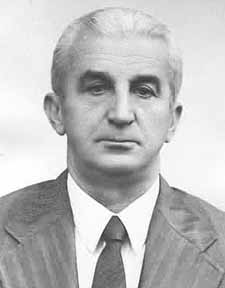 |
|
Necati
Ozkaner |
In other words, the purpose of publishing these
documents is not to revive the hatred and enmity continuously fanned today by
distorting the past but to demonstrate in an unbiased way the baselessness of the
genocide allegations. Documents published herein again reveal in a catalogue the
Armenian atrocities and massacres perpetrated on Turkish people during the First
World War years. The documents also very explicitly demonstrate the just and fair
treatment accorded by the Ottoman Administration to all citizens. irrespective of
their religion, race, sect or any other consideration.
We hope that this book, by exhibiting the realities will bring common sense to the
issue and help eliminate distortion of the facts.
Necati OZKANER
Director General of Press and Information
|
| |
|
DOCUMENT NO: 1893 (89)
|
Decoded Message from Mustafa Bey, Governor of Bitlis
Dated 5 September 330 (18 September 1914):
Recent decision and instigations of Armenian strategists envisage the following
moves: To preserve their loyalty in peace to the Administration pending the
declaration of war. If war is declared Armenian soldiers in the Ottoman Army will
take shelter on the enemy side with their arms. If the Ottoman Army advances. to
remain inactive, if the Ottoman Army retreats, to form armed bands and hinder
transport and communications. The above information based on documentary evidence
was filed from Provincial authority of Mus.
Section 216 (19)
Info. noted and filed to Section 1 for action
Director Section 2
A. Muhtar
Archive No : 4/3671
Cabin No : 163
Drawer No : 1
File No : 2811
Section No : 26
Index No : 28
|
| DOCUMENT NO: 1894
(90) |
OTTOMAN ARMY ACTING SUPREME COMMAND
Section
No.
(COPY)
TO: THE SUPREME COMMAND
(Summary)
Copy of decoded message from Hasan lzzet Pasha, Commander of the Third Army in Erzurum,
dated 11 September 330 (24 September 1914):
The Russians have provoked Armenians living in our country, through Armenians in the
Caucasus, by promises that they will be granted independence in territories to be annexed
from Ottoman land, they have brought many of their own men disguised as Turkish peasants
to the Armenian villages in our country, they have been engaged in forming armed bands,
and storing arms and ammunition in many places to be distributed to Armenians, according
to reliable information. In the same context they have resolved to preserve their loyalty
in peace pending the declaration of war and if war is declared Armenian soldiers in the
Ottoman Army will join the Russians with their arms. If the Ottoman Army advances to
preserve loyalty and peace, should the Ottoman Army then retreat, to form armed guerilla
bands and fight against us. Arms have been uncovered in a number of Armenian houses which
were searched.
To counter this move, the units were instructed as follows: Border units will capture all
non-Moslem persons who try to enter our territories without a passport. Anybody who
attempts to import arms and ammunition will be executed. Armenians will to the greatest
extent possible be placed along with noncombatants. Any action against us will be
suppressed and those who lead the action will be executed.
Recommendation to Local Administrations:
To increase investigations and form a militia force from Moslem people with no military
service commitment. These will stay in their villages and be called when needed.
Archive No : 1/131
Cabin No : 158
Drawer No : 3
File No : 2703
Section No : 308
Index No : 23-1
|
DOCUMENT NO: 1895 (91)
|
SECRET
No : 87
Horasan
24/25 September 330
(7/8 October 1914)
TO: THIRD ARMY COMMAND -- ERZURUM
Ahmet who was dispatched to Russia had to return tonight at seven o'clock as he came
across with the patrol from Mecingred. Related to issues requested in the coded
message of your high command dated 14 September 330 (27 September 1914) the
following information is submitted herewith:
1. A part of a map is submitted in enclosure.
2. Information on the military position in Russia:
In Hendere there are some three thousand Saltats (Russian Soldiers) together with
eight mobile artillery guns and ammunition. The guns are in Heridere. A number of
soldiers with two guns and some ammunition is in Serbasan village. In upper
Mecingred there are some 200 Saltat and around 70 or 80 Cossack soldiers. Soldiers
also exist in Karaurgan, their number, however is unknown. In Sarikamis there are
some 3000 soldiers, out of which some 800 are Cossacks and the remainder are Saltats.
There are over 30 mobile artillery guns drawn by three double-horse units each. In
Kosakilise there are about 200 soldiers. The number of soldiers in the Revan
direction is unclear, some soldiers in this region and in the Gumru region have been
sent to the German border, the sources said. The informant said his friend. Arshak
had been to Kars and observed ditches dug around Kars, wide enough for people to
move in about and with the tops covered. They have also laid rails in parts of Kars,
using trains for transport. The number of workers employed in digging the ditches
exceeds forty thousand daily, while, the number of soldiers in Kars is around 15,000
out of which some three thousand are regulars and the remainder reserves. Reserves
are equipped with bolted rifles. There are also some two thousand Cossacks with
Mauser-type rifles. In Karakurt there are 300 Cossacks and 750 reservists with four
artillery guns. The Commander of Caucasia is the same, name unknown, Commander of
Kars is Zivemn and Commander of Sarikamis is Bratov. A new commander is expected
from Russia, the informant learnt. Armenians in Russia are registering as volunteers
to join the war, arms and bread to be supplied by Russia and horses and clothing by
themselves. Leaders for drafting volunteers are Aramalis from Papsin of Bitlis in
Sarikamis and an Armenian named Antranik in Kars. Antranik had reportedly proceeded
to Tiflis to conscript volunteers from among the Christians there, after
conscripting a number of volunteers from Kars. All Armenians in Russia will join the
volunteers. Russia promised to allocate some of the lands to be captured from the
Ottomans to them. Arshak, friend of the informant was was taken by force to Kan by
volunteers to join them.
Third Regional Commander
(Signature)
Archive No : 4/3671
Cabin No : 163
Drawer No : 2
File No : 2818
Section No : 59
Index No : 2-15
|
| DOCUMENT NO: 1896
(92) |
Coded Message No: 319 Dated 7 October 330 (20 October 1914) from Amad Border
Battalion in Eleskirt to the 9th Army Corps.:
1. The great majority being from Armenians of our land and army deserters, over 8000
Armenians gathered in Kagizman.
2. Their formation is some sort of guerilla band. They are armed by the government
and their needs are supplied by the people on the basis of war commitments.
3. Kosti from Karakilise, Aramis from Central Eleskirt and lpik from Bacli village
of Eleskirt are the leaders of the gangs.
4. Ten more Plaston companies arrived in Kagizman in the last four days. Total
forces in Kagizrnan are estimated at 15,000.- This information was furnished by a
reliable Moslem from Kagizman through a special messenger.
Battalion Commander
Hakki
Certified true copy
Seal, 9th Army Corps
Staff Section
9 October 1330 (22 October 1914)
Archive No : 4/3671
Cabin No : 163
Drawer No : 2
File No : 2818
Section No : 59
Index No : 2-39
|
| DOCUMENT NO: 1897
(93) |
Third Army
General Staff Section
Copying official
(Signature)
Coded Cable
No: 150
Date of Copying:
10.8.330 (23 October 1914)
TO: SUPREME COMMAND
1 . In addition to the Second Turkistan Army Corps, the First Turkistan Army Corps has
been reportedly deployed to the Caucasus, ready to fight against us. Please convey any
available information in this regard to our headquarters.
4. It has also been reported this week that, as it was submitted in earlier reports,
Russians have deployed anew part of outfits in Kars to the German border. Any information
available in Istanbul in this regard, please convey to this headquarters.
5. Further information said, people of villages in the vicinity of the border have been
ordered by Russians to evacuate their villages and to withdraw to inner Caucasia.
2. Although there are no other changes noted in the border region, some 8,000 Armenians
from Mus, Van, Bitlis, including army deserters, are assembled in Kagizman, led by gang
leaders from Karakilise and Eleskirt. Further, according to information reaching here,
many Armenians in the Van region have been conscripted and armed.
3. There battalions from the Plaston units which up to date have been stationed in Erivan,
have been deployed to Kagizman, while a cavalry regiment and two artillery batteries in
Kagizman were recently deployed to Iran. Reinforcement of Russian forces in lran by
cavalry units is apparently a measure against the tribes.
Signature
Initials
(To the Memoranda File)
Archive No : 4/3671
Cabin No : 163
Drawer No : 2
File No : 2818
Section No : 59
Index No : 1-41, 1-42
|
DOCUMENT NO: 1898 (94)
|
Provincial Authority
Erzurum
Correspondence Section
No: General : 27285
Special : 658
Hour: 10.5
TO: THE THIRD ARMY COMMAND
Dear Sir,
Further to our letter No: 271441540 of 11 October 1330 (24 October 1914).
One of the armed bands which raided the mail was captured in the vicinity of Of.
Also captured were Agop, son of Keshis and Agop son of Ohannes, both from the Araksa
village of lspir and Yumra, Sihak from Pulur of Bayburt and Ohannes from Rüstü
village, according to information from the District Governor of Bayburt.
We are awaiting your orders in this regard.
15 October 1330 (28 October 1914)
Governor a.i. of Erzurum
Cernal
Section 3 15/16 (28129)
Document No: 2121
File (16129)
Nuri
Archive No : 4/3671
Cabin No : 163
Drawer No : 2
File No : 2820
Section No : 69
Index No : 1-9
|
| DOCUMENT NO: 1899
(95) |
Provincial Authority
Erzurum
Correspondence Section 646/18/19
Hour: 10
No: Special : 740
General :
TO: THE THIRD ARMY COMMAND
Dear Sir,
Enclosed please find copy of coded cable by Beyezid District Authority dated 16 October
1330 (29 October 1914) covering statements and remarks related to fleeing to Russia of
many army deserters and many Armenians from the villages of the region, with the help of
some Kurds, to join the bands formed by Surin in lkdir (Igdir). Awaiting your orders for
action. 18 October 1330 (31 October 1914).
Governor a.i. of Erzurum
Cemal
Section: 1.3
18 (31) dated
K (commander Documentary: 2234.18/19 (31/1) dated
As reserve units are on action, to be filed. 19 (1) dated
Nuri
Archive No : 4/3671
Cabin No : 163
Drawer No : 2
File No : 2820
Section No : 69
Index No : 1-15
|
DOCUMENT NO: 1900 (96)
|
". . . . . Erzincan
27/28 October 330
(9/10 November 1914)
THIRD ARMY COMMUNICATIONS ZONE INSPECTORATE
Staff Section
Branch : 1
3838
TO: THE THIRD ARM COMMAND ERZURUM
Summary: Some of the persons who raided the Erzurum mail confessed their crime,
while some others are likely to be found guilty upon their investigation; however,
the seized money was not recovered.
From persons who raided the Erzurum Mail, Strak from lzaska Village of Yumra
subdistrict, enlisted man at Third Construction Battalion of Bayburd, AWOL and
concurrently under custody at Gümüshane; Sükrü from Sarasor Village of Akcaabad,
enlisted man at the 1st Bn. 12th Reg. lXth Corps, AWOL and concurrently under
custody at the provincial centre have confessed their crimes. Although Strak has
denounced Agop, son of Artin and Osbek son of Sisman from lzaska village (both AWOL
and under custody in Bayburd) for being involved in the raid, and Sükrü denounced
Süleyman, son of Faik from Yanika village of Macka district of also being involved,
investigations proved Süleyman innocent and he was released.
Further Agop, son of Malkon and Ohannes, son of Sacan from Rahanoglu family from
lzaska village, both AWOL and concurrently under custody at the provincial centre,
are likely to be found guilty upon investigation. The seized money could not be
recovered. Investigation running. Based on the statement of Fixed Gendarmerie
Regiment Command.
Third Army Communications Zone
Acting lspector
(Colonel)
(Signature)
Section 3: 7 (20) dated
File. 7/8 Dated (20/21 )
Nuri
Archive No : 4/3671
Cabin No : 163
Drawer No : 2
File No : 2820
Section No : 69
Index No : 1-14
|
| DOCUMENT NO: 1901
(97) |
SUBLIME PORTE
(Ottoman Government)
Ministry of Interior
General Directorate of Security
SECRET
No: General . . . . .
Special 2086 (Correspondence)
DIRECTORATE OF INTELLIGENCE OF GENERAL HEADQUARTERS
1. Reliable sources reported irregular communication of the Istanbul Armenian
Patriarchate with the Etchmiadzin Catholicos through the Italian Embassy. Requested
to conduct extensive and secret investigation on the method of this communication
which is likely to facilitate and effect transmitting of our most important secrets
and our military position to Russia.
2. Despite the censorship of correspondence and communication with foreign
countries, Armenians have been reportedly carrying on external communications in
transit, and also passing out information under coded words and sentences of which
the meanings are known only to themselves, this being a very useful way of
communicating on their part. Requested that all concerned are instructed to take
necessary measures related to cables of this nature. 18 January 1330 (31 January
1915).
Director General for Security
Ismail
Abdullah
Section 2: 5900
18 January 1330 (31 January 1915)
Branch 2/18 (31) dated
Archive No : 1/2
Cabin No : 113
Drawer No : 3
File No : 521
Section No : 2029
Index No : 2
Holdwater: The Catholicos of Etchmiadzin had already pledged his support to the
Czar in the summer of 1914, with the terrorist Armen Garo as his agent. The
Patriarch, Zaven, was certainly in cahoots.
|
| DOCUMENT NO:
1902 (98) |
Ministry of Defence
Correspondence Department
Coded Messages Section
COPY
Coded message received from Mamuretulaziz (Elazigi):
As I reported earlier, upon killing of two gendarmerie soldiers adequate forces have been
dispatched, accompanied by the district governor, to the scene of armed attack by the
Armenians on the gendarmes which were sent to Sekur village of Hizan in Ahvus direction to
arrest army deserters, while a great number of Armenians were assembling at Korsu,
Sekur,and Arsin villages and a detachment was dispatched from Gevas and one from Bitlis
with necessary instructions. According to cable I have received, in clashes with rebels
during the last three days, the detachments have occupied the Mezkkapan Pass and Eznis
village, carrying on toward Hakes. The gendarmerie suffered six dead and one wounded,
while eight Armenians were killed. All fortifications in these are as have been demolished
while preparations are under way for an attack against their stronghold in Tasu village.
Copy of coded message from Bitlis Provincial authority on 5 February 1330 (18 February
1915) is hereby quoted. 6 February 330 (19 February 1915).
7/12/33O (20 February 1915)
One copy to Hq.
449/12/330
Acting Commander XIth Army Corps
Hakki
Public Order/965
To the independent Public Order
Section
Seal "Army Department/12 February 330
(25 February 1915) Supply Section"
Seal
Archive No : 1/131
Cabin No : 149
Drawer No : 4
File No : 2287
Section No : 12
Index No : 6
|
DOCUMENT NO: 1903 (99)
|
(The following lengthy report has already been featured on TAT; the
translation below is much better.)
OFFICE OF THE ACTING SUPREME COMMAND OTTOMAN ARMY
Section
No:
Continued from Format One (Last Part)
The moment for Turkey's collapse is fast approaching, it is being declared
everywhere. Parliament Member Papasian and Viremian came to Erzurum, bringing along
with them the conclusions of the general congress held in Istanbul, to proceed with
their arrangements. An assembly was held in Erzurum with the participation of the
Dashnak delegates arriving from the Caucasus.
The form of understanding reached with the Russians regarding promises that
Armenians will be given independence in territories to be annexed from Ottoman land
was discussed at the Erzurum meeting. The Congress approved the Russian-Armenian
agreements and resolved the following in summary, to be transmitted to the
committees:
1. To preserve loyalty in tranquility pending the declaration of war. but to carry
on with the preparations for arming with weapons being brought from Russia and
others to be obtained locally.
2. If war is declared Armenian soldiers in the Ottoman Army will join the Russian
army with their arms.
3. If the Ottoman Army advances to remain calm.
4. Should the Ottoman army then retreat or come to a standstill position, to form
armed guerilla bands and begin programmed operations behind army lines.
Following the dissolution of the congress, after taking its resolutions, Parliament
Member Viremian visited the Governor of Erzurum and proposed the following:
"Should the Ottoman Government declare war on Russia and attack Caucasia, the
Ottoman Government must make a concrete promise on the establishment of Armenia, in
order to propagate the arrangement for cooperation of the Armenians there with the
Turks."
This approach of Viremian to the Governor of Erzurum after signing the above
four-article resolution of the Congress, had two particular purposes:
1. If the Ottoman Army ends the war victorious to continue preserving national
aspirations.
2. To mislead the Ottoman Government and thus protect and conceal the secret
Armenian Organisation against any search or investigation. After setting their
affairs in Erzurum as explained above, Viremian and Papasian, accompanied by some of
the leading Dashnak Committee leaders, proceeded to Canakkale Monastery, assembled
the Armenian people of the region and conveyed the Congress resolutions. Papasian
stayed in Mus to lead the activities there and Viremian proceeded to Van accompanied
by his friends.
The Third Army was informed about these developments. The Governor and subordinate
commanders were instructed to be vigilant.
Information reaching the Third Army on the arrangements by Armenians in Russia and
in Turkey until war was declared follows:
1. Moslem dwellings in towns and villages East of the border in Russia were being
searched, all weapons confiscated and issued to Armenians.
2. A huge amount of arms and ammunition was being stored at Oltu, Sarikamis,
Kagizman and Igdir regions to be used in arming Armenians West of the border, in
Turkey, with those living in towns and villages close to the border in particular.
The son of Russian General Loris Melikov, accompanied by Melkon and Ohannes, both
leading Dashnak figures, proceeded to Van on 27 September 330 (10 Oct. 1914) through
Abaga to decide on the future arrangements and the weapons to be distributed in the
Van and Bitlis regions.
3. Russian consuls in Iran, after promises that an Armenian will be established in
territories to be annexed from Ottoman land, have reportedly armed Iranian
Armenians, with those of Rumiye and Salhas in particular, and deployed them over the
border.
4. A group of Dashnak Committee leaders of Caucasia and in Turkey have been
organising Armenian guerilla bands in the border region as follows:
a. Six thousand Armenians, comprising mostly Armenians from Pasinler, Erzurum,
Eleskirt. Hinis and Malazgirt and army deserters, have assembled in Kagizman, to be
armed by Russians and their rations to be supplied from the people under war
commitment arrangements with the help of Russian civil servants and Armenian
leaders. 3500 of these were sent to Iranian Azerbaidjan on 18 October 330 (31
October 1914), while the rest are in Kagizman.
b. According to reliable information, a 1500 strong cavary band was formed from
Armenians fleeing from Oltu, Kars, Sarikamis and Trabzon, 1000 of which proceeded to
Igdir to be deployed in the Bayezid region, while the 500 were sent to Oltu for
proceeding to Hodicor.
c. The major part being Armenians of Bayezid. Van and Bitlis and army deserters, and
Armenians of lgdir, some 6000 Armenians assembled in Igdlr and were organised in
guerilla groups and armed, according to soldiers from Russian border companies who
sought refuge and other sources.
d. Armenian guerilla bands are being organised at Biyecek Church in Koni direction
of Maku and bands established at Salhas prepare to proceed tu Van.
5. The leading organiser for Kars, Sarlkamis and Bayburd regions are well-known,
Antranik, Ershan from Bayburd and Aram from Bitlis, organisers for the lgdir region
are Pharmacist Rupen Migirdician from Ercis, Portakalian, and Surpin, Dashnak
delegate from Bayezid.
6. Intelligence bureaus have been established in each of the towns of Trabzon,
Erzurum, Mus, Bitlis, Van and, in the rear, Sivas and Kayseri, to inform the Russian
Army on the position, movements and operations of the Turkish Army.
7. Of the firearms and ammunition smuggled from the border, the surplus has been
stored at Karahisar, Sivas and Kayseri.
8. An Executive Board has been established in Batum comprised of Russian, Armenian
and Greek members, to facilitate the import of arms, ammunition and explosives into
Turkey, to provoke rebellion in the Black Sea region under Turkish control,
utilising the services of Armenians and Greeks there and for intelligence on the
Turkish Army for the Russians. The following information is from the files of the
Third Army on the attitude and moves of Armenians on Turkish territories up to the
declaration of war with Russia:
1. From Armenians with conscription obligations those in towns and villages East of
the Hopa-Erzurum-Hinis-Van line did not comply with the call to enlist but have
proceeded East to the border to join the organisation in Russia.
2. The Third Reserve Cavalry Division proceeded to its assembly in point of the
Yagan lsigi - Yanan Koprijkoy area and a great number of Russian weapons were
uncovered in the houses of Ovanis, son of Manuk at Koprukoy and of Papas at Yagan.
In Hasankale. Russian weapons were uncovered in various houses, and the perpetrators
were court-mantialled As its seems, the first stage of the Congress Resolutions is
being implemented
3. Strak, son of Eksi from lzaksa village of Yumra, with a 25-man group led by the
son of Aralik, murdered Moslems who happened to be in the solitary places of Hodicor
and also raided the Trabzon-Erzurum mail cart near Gumushane, murdering the cart
driver and seizing the mail and escaping. Several of his accomplices were captured
and prosecuted before a courtmartial, and it become clear that they are members of
the band which came to Oltu.
4. Russian outposts opposite our border posts at Hehas. Kotek, Pasin Kara Kilisesi,
Gurcu Bulak and further to the south are being replaced by Armenian guerilla
patrols. The raid by a 20 strong cavalry troop led by Kegork from,Malatya, who
deserted from the Pasin Kara Kilisesi Border Battalion with his weapon, the abortive
attack by Armenian gangs on the Kotek Border Battalion from Gurcubulak direction,
the raids by 500-strong Armenian gangs led by Pharmacist Rupen and Surpin from
Bayerid around Moson, made it clear that they were all aimed at initiating
Ottoman-Russian hostility and that the Armenians were to serve as the vanguards of
the Russian Army.
5. Some Armenian soldiers in our units, particularly those in units in the border
regions, have fled to Russia with their weapons.
6. Moslem soldiers on sick leave in their villages which happened to be around
Armenian villages have been murdered. In this way. Third Lieutenant Sabri from the
Artillery Battalion of the Lazistan Regional Command was brutally murdered and his
corps was dismembered and buried in the garden of his house by his Armenian landlord
Bedros at Hosmasa village. The murderer resisted the gendarmerie detachment which
went to the village to arrest him and after losing hope of escaping, he committed
suicide. It was not possible to uncover the accomplices.
This and many similar individual cases are reported every day.
Judging from the above mentioned preparations and plans, it was acknowledged by the
Third Army that a rebellion was being plotted. In fact, plans for a rebellion were
under way in suitable regions and arms, ammunition and explosives were being stored
for future use. As it will be explained below, the principal centres for the
rebellion were, among the Eastern provinces, Van, Bitlis, Erzurum, Karahisar and to
a secondary degree Sivas, Kayseri and Diyarbakir. As it became evident from the
confessions of Armenians before courtmartial in Sivas later on, the Armenians had
already designated general inspectorates, war commanders, and guerilla leaders and
had ordered the registration of all males above 13 years of age at the Dashnak
branches who would consequently be armed according to the same orders.
A look at the principal centres for rebellion shows that locations on the supply
line were selected. As a matter of fact, with the proclamation of mobilisation, the
Ottoman Government annexed the majority of the gendarmerie forces to the mobile army
and the Kurdish region was left to the jurisdiction of the second grade gendarmerie.
It was therefore assumed that, the rebellion would necessitate the deployment of
part of the forces to the region of the Kurds, putting the army in a very difficult
position.
When conflicts arose between Turkey and Russia, it was observed that units of the
Russian army started aggression on the border. A Plaston brigade from the Russian
army along with the First Cossack Cavalry Division was sent to the Id, Kotek. Pasin
Kara Kilisesi and Bayezid direction in support of the Armenians which were also
reinforced by machine guns and artillery. All properties in Moslem villages were
plundered by these passing gangs, all Moslems including babies in the cradle were
massacred. Hearing of these atrocities and inhuman acts of Armenian gangs,
inhabitants of other villages in the areas were escaping, leaving behind women and
children. In a short time, Erzurum. Van and Bitlis became centres of misery. In
fact, the Moslem youths in these regions were conscripted for military service,
leaving behind only aged, women, children and disabled who fell victim to the
Armenian cruelties and atrocities or to poverty.
The Armenian atrocities reported by the Eleventh Army Corps will be noted. The
Second Section could not find the Report. Sadik Bey has the draft report of the
Third Army. The list of the Refugee Committee will be added to this.
The position of the Ottoman Army in the Caucasian Front on the date of declaration
of war:
Units attached to the Third Army: The Ninth, Eleventh Army Corps and the 13th. Army
Corps to arrive from Baghdad. First, Second Third and the Fourth Reserve Cavalry
divisions, the Second Regular Cavalry Division and Van and Erzurum Gendarmerie
Divisions to be established. Those units which had completed their mobilisation
supplies, could not all reach the assembly zone. These units included in the Table
of organisation of the Third Army, as it will be seen on the attached No. 1 sketch,
were either on the move or in the Erzurum area.
Ten days before the declaration of war, upon orders from the Acting Supreme Command,
winter regions were allocated for the units proceeding to the assembly zones, and
the units arriving were on their way to their settlement points. Accordingly, the
political decision of the Government was not yet certain. The Third Army, believing
that a winter war would not be desirable, obliged Moslem people in the border region
who anticipated migrating to remain in their homes.
This was the position of the Third Army during the above mentioned horrible Russian
operation for bringing the evils of war to Turkish land. The Russians succeeded in
reaching the Hasankale vicinity in their first stride. Pending the completion of
strategic preparations, the Third Army was withdrawing its units from the border
region, taking advantage of the Erzurum fortress, and decided to set up its
resisting operation at the Hoyukler Line beyond Erzurum. In view of the four-day
resistance of the forward Second Cavalry Division, which blocked the Russian
advance, and as it became clear after reconnaissance that the enemy consisted of
Armenian gangs, one Plaston brigade, and the Cossack Cavalry Division only, it was
decided to deploy the main body of the Third Army. Thus, the Turkish Forces
repulsing Russian forces advanced all the way up to Zivin fortified positions.
The attitude of the Armenian officers, doctors and enlisted men in the Turkish Army
and of the Armenian people behind the front lines:
Advancing all the way to the East of Erzurum. Armenian gangs moved all Armenian
villages with all their families to Russia, forcing those capable of using arms to
join them. And, while withdrawing, as explained above, they resorted to every
inhuman act and atrocity toward the Moslem villages, burning the villages to the
ground, murdering the people. Armenian enlisted men in the Turkish army were taking
this opportunity to flee to the Russian Army with their weapons. Officers and
doctors, were also joining the Russian Army, taking with them much information about
the Turkish army. It was observed on many occasions that in the most critical
moments of the battle, positions of ammunition, batteries or the reserve positions
were shown to the Russians. In this context, Kirkor, son of Ohannes from Gumushane,
was seen showing the Pazacur position to the Russians. He confessed his crime at a
courtmartial. Again during the most critical moments of the battle, some Armenian
enlisted men were inciting Turkish enlisted men to flee, creating confusion in the
battle lines. Armenian people behind the lines, did not hesitate to murder wounded
soldiers who were sent back for treatment. Further, they had constant communication
with Armenians in the Russian Army, informing them of the position and state of the
Turkish units, and deciding their stand and position accordingly. Such coded
messages were seized from spies many times. A few of the numerous documents showing
evidence of spying on the position and state of the Turkish Army and supplying arms
and ammunition to the Armenian people living in Turkish territories are underlined
below:
Translation of a letter seized in the lining of the coat of (....) on his way from
Van. The letter is written to the Dashnak Committee in the Armenian language:
"Our Dears (This is a form of address among committee members) Your letter was
received on time. The properties known to you and to us where shipped via your
designation (means arms, ammunition, bombs). It is difficult to ship you properties
without risk. Roads are blocked. Clashes. have begun in the borders. As it seems,
the operation will be joined. Uncle Shekyager is the "nom de plume" of the
leader in Bursa, who fled. He does not cherish the same feelings. You will
appreciate this? He had placed many immobile things around us. Arrival of mobile
things continue. We have plenty of goods here and we know the shortage you suffer
there. We are all affected by the death of Dervish: If ours does not reach you
immediately dispatch vour messenger. Write about kind and number of troops in
movement. (Asks information about Turkish army units).
Friendly regards
Minarian
Inhabitants of Armenian villages secretly moved to villages in areas with an
Armenian majority, leaving behind only old and disabled Armenians in the evacuated
villages.
The first rebellion started in the province of Bitlis. The strongest forces of the
committees were in the Hizan district and the Karkar area of Bitlis, both bordering
Van and Mus. The mutiny started during the past 15 days in various sections of the
town by murdering the limited number of soldiers and gendarmes. An account of the
happenings follows:
On 27 January 1330 (9 February 1915) two gendarmes sent to the Sekur Village of
Karkar in the Hizan District were driven away from the village, being told that
Government orders will henceforth not be obeyed. An eight-strong gendarme force was
sent to the scene, but remained under strong fire from Armenian committees fortified
positions in the village. Six of the gendarmes were killed, two succeeded in
escaping. Further, no information was received from two gendarmes dispatched to
Korsor village. A great number of Armenian gangs assembled in Korsor, Sekur and
Arsin villages, starting raids on Moslem villages in the area, committing murders
and atrocities. In the Karkar region, a group of gangs attacked the district capital
of Hizan, in an effort to capture the town.
The rebellion expanded, Armenian gangs attacking Hizan were forced to halt by the
resistance of the gendarmes and armed people in the town.
A strong detachment led by the Gendarmerie Regiment Commander of Bitlis was
dispatched to the scene, while a message was transmitted to Van, to dispatch another
unit from Van and one from Gevas. The unit dispatched from Gevas was ambushed on its
way to Hizan and six gendarmes were killed in an armed clash with the Armenian
gangs, one gendarme was wounded. The detachment continued to advance after being
reinforced. The units dispatched from Van and Bitlis recovered the Kapan Yolu and
Arnis villages from Armenian occupation and broke the siege of Hizan. The units
continued their operation towards Ahkis. After two days of armed clashes, the Ahkis
and Bigeri villages were recovered but the insurgents escaped.
On 4 February 330 (17 February 1915) the detachments assembled at Tasu village,
turning over to the threatening insurgents. After one day's strong resistance, the
village was recovered. This was followed with the recovery of the Korsu and Sigor
villages, after a two-day battle. Many Russian uniform caps and Russian material and
equipment, abandoned by the insurgents, was found. It was also observed that the
villages were turned into fortified field positions. The corpses of the two
gendarmes murdered in Sigorvillage were uncovered, their eyes gouged out, their
lungs taken out from ripped chests and their heads smashed. The marked mare of Van
Committee Leader Ishan was found during the recovery of Viris village. Among the
corpses were also those of Vahan, one of the famous committee leaders of Van, son of
Kesis from Humnis village, and of Kalon from Sekur village. This makes it clear that
Vahan was specially sent from Van to lead the rebellion. The start of the rebellion
in the above places, soon ignited revolts in the plain villages of Mus. On 28
January 1330 (10 February 1915) that is to say just one day after the start of the
rebellion in Hizan, a gendarmerie detachment on its way, came under fire around
Serunek village of Mus, and was forced to an armed clash which ended with casualties
and loss of horses. Supporting detachments dispatched from Mus under the command of
three officers, reached the scene and surrounded the insurgents. Nine of the
Committee members were captured dead. Others succeeded in escaping. On the same day,
the house where the sub-district head and the Gendarmerie detachment stayed in the
Kumes village of Aksan, was surrounded by the insurgents after an eight-hour armed
clash, nine gendarmes were brutally killed and the house was set on fire by the
Armenian gangs. The sub-district head and one of the gendarmes escaped in the dark
of night, after fighting his way out through the flames of the building. The
detachments from the Mus Depot Regiment dispatched to capture the perpetrators came
under fire and after two-day armed clashes the insurgents escaped. The presence of
Dashnak Mus Committee Delegate Rupen and one of the leading Dashnak Committee
figures of Mus, Esro, at the scene of the Kumes incident, and, as it became clear
afterwards that the operation of the insurgents was led by these two Armenian
figures, clearly shows the actual face of the rebellion. As a matter of fact,
following the Kumes incident. Rupen and Esro did not return to Mus. They stayed with
their gang and continued to threaten the Government here and there.
Upon learning that the perpetrators of the Kumes and Seronik incidents were hidden
in the Arak Monestary of Mus, a gendarmerie detachrnent was dispatched under the
command of 2nd Lt. Ahmet on 12 February 330 (25 Februay 1915). While the detachment
was approaching the monastery, it came under severe fire from the front and the
flanks. Lt. Ahmet and four of the gendarmes were killed, while the rest of the
detachment continued the armed clash until night and were obliged to withdraw after
dark. A second stronger detachment from the Mus Depot Regiment was dispatched on 14
February 330 (27 February 1915) as in reinforcement but the Committee gang had
already escaped, evacuating the monastery. They had always maintained their
occupation of the monastery as one of their shelters.
Further, on 13 February 330 (26 February 1915) four gendarmerie patrols, were
attacked while eating their lunch on the river bank near Kelikozan, by the people of
Kelikozan, and brutally murdered, their corpses were cut into pieces with axes and
buried at a one hour distant place. With the sudden loss of the four gendarmes,
authorities already assumed that they had been annihilated by the committee. The
investigation gave clues and traces which led the investigators to the Kelikozan
area, uncovering the murder. The perpetrators were captured and put on trial before
a military court. As a matter of fact, without any hesitation, they confessed their
crime and all the brutality. Similar incidents followed.
The immediate suppression of the rebellion on the spot by Government forces
surprised the committee gangs, bringing relative calmness in Bitlis. Armenians of
Bitlis realized that the Government's strength was superior to the committee's. The
protection by the government of lives and properties of Armenians who were not
involved in any armed clash was very effective and leading Armenian personalities
both in Mus and Bitlis who had no links with the Dashnaks, openly condemned the
happenings.
Parliament Member Papasian was in Mus, commanding the operation from the Centre. As
the conclusion of the developments was contrary to his line, he immediately
approached the Government, saying that perpetrators of the Hizan, Kumes, Serenek and
Monastery incidents were ignorant army deserters, and that the clash at the
Monastery was because the army deserters sheltering there fired their weapons in
fear of the attack of the Gendarmerie, claiming that the Dashnak Committee had no
involvement at all in the incidents, and that they were ready to assist the
Government. He was afraid that the plot for a rebellion would be uncovered by the
Government. He went on to send letters to the Armenian Patriarch in Istanbul, with a
different version of the happenings. Here was the explanation of the Patriarch based
on the information received from Parliament Member Papasian:
"With the assignment of Yasar Ceto and Mehmet Emin recently for the
preservation of public order, Armenians became victims of disasters and with the
killing of the bailiffs of Halsi, Hunz and Ruhte villages by gendarmes, the
inhabitants were so upset, that in retaliation they killed the four gendarmes. Also
two gendarmes were killed in retaliation for the killing of a boy by gendarmes in
Zigo village and of four of eight army deserters while being taken to the centre. If
the people were obliged as a last resort in protection of sacred things to resist
the aggression of the gendarmerie, this cannot be described as a revolt and the
burning and plundering of houses of the people and attempts to kill the people is
incompatible with justice ..."
Upon this application of the Armenian Patriarch. Istanbul requested the Third Army
Command to investigate the matters and if things had really happened as reported
above, the perpetrators must be severely punished. It was also reported from Elazig
that it was the Director who caused the Meksi incident. Upon the request from
Istanbul, the Third Army Command ordered the Eleventh Army Corps Command in Elazig
to send an Investigation Group led by Colonel Veysi Bey, Acting Commander of the
33rd Division.
Here are the conclusions of the investigation:
1. The assignment of Yasar Ceto and Mehmet Emin as officials for public order was
completely baseless. In fact, Yasar Ceto, together with his men, volunteered to
Azerbaidjan in the initial stage of mobilisation and was killed in the Hoy Battle
three months before the incidents in question happened.
Mehmet Emin was ambushed by Armenians on his way to Azerbaidjan also three months
ago, was wounded and is currently under treatment.
2. There was no Armenian village bailiff killed in Bitlis Province.
3. As to the boy the Patriarch claimed to be killed in Zigo Village: There is no
village within the Bitlis Province with the name of Zigo and the killing of a boy by
the Gendarmarie was completely unfounded.
4. It was clear that the actions were not retaliation or moves of legitimate self-defence
as the Patriarch claimed, but were absolutely audacious aggressions.
As it was clearly understood the conclusions of the investigation. referring to
officials related to public order (Yasar Ceto) who was killed. long ago not making
clear the place for which the persons were assigned the duty of preserving public
order, and claiming the murder of a boy in a village which does not exist on the
map, are sufficient to judge the degree of accuracy of the allegations.
As a matter of fact, the Van and Karahisar rebellions which followed made it clear
that the purpose was to create confusion, leading to dispersion of the Government
forces and a sudden strike in Van. All the incidents were followed by the general
rebellion in Van.
Sukru
Van
Archive No : 112
CabinNo : 113
Drawer No : 4
File No : 528
Section No : 2061
Index No : 2.21-18
Holdwater: The above reflected pretty good
intelligence! The bit where the Patriarch got caught with his pants down (with the
made-up village of Zigo) was very amusing. The Parliamentarian Papazian shed very
important light on the treachery of his people, in an article he had written,
representing the kind of traitorous "Armenian intellectuals and cultural
leaders" arrested on April 24.
|
| DOCUMENT NO:
1904 (100) |
Cable No: 3949
No: 343
CODED MESSAGE RECEIVED FROM LT. COL. PERTEV BEY ACTING COMMANDER TENTH ARMY CORPS, ON 14
MARCH 331 (27 MARCH 1915):
1. Two elderly conscripts accompanied by the gendarmarie on a mission to capture army
deserters in Bafra were shot dead by deserters on their way to the town near Naki and
Kayavila Greek villages on March 2, their corpses were burnt and thrown into the nearby
river. Kisa Avram, one of the perpetrators, was captured while others are being sought.
Instructions have been issued to send stronger detachments for such missions and take
other necessary precautions to prevent a recurrence of similar incidents.
2. Several firearms and a quantity of rifle ammunition was seized in an Armenian house in
Tokat. An Armenian army deserter, currently under arrest, reported that arms and
ammunition were stored by Armenians at the Ulas sub-district of Kangal near Sivas and the
provincial authorities have been notified.
3. In Porek village of Susehri, on 12 February 330 (25 February 1915) Armenians attacked a
group of unarmed volunteers on their way to the village. A follow-up force came under fire
and the force could enter the village only after an armed clash. One gendarme from the
follow-up force and an unarmed volunteer were wounded. Two Armenians were killed.
Four rifles, 75 gras, 57 old model rifles, two Russian weapons and one Winchester gun were
taken from the gang and the village along with 95 army deserters and five wanted persons,
according to the report of the Commander of the Mobile Gendarmerie Detachment, part of the
follow-up force. A copy of the said report which also included important information on
the seditious aims of Armenians has been mailed to your authority.
As the need for maintaining the forces here following the joining of the enlisted men to
the training centre is becoming more apparent, the issue is brought to your kind attention
for permission for necessary precautions.
Section: 116 (29) date
Branch : 2
Initials (not clear)
Archive No : 4/3671
Cabin No : 163
Drawer No : 2
File No : 2818
Section No : 59
Index No : 1-37.1-38
|
DOCUMENT NO: 1906 (101)
|
Ministry of Defence
Department of Correspondence
Coding Section
CODED CABLE FROM ELAZIG TO THE MINISTRY OF DEFENCE
Hadji Abdul Aziz Effendi, responsible for the group sent from Silvan to Mus,
accompanied by five gendarmes, was confronted with a nine-man Armenian band around
Murz Village four hours' distance from Bitlis. After a two-hour armed clash, five
Armenians escaped, four were captured (dead) together with four short Russian...
three sword belts, 380 rounds of ammunition. 100 Ottoman Liras found on one of them
was delivered to the Bitlis provincial authority. The above information was
submitted by the coded message of Division Command in Mus on 16 March 1331 (29 March
1915) and was conveyed to the Army and to the Army Corps. 17 March 1331 (30 March
1915)
Acting Commander Eleventh Army Corps
Hakki
Public Order 72/18 March 331 (31 March 1915)
Public Order Section
18.1.331 (31 March 1915), K.A.E.
Info. to Ministry of Interios. To be returned after info. (18.1.331) (31 March 1915)
Hakki Cemal
(seal)
Section: 331/3
Independent Public Order Section
Hereby returned 18.1.331
(31 March 1918)
Ismet
Archive No : 4/131
Cabin No : 149
Drawer No : 4
File No : 2287
Section No : 12
Index No : 6-16
|
| DOCUMENT NO:
1906 (102) |
SEAL (Not clear)
No : 35
TO THE THIRD ARMY COMMAND
Honourable Commanding General,
After leaving Istanbul by train on January 29 and arriving in Ulukisla, I have
continued following the rear-line communications programme issued by the Special
Service Deportment. Several days before our arrival in the 300-dwelling Armenian
village of Purek of the Susehri District of Sivas (province), in other words on
February 12, two horses were taken from the village to carry two sick enlisted men
of the Zaro comrnandos up to the communication Zone. Agop, the Moughtar (headman) of
the village, revolver in hand, led and incited the people, all armed with revolvers,
and attacked the Commandos, forcing them to take shelter with the unarmed recruits
of the training centre, after which they attacked, wounding two enlisted men.
District Governor Ahmet Hilmi, Mobile Gendarmerie Unit Commander Salim and
Stationery Gendarmerie Unit Ziya and Public Prosecutor Fuat, the same mob of
Armenians attacked the gendarmes, murdering one gendarme and escaping to the
mountains from where they continued their raids. They were later suppressed and
investigation started. In this way the following information was obtained:
The Karahisarisarki Flag and attached organisations of the Dashnaksoutiun Committee,
have been arming 111 Armenian youths in the Sivas region ever since the Proclamation
of the Constitution, bringing together an armed and equipped contingent of some
30,000 men in the region when mobilization was declared. Of these 15,000 men were
sent to Russia while 15,000 remained ready for a rebellion upon instructions from
Russia. Sources said they are capable of carrying on with the revolt for 30 days,
with sufficient ammunition for 1000 rounds per man daily. A 30-men War Command has
been designated by the Committee headed by Armenian Bishop of Karahisar for the
Karahisarlsarki region. Investigations have been extended. When our designated
battalion arrived in the said village, the investigation committee persistently
requested our assistance the investigation. During the one-night investigation, some
100 Greek gras (a type of rifle) were captured and delivered to the investigation
board against receipt. Throughout, district and sub-district governors representing
the Government explained that all Armenian villages are armed, ready for a
rebellion. As their forces were not sufficient for the necessary inquiries and
searches, they asked for our assistance. During our search in these places, escorted
by sub-district governors of Ezbider (Refahiye) and Agvanist (Karahisar) and
District Governor of Refahiye, we uncovered some 1000 weapons which we turned over
to the local authorities against receipt. Proceeding from Erzincan, accompanied by
sub-district governor of Pulur (Bayburt) and Commander of the Training Unit of
Kesanti village, we uncovered some 40 weapons in the said villages and in Pulerik,
Kaleverik, Hendi, turning them over to the district authority of Bayburt against
receipt.
As it was explained earlier, the investigation related to the Purek village has
shown that arms have been supplied in preparation for a rebellion, each individual
Armenian guarding these as carefully they guard their lives. Each Armenian owned one
or more weapon, with abundant ammunition, apart from arms and ammunition stored in
depots. Printed rebellion leaflets and programmes were also seized. It became
evident that only in the Sivas and Erzincan regions, the number of arms possessed by
Armenians is around 30,000. It is worth noting that during brief searches on
over-night stays in these places more than 200 weapons were uncovered. An extensive
search, is therefore likely to end up with large quantities of armaments. Awaiting
your orders. Section 3 27/28 Date
Special Service Volunteers Battalion
Commander
(Signature)
To the First Section for comments
29 Days
(Signature)
Archive No : 113671
Cabin No : 163
Drawer No : 2
File No : 2818
Section No : 59
Index No : 1-59, 1-60
|
| DOCUMENT NO:
1907 (103) |
MINISTRY OF DEFENCE
Independent Public Order Section 183
Istanbul 7.2.331 (20 April 1915)
TO THE THIRD ARMY COMMAND
1. Some of the Armenian and Greek soldiers under military service, particularly those
employed in the labour battalions are deserting, forming small bands (gangs) here and
there, resorting to arms against the gendarmerie, dispatched to arrest them, and becoming
tools of certain political aims in parts where large Armenian and Greek communities live.
2. As the number of desertions is rising and the number of stationed gendarmerie in
provinces and districts has declined, their number is increasing every passing day because
they cannot be captured.
3. In the case of assigning the duty to the units of the army corps and of mobile
gendarmerie, this will require the undesirable deployment of army corps units. The
practice of the stationed gendarmerie arresting those deserters will be continued, yet
their capture with the help of the local population is also under consideration.
4. From the local population, whoever arrests a Moslem or non-Moslem army deserter and
delivers him to the military authorities will be financially rewarded with not less than
one Lira. All army corps, and district authorities will be informed accordingly.
5. Written to all armies, army corps and to the Ministry of Interior.
Defence Minister
Enver
Section: 3-1
2/21 date
First Section. Noted. To the Third section. 23.2.31 (6 May 1915)
File. 12.3.31 (25 May 1915)
Archive No : 4/3671
Cabin No : 163
Drawer No : 2
File No : 2820
Section No : 100
Index No : 2
Holdwater: You know what is really interesting about the
above? Armenian propaganda tells us Armenian soldiers were put in labor battalions as a
means to murder them, which implies they would be kept under lock and key. Yet, they
obviously enjoyed freedom, in order to be deserting (Point one). Otherwise, Enver would
have written, "escaping."
|
DOCUMENT NO: 1908 (104)
|
No: 1011
CODED MESSAGE FROM PERTEV BEY, ACTlNG COMMANDER 10TH ARMY CORPS (SIVAS) RECEIVED ON
7.2.331 (20 APRIL 1915)
Annex to Coded Message No 713 of 26 March (8 April):
1. The Gendarmerie detachment dispatched to Horasan village to look for army
deserter Armenian Mirad upon suspicion did not find the deserter but captured a
crate of 'Gra" rifles (a type of Greek rifle) a crate of bombs and dynamite.
Searching continues.
2. In searches conducted by the Government at Tuzlasar village of Hafik yesterday,
16 crates of weapons, 20 bombs, and a crate of brand new blue uniforms were
uncovered and confiscated. During the search, 30 partisans together with two persons
from the gang of Armenian Mirad from Gokdin village, opened fire on gendarmerie
guards on the outskirts of the village but succeeded in escaping in the dark. The
detachments have been reinforced and searches continue. All mobile gendarmes have
been deployed on the scene. As to the infantrymen in the centre, their Schneider
type weapons can hardly cope with the Manliher weapons possessed by the Armenians.
It was therefore considered inappropriate to utilise the infantry in the centre as
this would result in a high number of casualties.
It is requested that sufficient cavalry and infantrymen are dispatched from the
garrison as soon as possible. As many of the Armenians hide weapons, bombs and
dynamite in their homes and many are armed, action is necessary accordingly. For
this, 20 armed cavalry men from Depot Cavalry company were dispatched to the scene.
It has been ordered to assign all trained men of the Depot Battalion at Hafik under
the order of the Government and every measure is taken to suppress the upheaval.
Section: 1
8 (21 ) Date
Archive No : 4/3671
Cabin No : 163
Drawer No : 2
File No :. 2820
Section No : 69
Index No : 3-10
|
| DOCUMENT NO:
1909 (105) |
URGENT
NO :
EMERGENCY
CODED MESSAGE FROM GOVERNOR CEVDET BEY OF VAN RECEIVED ON 8.2.331 (21 APRIL 1915):
Firing continued throughout the city the whole night. Hundreds of Armenian rebels from the
Armenian districts of Kaledibi, were directed toward capturing the fortress, taking
advantage of the confusion. Despite the dominant artillery from the fortress, we suffered
casualties. Buildings of the Public Depts, Post Office, Tobacco Monopoly and the Ottoman
Bank were burnt down and destroyed. They attempted to escape during the confusion but they
failed. Fire with obsolete artillery guns from the fortress started anew. I am doing my
best to repulse these cursed persons who disturbed us so much the whole night.
The Armenian district in the vineyard part of the town attacked the outposts, the military
barracks and the Islam sections of the town but they were repelled. Clashes continue. Two
artillery guns were placed in dominating positions, however, their range and fire accuracy
is ineffective. One of the two mountain artillery guns is with detachments at Gevas.
The other gun is again defective. We are trying to repair it. The militia are trying to
make the best use of the three small "Vitvort" guns. Their ammunition, however
is scarce. Armenians of villages surrounding the north, east and south, have been digging
positions to block the arrival of our support detachments. The engagement in the city
itself, does not allow the repulse of the rebels in these positions. When it is clear that
they will wage attacks on our forces arriving from Ercek and Timar, I shall try to assign
some troops to help, Gevas road is clear.
Initials
8 (21) date
Archive No : 4/3671
Cabin No : 163
Drawer No : 2
File No : 2820
Section No : 69
Index No : 3-26
Holdwater: Cevdet Bey was really under the gun. I have a
feeling he was hard-pressed to engage in his favorite hobby, nailing horseshoes onto the feet of Armenians.
|
DOCUMENT NO: 1910 (106)
|
INTERROGATION OF CHAKCIAN KlORK (Continued)
Who was with him in the house ?
Some army deserters. I don't know their names.
What is your job ?
I am a clerk.
Does your son come home at nights ?
No, he never comes. I don't know where he stays.
Where is he now ?
I don't know where he is.
When did you throw the seven military uniforms which were recovered from the well
during the search today?
I have no information about this. There has bean nobody at our home for five or six
days. Our home was empty with the door open.
Who threw the uniforms into the well?
I don't know. Mehmet Effendi (military police) told me that they had learnt from the
informant denounced. Who ever is the informant may be he threw the uniforms in. I
have no information whatsoever.
Tell us the truth ?
Our home is deserted.
Where was your son then ?
He was in the street then.
At home ?
Did you give food or goods to these deserters any other time ?
No, as I said before, I gave them food and bread only one day.
Does your wife have any information about the uniforms in the well ?
No, she doer not.
Now seal your statement.
I have no seal. Let me put my fingerprint. 9 (22) date
Aforesaid women Luaik
(Fingerprint)
Drafted by Assistant Police Commissioner
Signature (Seyit lbrahim)
Interrogation statement of aforesaid woman Lusik's
husband Chakcian Kiork. 9 April 331 (22 April 1915)
Where is your son Dikran now ? Where was he before ?
I have not seen him for five or six days. He is an army deserter. He is hiding in
the houses.
You should have known by now where your son is and sent him food ?
No, I don't know his whereabouts.
Today these seven sets of khaki uniforms (jackets, trousers and Enveriye (head gear
attributed to Enver Pasha) of Armenian Army deserters were recovered from the well
in sacks
You have seen these. Who brought them and threw them into the well?'
I don't know. I have no information
You a while ago admitted that you have given food to the deserters from mobilisation
forces ? What way and how ?
One of the deserters with three friends asked for food and bread. I gave them cooked
spinach and bread, they took it away.
Interrogation statement of Mrs. Lusik, daughter of Kirakos, wife of Chakcian Kiork.
Armenian from Hasirli section of Diyarbakir, father of Dikran, involved in the case
of uncovered uniforms of Armenian soldiers deserting from the Fifth Army Corps. 9
April 331 (22 April 1915).
Your name - Name of father ?
My name is Cusik. I am wife of Kiork.
Your age ?
60 years old. I live in Hasirli section.
Name of your son ? How old is he ? His profession ?
His name is Dikran, He is around 30. He is a shoemaker.
Where were you yesterday and last night ? Was your son with you?
Yesterday I was in the house of my daughter Haiganosh. At night I stayed at the
house of Minosh, sister of my husband. My son Dikran was not with us.
For how many days have you not seen your son?
He left on Wednesday, saying he will surrender to the Government. I don't know his
whereabouts now. Give me time to go and look for him. When I find out, I will come
and let you know.
Did your son have good relations with army deserters ?
I have no information. He was wondering around houses.
You have a seal, can you write ? Sign your statement.
I have no seal. I can write. I sign. 9 April 331 (22 April 1915) Chakcian Kiork.
(Date and Signature.)
Archive No : 5/1920
Cabin No : 204
Drawer No : 3
File No : 4608
Section No : 1
Index No : 33, 331-1
Holdwater: While reading the account of the above
interrogation, I could not help thinking of the "Armenian song"
(accessible in the red box entitled "Addendum (10-06)" near the top of
this page), where the withholding
of information was considered a patriotic duty.
|
| DOCUMENT
NO: 1911 (107) |
No: 10327
CODED MESSAGE RECEIVED FROM GOVERNOR OF SIVAS, MUAMMER BEY on 9/10.2.331
(22/23 April 1915) :
C. 8.2.331 (21 April 1915)
1. The places within the province with a high Armenian population are Karahisar,
Susehri, Hafik, Dirigi and Gurun, Gemerek, Amasya, Tokat and Merzifon.
2. To date a great number of prohibited weapons and dynamite have been seized in
searches in villages around Susehri, at Tuzhisar and Horasan villages of Hafik and
at Ulalas sub-district of the Central region.
3. Armenians have organised and armed a 30,000 strong force from this province, of
which 15,000 this way or the other joined the Russian Army while the remaining 15
(thousand) have been assigned with the mission of occupation in the rear, should our
Army fail to be successful (May God forbid). These have been confirmed with the
interrogation statements of the arrested suspects.
4. It has been felt that Armenians are preparing for a rebellion in the spring, when
sheltering is possible in the mountains. This has been confirmed by the captured
arms and explosives during the Van incident and with the flight of some of the
leading figures of the committee.
5. Upon reports that Mirad, a leading Dashnak figure was hiding at Tuzhisar village,
I dispatched a contingent. During an armed clash several of the Armenians were
killed and about 20 surrendered, the rest escaped. Follow-up operations continue.
6. Upon request from stationed and mobile gendarmerie for support, a strong
detachment was sent toward Hafik. Villages expected to take part in the rebellion
have been cleared by the military of materials, vehicles and means of attack and
defence.
7. The provincial authority has been authorised to invite all men up to 40-50 ages
for military service and take all necessary precautions. We are gratified for this
permission, however, as most of the people of that age are sick or disabled, their
presence would make hospitals more crowded. In fact, only men of that ages are left
in villages now, because of mobilisation. Their conscription would mean the
evacuation of the villages and would have negative effects on the morale of the
people. I therefore consider it appropriate to delay this move for the time being,
after arming those able, pending their call when needed. Two artillery guns, would
be sufficient for the purpose, if sent here.
Section : 1
10 (23) dated
Archive No : 4/3641
Cabin No : 163
Drawer No : 2
File No : 2820
Section No : 69
Index No : 3-45.3-46
Holdwater: The "Mirad" from Point 5 must be
"Murad." In addition, Vahakn Dadrian attempted to discredit Point 3's report
concerning the 30,000 traitorous Sivas Armenians.
|
| DOCUMENT NO:
1912 (108) |
No: 5319
CODED MESSAGE FROM RESID BEY, GOVERNOR OF DIYARBAKIR OF 14.2.331 (27 APRIL 1915).
(Received on 15 (28) dated)
Firm action has been carried against army deserters for ten days. During searches, a great
number of weapons, ammunition and army uniforms were found in Armenian homes. In
yesterday's searches, a great amount of explosives, 50 bombs, plenty of ammunition and
weapons, state property and dynamite powder were captured. 12 members and leading figures
of the villages were arrested. Up to date, over 1000 army deserters, most of them
affiliated to the committee have been arrested.
Investigation and search continues.
Section : 1 1 5 (28) dated
Branch : 2-1 5 (28) dated
Archive No : 4/3671
Cabin No : 163
Drawer No : 2
File No : 2820
Section No : 69
Index No : 3-42
|
DOCUMENT NO: 1913 (109)
|
TELEGRAM
OTTOMAN GOVERNMENT TELEGRAPH ADMINISTRATION
Cable No : 258
Origin : Elaziz
No : 934
Number of words : 120
TO THE ARMY COMMAND
Based on information derived from the interrogation of those who had not complied
with conscription and deserters in Diyarbakir, the house of Artin, son of Bogos, was
searched and in a built-in section the following weapons and ammunition and
materials were uncovered and confiscated: Seven Mauser rifles, one Bulgarian
Menliheri weapon, one British Martini rifle, several pistols, 16 fused and 30
unloaded bombs, a great number of fuses, twenty two okes (1 oke: 1282 grams) of
dynamite powder, 40 okes of gun powder, plenty of rifle ammunition and a manual of
instructions on explosives. Aforementioned Artin has been arrested. lnfo. submitted
to Army corps. 15 (28)
Acting Commander
11 th Army Corps
Hakki
Archive No : 4/3671
Cabin No : 163
Drawer No : 2
File No : 2820
Section No : 69
Index No : 1-21
File
16.2.31 (29 April 1915)
Section: 3/1652-16/29) dated
|
| DOCUMENT NO:
1914 (110) |
Section : 2/9499
Drafted by : Ali Cevat (Signature)
Written by :
17 April 331 (30 April 1915)
CODED CABLE TO FOURTH ARMY COMMAND
C/13 April 331 (26 April 1915) Coded message No: 3519.
The Armenian Charity Association has nothing to do whatsoever with its title (name). Many
committee members from Egypt and other countries disguised under this title, are going to
Adana, Aleppo and near Syria to bring in weapons and for political motives and purposes.
This Association is similar to other political organisations and its leading members are
committee members.
Tevfik
(Signature)
M : 1736 Coded
20 April 331 (3 May 1915)
Section l l, File: 6/172
Bogos Nubar Pasha Armenian Charity Association
Archive No : 1/2
Cabin No : 112
Drawer No : 3
File No : 483
Section No : 1893
Index No : 1
|
DOCUMENT NO: 1915 (111)
|
SUBLIME PORTE MINISTRY OF INTERIOR
Coding Office
Source of Origin: Kayseri
Date of cable: 1 May 02.24
Arrival : 1 May / 04.30
ISTANBUL MARTIAL LAW MILITARY COURT
C. 29 April 331 (12 May 1915) Stephan Negyazarian, son of Ohannes. while serving as
executive board member and secretary for the Armenian Hunchak Association, together
with President . . . . . . (not clear) Apioviscavic of the Association, supplied
arms and ammunition to special platoons established under special names,
participating in the arrangements for the rebellion, the courtmartial military
prosecutor reported. As he is needed here for uncovering hidden arms, it is
requested that he be sent here if possible.
Governor of Kayseri
Midhat
Add to file
2 May 331 (15 May 1915)
Archive No : 1/2
Cabin No : 108
Drawer No : 2
File No : 292
Section No : 190
Index No : 4-8
|
| DOCUMENT NO:
1916 (112) |
SUBLIME PORTE
Ministry of Interior
Department for Settlement of Tribes and Immigrants
General :
Special :
REGULATION RELATED TO SETTLEMENT AND BOARD AND LODGING AND OTHER AFFAIRS OF
ARMENIANS RELOCATED TO OTHER PLACES BECAUSE OF WAR CONDITIONS AND EMERGENCY
POLITICAL REQUIREMENTS:
Article l: -- Arrangements for transportation of those to be transferred is the
responsibility of local administrations.
Article 2: - Armenians to be transferred are free to take all their movable
properties and animals along.
Article 3: -- Protection of lives and properties of Armenians to be transferred en
route their new settlements, their board and lodging and their rest is the
responsibility of local administrations en route. Civil servants in all echelons are
responsible for any negligence in this regard.
Article 4: -- Reaching the destinations of their new settlement, Armenians will
either be settled in individual towns and villages in houses to be built, or in the
villages to be established in locations designated by the Government. Due attention
will be paid to establishing the villages in places which suit public health
conditions, agriculture and construction.
Article 5: - If there is no unowned and derelict land in places of settlement for
establishment of villages, state owned farms and villages may be allocated for this
purpose.
Article 6: - Boundaries of villages and towns to be established anew for the
settlement of Armenians will be at least 25 kilometres away from the Baghdad
railroad and from other railroad links.
Article 7: - A Registration log will be established covering very accurately in an
orderly way the name, family name, age, profession. place of origin, place of
settlement, together with names and ages of all members clearly indicated for all
Armenians to be settled in villages and towns or in newly established villages, this
log being the basis of the population registers.
Article 8: - Persons to be settled at the designated places are prohibited to go to
other places without permission from the Commission to which they are attached and
without the necessary special document from the local security force.
Article 9: - All boarding needs of the people arriving, and the construction of
houses of those who are in need, is the responsibility of the Government, such
expenses to be financed from the immigrants' appropriations (funds).
Article 10: - Arrangements of boarding and housing, expediting the completion of
these, preservation of health and welfare of the people, is the responsibility of
the immigrant commissions, led by the highest local civil servant. In places where
there are no immigrant commissions, these will be established anew, in accordance
with the Regulation on Immigrants.
Article 11: - District and provincial governors are authorised to assign sufficient
civil servants necessary to carry out efficiently the task related to transport,
board, lodging and settlement, with the concurrence of the Ministry.
Article 12: - Each family to be resettled will be allocated appropriate land. taking
into account their previous economic condition and their present needs.
Article 13: - Allocation and distribution of land will be handled by the
commissions.
Article 14: - Boundaries and areas of the allocated iand will be indicated in a
Temporary (Provisional) Receipt which will be issued to the owner, with identical
information clearly registered in the special book.
Article 15: - Those engaged in agriculture and craftsmen who are in need, will be
issued an appropriate amount of operating capital, or necessary tools and
instruments. Recep 333/17 May 331 (30 May 1915)
Certified True copy.
Seal (Department for Settlement
of Tribes and Immigrants, Ministry of Interior)
Archive No : 1/2
Cabin No : 109
Drawer No : 4
File No : 361
Section No : 1030 (1445)
Index No : 1
|
| DOCUMENT NO:
1917 (113) |
URGENT
No: 2462
CODED MESSAGE FROM ACTING 10TH ARMY CORPS COMMANDER PERTEV BEY OF 15.4.31 (28JUNE 1915)
Copy of coded message from Niksar Training Command
of l 5 June 331 (28 June 1915) is below:
COPY
Armenians have raided the Seferli village and Camlikiris section of Karakus sub-district,
carrying out a massacre of the inhabitants. Upon request from the district governor based
on information from the subdistrict administrator, an adequate contingent was dispatched
this morning to the subdistrict centre under the command of 2nd Lt. lhsan Efendi from the
91st Regiment Depot, comprising 18 conscripts, 21 enlisted men from the 10th conscripts
(born in 1310), 61 enlisted men from the 11th conscripts (born in 1311), 2 sergeants and 6
corporals. Hereby for your information. B. Behic
Section : 1/3417/16 (29) dated
Branch . 1
Archive No : 4/3671
Cabin No : 161
Drawer No : 2
File No : 2835
Section No : 127
Index No : 3-54
|
DOCUMENT NO: 1918 (114)
|
From: Erzurum
3.5.331 (16 July 1915)
TO THE THIRD ARMY COMMAND ERZURUM
The contingent assigned to protect Armenian convoys against attacks by Kurdish gangs
was attacked by Kurdish gangs from all four directions on their way through the Kop
mountains on 28.4.331 (11 July 1915). The contingent, dispatched from Bayburt under
the command of 2nd Lt. Salih Efendi comprised 56 enlisted men from the
communications zone troops. After a two-hour armed clash, two of the gang were
killed, the rest escaped. The contingent suffered no casualties and the Armenian
convoy was saved, according to the information from Bayburt post.
Communications Inspector
Fuat Ziya
Section : 1/3731/4 (17) dated
File./ 4.5.31 (17 July 1915)
Archive No : 4/3671
Cabin No 161
Drawer No : 2
File No : 2835
Section No : 127
Index No : 1-11
Holdwater: This one is an
extremely important report, lending evidence that not all of the gendarmes were low-lifes,
as depicted in Armenian propaganda (although, of course, many were of the
comparatively bottom-of-the-barrel variety; the better men were desperately needed
to protect the nation at the multiple fronts); note how the gendarmes, in this
instance, succeeded in defending the Armenians, and we are reminded of the
precariousness of the march, when lawless bands would suddenly appear, and scarily
descend from "all... directions." The district attorney in the 1921
kangaroo court trial of Talat Pasha's assassin attested to gendarmes getting killed in the line of
Armenian-protection duty, and even "Ambassador Morgenthau's Story" informed us of (forty)
killed gendarmes, while defending the Armenians.
So let's ask out loud the logical question, ladies and gentlemen: If the Ottoman
government planned an extermination policy, how could the Ottomans' own soldiers
disobey this policy, to the extent of risking, or even losing, their lives?
|
| DOCUMENT NO:
1919 (115) |
FIRST ARMY CORPS COMMAND
Cable : 17228
COPY
According to a cable message just received from Urgup Conscription Office, a
300-strong Armenian armed gang raided the Bogazliyan village in Avanos District,
murdering the people and destroying and burning the village. According to
information based on instant cable communications from Urgup. Nevsehir, Nigde and
Avanos, Nigde only, requested the urgent arming of 250 enlisted men. In this
context, instructians have also been issued by the Ministy of Defence as understood
from the report of district authorities. The Nigde Conscription Office has been
immediately instructed to promptly conscript and turn over to Nigde Gendarmerie
Command 250 enlisted men. Civil Administration authorities have also been informed.
10/11 July 331 (23124 July 1915)
Konya Conscription Department Head
Ziya
Archive No : 1/131
Cabin No : 149
Drawer No : 4
File No : 2287
Section No : 11
Index No : 3-1
|
| DOCUMENT NO:
1920 (116) |
FIRST ARMY CORPS COMMAND
1193
14.5.331 (27 July 1915)
Double, Crescent (Top Secret)
TO THE SUPREME COMMAND
A 300-strong Armenian armed gang emerging in the Nevsehir region, within the Army Corps
zone, raided the Bogazliyan village, conducting murders and destruction as reported by
cable to the Ministry from Konya Conscription Department on 11/5/331 (24 July 1915). The
Second Section of the General Headquarters was informed on the same date by telephone and
it was written to the Defence Ministry. Nigde Gendarmerie Command has dispatched
sufficient forces to follow up and punish these brutal rebels. No other action of this
gang has been reported so far, and it did not clash with the follow-up forces. The Nigde
Gendarmerie Battalion has been instructed to intensify the follow-up operation. Further
information will be submitted. The Fifth Army Corps also informed. A code-key is requested
for classified communications between the First and the Fifth Army Corps in this regard.
First
For Acting/Army Corps Commander
Colonel Fuat
Stamp (Supreme Command Correspondence)
6453
Section : 1-2/15 (28) Dated
Branch : 4/15 (28) Dated
Section: 1-3/3717
Second Section
Written to Section 10 for issuing a copy of the code at Army Corps
Command. Submitted/15 (28) dated
On order of Director
(Signature)
Section: 211 3602
15 July 331 (28 July 1915)
Archive No: 1/2
Cabin No : 110
Drawer No : 2
File No : 385
Section No : 1530
Index No : 17
|
DOCUMENT NO: 1921 (117)
|
OTTOMAN ARMY
ACTING SUPREME COMMAND
Section Directorate
No: 5998
CODED MESSAGE RECEIVED BY THE ACTING SUPREME COMMAND FROM ERZURUM
Orders and instructions were issued not to give way to insults or humiliation of
Armenians being transferred to inner regions and for strict protection of their
properties and goods. The same orders are reiterated 17/18 July 1331 (30131 July
1915)
Third Army Commander
Mahmut Kamil
Seal
(Acting Supreme Command
Documentary Section)
Section 2/18 (31) dated
Section : 2/13715
18 July 1331 (31 July 1915)
Archive No : 112
Cabin No : 109
Drawer No : 4
File No : 361
Section No : 1445
Index No : 3-3
Holdwater: in the same
spirit as the previous document, boy, this one makes a lot of sense. Here the idea
was to knock off the Armenians, according to Armenian propaganda... but here, the
government wanted to conduct their "Final Solution" nicely.
|
| DOCUMENT NO:
1922 (118) |
Writer :
No : 9473
OTTOMAN ARMY
ACTING SUPREME COMMAND
Section: 1
Drafters Signature :
Date of Drafting :
16.7.331 (29 September 1915)
TO THE FOURTH ARMY COMMAND VIA DAMASCUS (CODED MESSAGE)
Unrest is being observed among the Moslem people of Urfa in reaction to the wounding of
three gendarmes by fire opened from an Armenian house, according to reports from the
Governor. The Governor further reports that the existing gendarmerie force in the region
is not sufficient to quell the unrest and to suppress the revolting Armenians and to
prevent any attack by surrounding tribes on the town and requests supporting military
force. I have written him to apply to your command. Necessary immediate action is
requested.
Signature
(Ismet)
Provincial Authority of Urfa
Reply - 16 September 331 (29 September 1915)
Action has been requested from the Fourth Army Command. Apply there.
Signature
Section : 1/5447
Coded - 16 (29) dated
Signature :
Archive No : 1/1
Cabin No : 101
Drawer No : 2
File No : 13
Section No : 63
Index No : 15-3
|
DOCUMENT NO: 1923 (119)
|
Section : 2/221 -9
Drafter : Signature
Write : Signature
8 January 331 (21 January 1916)
Reply : 10 (23) dated
Signed : Tevfik
Letter No : 9835
TO THE MINISTRY OF THE INTERIOR
In a cable from the U.S State Department to the U.S. Embassy in Istanbul the
following was reported:
The Permanent Mutual Assistance Committee of Philadelphia has delivered $ 100
thousand by Armenians living in the United States for distribution among Armenians
in Turkey who are in need and have financial difficulty.
Earlier another sum of money was sent from the United states. The Embassy, however,
rejected distribution by us. Both this last amount and the sum reached earlier is
undoubtedly being distributed through secret channels. Investigation of this matter
with the outcome is requested.
Section 1 1.8/15
Signature
Armenian instruction not to be quoted
Archive No : 1/2
Cabin No : 113
Drawer No : 4
File No : 533
Section No : 2082
Index No : 2-98
Holdwater: Ambassador Morgenthau's term was up by
around this time, but one can imagine the predicament. Naturally, Morgenthau would
not have entrusted such monies to be distributed by the villainous Turks. Yet, this
document presents the other side of the coin. Given the treachery of Armenians, and
the blind support provided by the missionaries and Morgenthau, who was to say
whether such monies would not have been diverted toward revolutionary ends?
|
| DOCUMENT NO:
1924 (120) |
MINISTRY OF DEFENCE
Correspondence Department
Coding Section
CODED MESSAGE FROM ANKARA TO THE MINISTRY OF DEFENCE
Four Moslem women from the Caykapu Village of Tosya were kidnapped by four armed Armenian
gangs on March 25 (April 7) and a detachment has been dispatched as reported from the
region. Hereby submitted. 27 March 332 (9 April 1916)
FIFTH ARMY CORPS
CONSCRIPTION DEPARTMENT HEAD
HaliI Sami
A.S. 28.1.332
(10 April 1916)
Info. File.
Archive No : 1/131
Cabin No : 149
Drawer No : 4
File No : 2287
Section No : 11
Index No : 5-13
|
DOCUMENT NO: 1925 (121)
|
Istanbul,
28 January 332
(13 February 1917)
GENDARMERIE GENERAL COMMAND
COPY OF CODED CABLE FROM ADANA GENDARMERIE
REGIMENT COMMAND OF 25 JANUARY 332
(7 FEBRUARY 1917)
The armed clash between a 30 strong Arrnenian gang and a 15-man gendarmerie
detachment in the forest near Sihli village of lslahiye started at two o'clock
(afternoon) on 19 January 332 (1 February 1917) and continued until nine o'clock at
night. Four soldiers were killed and one wounded in the clash, the bandits escaped,
taking advantage of the nature of the terrain. Cebel-i Bereket (Osmaniye) Battalion
Commander has been ordered for the follow-up operation. In a cable dated 24 January
332 (6 February 1917) from the said Battalion Command, it is stated that a second
armed clash took place on 23 January 332 (5 February 1917) at Eriklibel, some six
hours distant to lslahiye in which two of the gang were killed and one wounded.
Casualties of the military fore include two from Antilli Construction Battalion and
one from the 44th Cavalry Division, also one soldier was wounded. The gang is
escaping toward Ayintap (Gaziantep). Cables have been sent to Gendarmerie commands,
of Aleppo Regiment and Ayintap, Kilis, Maras, and Goksun for counter-operations to
prevent the escape of the gang. Instructions were also issued to all concerned to
dispatch urgently other cavalry forces available for support of the Battalion
Command. Personally I am on my way to lslahiye.
Seal
(First Section, First branch)
Archive No : 1/131
Cabin No : 149
Drawer NO : 4
File No : 2287
Section No : 11
Index No . 5-24
|
| DOCUMENT NO:
1926 (122) |
...333 (1917)...
(not clear)
The conclusion of peace with Russia was welcomed here. This will be an encouraging factor
in our efforts towards achieving a general peace. There is a development, however,
grieving us. In the Ottoman lands evacuated by the Russian Army, Armenian Committees are
committing murders, crimes and atrocities beyond description. Because of this deplorable
situation, unrest prevails among the public. Any initiatives of the "Union"
groups in their governments for a remedy and for a contribution to peace will be of use.
Signature
(unclear)
Archive No : 1/2
Cabin No : 112
Drawer No : 3
File No : 483
Section No : 1893-A
Index No : 27-3
|
DOCUMENT NO: 1927 (123)
|
MINISTRY OF DEFENCE
Department of Public Order
Incoming and Outgoing No: 10257
Original No : Letter
Date of Drafting : 24 May 333 (24 May 1917)
Drafter : Signature (Irfan)
Date of Writing : 24.5.33 (24 May 1917)
Writer : Signature
SUBJECT :
The Armenian gang assembling at Kadircik location on the Adana-Maras road and
carrying out raids and attacks on the Moslem population in the course of July 331
(191 5) was dispersed in an armed clash with the Governor and Commander of Adana and
their accompanying unit. Letter from the General Directorate of Security dated 23
May 333 (23 May 1917) related to the file in this regard is attached herewith. After
info. file to be returned.
Address:
Directorate of Legal Department
The file and the contents related to the said case to be returned to
this section after seen by the General Directorate of Security.
Signature
The back page of the Document:
10257/Directorate of Legal Department
24 May 333 (24 May 1917)
Case . Armenian
Related to Armenian incident on Adana -
Maras Road
Archive No : 1/131
Cabin No : 149
Drawer No : 4
File No 2287
Section No : 11
Index No : 8
|
| DOCUMENT NO:
1928 (124) |
WAR DOCUMENTS FILE No: 815 HEADQUARTERS OF THE ARMIES
2.2.34 (2 February 1918)
COPY
TO GENERAL PERJOVALSKY, COMMANDER IN CHIEF OF RUSSIAN CAUCASIAN ARMIES
Honourable General,
The cruelties, atrocities and abuses suffered by the Moslem population in the Ottoman land
under your occupation upon the withdrawal of Russian soldiers and their replacement by
Armenians have reached such horrible dimensions as burning Moslem people alive, tying them
one over another and shooting them and similar brutal murders. My grief and regret on
learning of the continuation of these atrocities is very deep and I assure you that in
reporting this situation to your honour I feel the same endless grief and sorrow. As the
time for preventing these cruelties by orders or by warnings is long over-due it is
obvious that immediate urgent and effective measures have to be taken by the parties and
these measures have to be put into operation without any delay or negligence.
Further to the cases I had submitted in my Letter No: 738 of 29.1.34 (29 January 1918). 1
am hereby submitting with deep regret the following additional cases.
1. The male Moslem population of Erzincan and surrounding villages are being taken away by
Armenians with their hands tied and shot in the barracks.
2. On 28.1.34 (28 January 1918), many of the rnale Moslems of Erzincan were assembled at
the Church square by Armenians and burnt to death.
3. Armenians are still continuing setting on fire Muslims' homes in Erzincan. In this
context let me mention only the Government Office Building of Erzincan, Yenicami Mosque,
and all mosques of Zekganc and surrounding villages.
4. Corpses, of six Moslems murdered by Armenians on 15 January 34 (15 January 1918) at
Teke, south-east of Gumushane were found by the road.
Similar atrocities are increasing every passing day. In fact, with the departure of the
Second Turkistan Army from Kelkit, the lives of even the members of the Joint Committee
cannot be considered safe. I have the honour to express my readiness to assist as deemed
appropriate in protecting the lives, dignity and property of the people suffering
cruelties in places where Russian soldiers had to evacuate. Please accept my deep regards
honourable General.
Commander of the Ottoman Armies
of the Caucasian Front
Lt. General
Vehib Mehmed
(A True Copy)
Seal Chief of Staff,
Third Army.
Signature (Husrev)
Archive No : 4-3671
Cabin No : 163
Drawer No : 1
File No : 2907
Section No . 440
Index No . 2-18. 12-9
|
DOCUMENT NO: 1929 (125)
|
THE FOLLOWING TRAGEDIES ARE BASED ON STATEMENTS OF DESERTERS AND REFUGEES: 3.2.34 (3
February 1918)
From Army Reports:
- Municipal Clerk of Erzincan Mehmet Efendi was kidnapped by Armenians while his
mother, his wife and his four. . . . . . children were brutally murdered and their
bodies dismembered.
- Armenians attempted to abduct the wife of Veysi; the son of Gulbahar and Veysi was
murdered, as he resisted.
- On 12 January 34 (12 January 1918) Armenians raided Kelersen village shooting dead
15 Moslems after tying their hands.
- On 7 January 334 (7 January 1918) a group of Armenians in Russian uniforms
kidnapped some 50 men and women from the Ful district on the Black Sea coast, took
them in the direction of Trabzon, their corpses were later found in the Ful river.
- Armenians raided the Kizilgac village, south of Sarlipazari. murdering Moslems,
stabbing by bayonets, hands and legs tied.
- Armenians began murdering Moslems of villages near Gorele and Erikli, raping
Moslem women publicly.
- For one month, strong Armenians gangs murdered Moslem people of Sarlipazari,
Akkilise, lnesil villages, plundering all their goods and properties.
- An Armenian gang of 50 men raided the Ardese town, plundering properties and
burning the market street.
- Provisions left over by the evacuating Russian Army to the people in Sarpo, Sadak,
Kose, Ardas, lkisu and Bayburt on the Trabzon region and in Tercan and Erzurum were
seized by Armenians.
- Connections and communications of Erzincan with the outside world was cut off by
Armenians following burning people alive in their homes. Some of the people were
rounded up in the Church Square and burned alive there. Yeni Cami - Mosque and the
Provincial Head Office in Erzincan were also bombed and burnt.
Some 500 Moslems from villages around Erzincan were brought to Erzincan and shot
dead.
- Mir Mustafa Aga and 800 Moslems from the people of Dersim succeeded in escaping
Armenian atrocities and took shelter with the Ottoman Army.
- A Commander who set up his headquarters at a village 28 Kms. west of Erzurum, gave
the following account of Armenian cruelties and atrocities in his report of 12.3.34
(12 March 1918) (Summary):
- Armenians shut 278 Moslem inhabitants of this villages in their homes and murdered
them all. 42 Moslems were found in their homes critically wounded. Lungs and livers
of girls and women were torn out after being raped, their abdomens ripped open. Many
corpses of children and men were found after gasoline had been poured on them.
- Some 50 Moslem people of Hosan and Kalcik were murdered at Gumgum. An indefinite
number of people taken to work in road-building from Magal lsur did not reutrn.
- In Erzurum at the Kars gate, bodies of 250 brutally murdered Moslems were
uncovered.
- Some 60 Moslems of Erkinis Village north of Erzurum were murdered by Armenians
while trying to escape.
- The town of Hasankale was completely burnt by Armenians, leaving not a single
place habitable.
- Massacres took place in Wasankale and surrounding villages, Moslem men, women and
children were murdered by knives, axes or were shot, while some of the people were
abducted, as witnessed by some of our cavalrymen
Report by the Third Army Command of 22.2.34 (22 February 1918):
- Russian Captain Kazmiri who remained in Erzincan reports: As I remained in
Erzincan I saved the lives of many Moslem people from Arrnenian cruelties. I have
heard that many Moslem people assembled by Armenians under the pretext of taking
them for work in Kup and Sarikamis were massacred as soon as they were out of
Erzincan. Also from what I am told by Armenians, they massacred 800 Moslems
overnight in Erzincan.
- Statement of Russian Enlisted Man Alexander who remained in Erzincan: I was told
by Armenians when I was in Ciftlik village that they had destroyed the city,
massacring the people.
- Statement of a Russian woman named Yash: Following the withdrawal of Russians,
Armenians set up a Committee in Erzincan and began aggression and atrocities on the
Moslem people. From conversations I heard through the window, Armenians said that
they had massacred all the people of Erzurum and its surroundings, and that they
would do the same for the people of Erzincan. From Army Reports: 16 . 2. 34 (16
February 1918)
- There is no news on the fate or whereabouts of 650 Moslems taken by Armenians in
mid-January for so-called road-building.
- Corpses of brutally murdered Moslem people were uncovered at Teke village east of
Gurnushane.
In Tandirlik village 25 Moslem males were cut into pieces in carts.
- The Moughtar (Headman) of the Zanqa village north to Gumushane was tortured, his
daughter was attacked and the next day was raped by 15 members of an Armenian gang.
- Armenian gangs destroyed and burnt the barracks, Provincial Office and many houses
in Erzincan and the bridge on the River Euphrates, south to Erzincan.
- The market street and mosque of Rize were plundered by Armenians gangs and burnt
to the ground.
- Our security detachments entering the town of Bayburt found the remnants of
dreadful crimes. Aged women and children unable to escape, stayed in their homes and
were burnt, those captured in the streets were stabbed to death by bayonets. More
than 200 corpses were recovered from burnt houses in two days and buried.
- A Georgian detachment during a stopover in the town of Rize for the night,
observed the remains of Armenian cruelties, and being disgusted, changed their mind
left the town, despite the calls of the people for help.
- General Odishelidje, Commander of the Russian Caucasian Army reported with regret
that soldiers stationed in Erzincan, on speculation originated by provocateurs
alleging that Moslems would carry out a revolution. and upon the wounding of a
soldier, were armed and used against Moslems and there was an unknown number of
casualties and wounded.
- The General also informed us of a Colonel Morel (GS), his identity not quite clear
(French or British), ordering the burning of Kurdish and Moslem villages on the
Erzincan-Erzurum road, on the grounds that the Kurds were preparing for an attack.
Armenian Gang Leader Mirat executed the orders.
The same Mirat, escorted by Armenian patrols, ordered the assembly of all Moslem
people in the Church Square in Erzincan, when moughtars (headmen) came to inquire
the reason, all were executed. Armenian patrols took the people out of their homes
in parties, brought them first to the telegraph office and then to Vahit Bey's House
in the night burning them alive with the house, shooting those who attempted to
escape. Over 1000 women and children were also burnt in the Fortress barracks and in
three large houses. Many other houses were also burnt by Armenians.
- Hulusi Efendi, an inhabitant who escaped the following day, in his account, told
of the dreadful cries of women being burnt to death. People wounded, with burns,
bloody clothes or naked who took refuge on the armistice line, said the orders for
the atrocities were issued by Colonel Morel.
- Armenian Gang Leader Arshak in Bayburt, ordered the assembly of the people in the
surrounding villages in Bayburt, but the people, informed of the atrocities in
Erzincan, fled to the snowy mountains along with their women and children.
Archive No : 1/2
Cabin No : 113
Drawer No : 4
File No : 527
Section No : 2057
Index No : 1-6
|
| DOCUMENT NO:
1930 (126) |
WAR FILES
No.
Decoded Message:
Do: 268/2
K-l (1st Army Corps)
Caucasian Headquarters
6.2.34 (6 February 1918)
Received 7.2.34 (7 Feb. 1918)
Hour : 1.35 before (13.35)
TO THE THIRD ARMY COMMAND
The contents of a letter from Emir Huseyin. son of Seyyit Ali Aga and his friends which
reached the 36th Division Command at 8.30 (after) on 6.2.34 (6 February 1918) and which
was transmitted by telephone from the said command at 11.30 (after) are hereby submitted:
In an armed clash between Kurds and Armenians around Petric near Vahit Bey Inn on 3.2.34
(3 February 1918) the Kurds seized two machine guns and four horses from Armenians and
delivered these to Eastern Dersim Commander Hasan Bey. In Erzincan all men and children
alike have been murdered by Armenians. The city is finished and now villages are under
artillery fire. If no forces arrive in the next few days to help, there will be no people
left.
For K-l Caucasian 1st Army Corps Commander
Acting Chief of Staff
Avni
Archive No : 1/2
Cabin No : 163
Drawer No : 1
File No : 2910
Section No : 456
Index No : 9
|
DOCUMENT NO: 1931 (127)
|
ARMY COMMAND
Section: 1
Army Headquarters
COPY
I, an officer of the 13th Turkistan Regiment, hereby declare that I accepted service
for the Armenian detachments. The detachment was under the command of Colonel Morel
from the 27th Turkistan Regiment. The enlisted men of the detachment were committing
cruelties and robbing the people. On the night of 15/16 January, Armenians committed
a massacre of the local population. Some 800 people of Erzincan were massacred, it
was said. Measures taken by Colonel Morel were futile. Cruelties and plundering went
on. I tried to prevent them when I could. Personally I saved a few Turkish families.
When my relations with Colonel Morel reached a critical stage, I was obliged to ask
for his permission to join my unit. My orders for permission were drawn on January
30. Lack of transportation, however did not allow my departure and I had to stay. It
was not possible for me to leave even after the arrival of Turks and Kurds.
My Affidavit Statement:
Armenians of the detachment plundered the city of Erzincan committing atrocities
upon the people. They carried out massacres. Here and there in the city I personally
saw piles of corpses. These are evidence of the truth of my affidavit statement. I
went along the many houses and I have seen all these. Erzincan 7 February 1918
Acting Captain from the 13th Turkistan Snipers Regiment
Kazmir
Footnote:
12 families took shelter at my residence seeking my protection as a Russian Officer
against Armenian cruelties. These were safe as they were under my protection
Erzincan
7 February 1918
Acting Captain
Kazmir
Archive No : 1/2
Cabin No : 113
Drawer No : 4
File No : 527
Section No : 2057
Index No : 1-2
|
| DOCUMENT NO:
1932 (128) |
WAR DOCUMENTS FILE
No :
(In writing)
ARMY HEADQUARTERS
7.2.34 (7 February 1918)
COPY
" I "
TO THE FIRST, SECOND CAUCASIAN ARMY CORPS AND THE FOURTH ARMY CORPS COMMANDS
l . As the advance operation aims solely at the establishment of order and security, and
as the provisions of the Erzincan Cease-fire Agreement related to the dividing lines are
not valid any longer in view of the fact that Russian troops have already withdrawn, only
the remaining provisions are valid. Therefore, any Russian officer or enlisted man to be
seen in the regions being taken over will not be treated in a hostile manner.
2. Persons from the Armenian nation who committed cruelties and abused the Moslem people,
if faced by our soldiers, arms in hand, even if they are in Russian uniforms will be
considered as rebels and gangs and will be court-martialed.
Women and children, irrespective of their kind or religion, will be treated benevolently
in a way which fits Ottoman dignity.
3. Caucasians, Russians, Armenians. Georgians and similar tribes who collaborated with
Armenians in serving their aims and in the [genocide] and annihilation against the Moslem
population, will not be recognised as members of the Russian Army.
4. Strict discipline will be practised during the operation: All protective measures will
be taken for provisions, materials, equipment and ammunition depots against any possible
raiders or plunderers who might take advantage of the chaotic situation. Such moves shall
be most strictly prevented.
5. Personnel and patients in hospitals will be treated in accordance with the provisions
of the Geneva Convention.
6. All applications will be carried in compliance with laws and regulations, absolutely
free from any personal consideration, not giving the slightest harm to any body.
This order has been issued to the First and Second Caucasian Army Corps and to the Fourth
Army Corps. Operation: 897
Third Army Commander
Lt. General
Vehib
(Certified True Copy)
Archive No : 4/3671
Cabin No : 163
Drawer No : 1
File No : 2907
Section No : 440
Index No : 5-53
|
DOCUMENT NO: 1933 (129)
|
OTTOMAN ARMY
ACTING SUPREME COMMAND
8 2 334 (8 February 1918)
Section:
8.2.334 (8 February 1918)
No: B.C./22
CODED MESSAGE NO: 1369 RECEIVED BY THE ACTING SUPREME COMMAND FROM THE THIRD ARMY
COMMAND
1. Four persons escaping from Armenian cruelties took shelter at Tubelek Village
"53 L" (code). Their account on Erzincan is submitted below:
On 31.1.34 (31 January 1918) patrols going through the streets of Erzincan on orders
from Mirad, one of the leading Armenian gangs from Sivas, summoned all the Moslem
population to assemble at the Church Square. When the moughtars (headmen) together
applied to learn the reason. Mirad arrested and immediately executed them all.
Later, the patrols forced the Moslem population out of their houses, brought them in
parties to the Telegraph Centre and then to Vahit Bey's House in the town. At eight
o'clock in the evening (20.00 hrs) over 1500 Moslems were brought to Vahit Bey's
House. Armenians later set the building on fire from all sides. Those who jumped
from windows to escape from fire were shot or stabbed to death by bayonets by
Armenians.
These villagers also said Armenians rounded up Moslem women in the Fortress Barracks
and in three other large houses burning them alive, apart from nearly l000 houses
which they also burnt.
2. A person named Hulusi who also escaped during the same week said Armenians
assembled leading Moslem figures and the rnoughtars in Erzincan and burnt them. Many
Moslem houses were burnt by Armenians, he said, indicating that he had personally
witnessed four of these horrible cases. Around 1000 Armenians present in Erzincan
began massacring the Moslem people, he explained.
3. In Bayburt, Armenian Gang Leader Arshak ordered Moslem people of the villages in
the region on 7.2.34 (7 February 1918) to assemble in Bayburt. Afraid of what would
happen, the lmam (Religious Headmen) and the Moughtar of the Hayik Village south to
Sulun mountain, escaped, reaching the Armistice Commission to inform them of the
situation and ask for arms.
Accordingly, Armenians committed many cruelties, atrocities and massacres in the
said region, details of which have not yet arrived
8.2.34 (8 February 1918)
Third Army Commander
Vehib Mehmed
Archive No : 1/2
Cabin No : 113
Drawer No : 3
File No : 525
Section No : 2096
Index No : 10, 10-1
|
| DOCUMENT NO:
1934 (130) |
THIRD ARMY COMMAND
Section : 1
Army Headquarters
COPY
l . Arrived in Bayburt at 4.30 after (16.30) yesterday. Upon search and investigation, I
have witnessed with all evidence and indications of cruelties and atrocities and crimes
Armenians committed on Moslem inhabitants of Bayburt. An account follows:
2. On the day they were leaving Bayburt, Armenians burnt some 400 of the most beautiful
houses and shops of the town.
3. On 15.2.34 (15 February 1918) Armenians assembled a group of poor women, children and
men of the town in a large building, formerly a prison, by deceit, telling them that they
would distribute flour, and brutally burnt them. Children, women, girls and boys alike,
who happened to be in the streets, were brutally murdered, shot or stabbed by bayonets.
4. While burning these suppressed innocent people, their cries for help were listened to
as if music by Armenians who, not even deeming these cruelties sufficient, they threw
grenades and fired bullets through the holes in the burning buildings. Many girls were
among the victims. The number of these Moslem bodies burnt in a way never witnessed by
humanity and the world of civilisation, murdered, and annihilated under all kinds of
torture is over 250.
5. There are 30 wounded women, men and children in the town. Their first aid was carried
by the Regiment physicians.
6. The Binbasi inn full of infantry and artillery ammunition and bombs, was also burnt by
Armenians.
People tried to put out the fires in some of the buildings after Armenians fled. Fires are
still burning in some buildings, while artillery ammunition explodes here and there.
7. Fleeing Armenians reportedly took two machine-guns and two mountain artillery pieces
along.
13th Caucasian Regiment Commander
Lt. Col. Ahmet Riza
Archive No : 1/2
Cabin No : 113
Drawer No : 3
File No : 527
Section No : 2057
Index No : 1-8
|
DOCUMENT NO: 1935 (131)
|
THIRD ARMY COMMAND
Chief of Staff
Section . 1
Army Headquarters
Branch 23.2.34 (23 February 1918)
No Code.
TO: THE ACTING SUPREME COMMAND
THUNDERBOLT GROUP COMMAND
SIXTH ARMY COMMAND
FOURTH ARMY COMMAND
1. An Armenian gang's existence has been reported, in Adilcevaz, within the Fourth
Army Corps Front. An enemy motor-boat, after ineffective fire from 4000 metres on
the Karmuc pier, sailed toward Van..
On 21.2.34 (21 February 1918) Ahlat and, the following day Perhavs, south-east of
Nazik lake were occupied.
Our reconnaissance column proceeding up to Abdal Beyand, northwest of Nazik lake,
met no enemy forces.
Muhacir and Til villages "La 59" (code) in the Mus plain have been
occupied.
Our reconnaissance columns proceeding in the direction of Lower Kurnu, met no enemy
forces at Mozsufla "L 46'. (code) and Darayi "L 45" (code).
Snowstorms continue in this Army Corps zone.
2. Mamahatun in the First Caucasian Army Corps Zone, was occupied by our troops on
22.2.34 (22 February 1918). the major part, however, burnt.
Security units have been deployed to Pelegoz "K 47" Cinar Konu Vartik
"F 48" Peceric "G 50" (codes) line. According to statements of
villagers, some 1000 Armenian gangs with six artillery guns, withdrew to the east on
21.2.34 (21 February 1918) via Yenikoy "G 46" (code). On their way they
murdered and burned around 300 defenceless Moslem people.
3. There is no change in the position of the Second Caucasian Army Corps.
On 22.2.34 (22 February 1918) the number of ships in Trabzon port was reported as
eleven.
In Huka "D 56 ' (code) and vicinity, south-west of Polathane a number of
artillery guns and ammunition abandoned by Greeks were found, with breech-mechanisms
and other components of some of them missing. These included four ordinary 10.5 long
barrel guns, 15 howitzers of 15 caliber, 22 short and long barrel guns of 9,300
rounds of 15 ea. and 250 7.5 ea. howitzer arnmunition. (*)
To the Artillery Inspectorate:
Submitted to the Commanding General and by him to the Supreme
Command.
4. Weather cloudy, partly open and very cold.
5. This Report of No, fifty four was delivered to the telegraph office of Susehri at
eight after (20.00 hrs) to be transmitted to the Supreme Command, Thunderbolt Group,
Fourth and Sixth Army Commands.
Third Army Commander
Lt. General
Signed
Vehib Mehmed
Husrev
23.2.34 (23 February 1918)
Operation : 54
Coded : 23.2.34 (23 February 1918)
Archive No : 4/3671
Cabin No : 163
Drawer No : 5
File No : 2947
Section No : 629
Index No : 2-9, 2-10
(*) Note : This paragraph was deleted in the document
|
| DOCUMENT NO:
1936 (132) |
OTTOMAN ARMY ACTING SUPREME COMMAND
SECTION
Section No: 2nd/2947
Date of Drafting: 17.3.34
(17 March 1918)
Correspondence No: 288
Written by : (Signature)
Date written : 17.3.34
(17 March 1918)
TO THE DIRECTORATE FOR PRESS
Summary of cables from the Third Army Command related to Armenian cruelties and
atrocities.
Distribution:
To abroad through National Agency
Local newspapers
Special Department of the Ministry of Foreign Affairs
(Signature)
Definitely today
Sender . 17.3.34 (1 7 March 1918)
Section/Branch : 4
Archive No : 112
Cabin No : 110
Drawer No : 2
File No : 385
Section No : 1530
Index No : 36-9
OTTOMAN ARMY ACTING SUPREME COMMAND
Section :
Armenians murdered around 50 of the Moslem population of Hosan and Kalci after taking them
to Gumgum. Men in unknown numbers taken by Armenians from Magalisur under the pretext of
employing them in road-building did not return.
Before leaving the Erkinis village north of Erzurum, Armenians murdered about 60 Moslems.
At Kars Gate of Erzurum, corpses of about 250 Moslems were uncovered, all brutally
murdered by Armenians.
In Hasankale and surrounding villages Armenians brutally massacred a group of men, women
and children, by axes, knives or shooting, also taking a number of Moslems along as seen
by a group of our cavalrymen.
Hasankale was completely burnt by Armenians, not a single dwelling left habitable.
Archive No : 1/2
Cabin No : 110
Drawer No : 2
File No : 385
Index No : 36-10/11
OTTOMAN ARMY ACTING SUPREME COMMAND
Section:
Drafting Date : 12.3.34 (12 March 1918)
TO THE NATIONAL NEWS AGENCY
Summary of the Report of a commander who set up his headquarters at a village 28 Km.s west
of Erzurum, on Armenian cruelties and atrocities:
Armenians shut 278 Moslem inhabitants of this village in their homes and murdered them
all. 42 Moslems were found in their homes critically wounded. Lungs and livers of girls
and women were torn out after being raped, their abdomens ripped open, brains crushed.
Many of the corpses and children and men were burnt after pouring gasoline on them.
12/4
I have telephoned the Directorate of Press to convey the message to the National News
Agency.
Archive No : 2
Cabin No : 110
Drawer No : 2
File No : 385
Section No : 1530
Index No : 36-8
OTTOMAN ARMY ACTING SUPREME COMMAND
Section :
ABROAD THROUGH THE NATIONAL NEWS AGENCY
Entering Bayburt, our security detachments were faced with views of horrible murders and
crimes. Old people, men, women and children alike, hiding shut in their homes afraid of
Armenians, were partly burnt to death with their homes. Those who happened to be in the
streets were bayoneted to death. In the past two days, corpses of more than 200 such
victims were found in the streets and buried.
Several days ago a Georgian detachment during a stopover in the town of Rize for the
night, observed the remains of Armenian cruelties, and being disgusted, and sorry for the
cries of the people, changed their minds and left the town despite the calls of the people
for help.
Signature
Archive No : 1/2
Cabin No : 110
Drawer No : 2
File No : 385
Section No : 1530
Index No : 36-1 2
Holdwater: So some of these reports were actually released to
a news agency, in the hopes that a just and humane world would pay attention to the
terrible crimes being committed by the Armenians. Did any see print in a Western
newspaper? I have conducted deep research with newspaper archives of the United States,
and I don't recall encountering any such articles. Pretty racist, huh?
|
DOCUMENT NO: 1937 (133)
|
STATEMENT OF ALI, SON OF RESIT FROM HOSPIYA, PRISONER OF WAR AT AHILKELEK ON HIS
ARRIVAL AFTER BEING EXCHANGED:
COPY
On 2.4.32 (2 April 1918) Armenians raided the Kolaksi Village south of Ahilkelek.
They forced out the following persons from their homes and shot them in front of
their homes:
Copurzade Karnil, his son, his brother llyas, Ahmet, son of llyas, Gulmehmet,
another son of llyas, Ali, son of Yusuf, Iskender, son of Yusuf. Yahya, son of
llyas, Hirnmet, son of Yahya, Abbas, son of Kadi, Asker, son of Osman and Dursun
from Hasona..
On 11.4.34 (11 April 1918) they took lskender Bey from Tok Village (East of
Hortovis) out of the prisbn at Ahilkelek and shot him dead before our very eyes.
Further, they also murdered rnany Moslems from Varadan, Kokiya (near Hortovis) and
Tok villages.
I certify my affidavit statement
Ali from Hospiya
Archive No : 1/2
Cabin No : 110
Drawer No : 1
File No : 379
Section No : 1484
Index No : 14-1
|
| DOCUMENT NO:
1938 (134) |
Code without No.
From OLTU
TO THE THIRD ARMY COMMAND
1. Armenians assembling in the Ahilkelek region, have been going on with their massacre of
the Moslem population in the region between Ahilkelek and Ardahan, according to reliable
and repeated reports.
2. As the total of the troops of our group have been dispatched to the Kars region against
Armenians in that area, it is not possible to send sufficient forces to the Ahilkelek area
now.
3. In order to save the lives and properties of the Moslem population, your orders are
requested for dispatching urgently sufficient forces from the Batum area to the
Ardahan-Ahilkelek line if possible.
Group Commander
Sevki
Operation - 1458
21 April 34 (1918)
No: 33
Is he going mad ?
Signature (not clear)
Section : 1/25 dated
No need any more.
Archive No : 4/3671
Cabin No : 163
Drawer No : 5
File No : 2947
Section No : 628
Index No : 38
|
DOCUMENT NO: 1939 (135)
|
THIRD ARMY COMMAND
Section : 1
No: 4/25
Army Headquarters
25.4.34 (25 April 1918)
URGENT
Copies to: Ministry of Interior
Ministry of Foreign Affairs
Canonical Affairs
TO THE ACTING SUPREME COMMAND
The Ottoman Army, in its advance operation to liberate and clear from the enemy the
invaded lands, and to save the so-known Three-Provinces (Kars, Ardahan, Artvin) from
further disintegration and destruction, has opened its protective arms to the
population inhabiting these lands irrespective (without any discrimination) of their
sex or religion, has taken the laws as the basis of state rule and authority,
protected their lives, properties and their dignity, and has devoted all its efforts
to secure their loyalty to the Ottoman Government.
|
|
|
Vehib
Pasha in 1915. Does he
sound like he would have admitted
a genocide against Armenians?
Yet he is one of Vahakn Dadrian's
favorite "genocide
witnesses."
|
Armenian Dashnaks and committees alike have
provoked and created confusion among Armenian and Greek inhabitants of the Three-
Provinces, forcing them to migrate against their wish to inner regions, it was
reliably learnt. Under these circumstances, printed leaflets were immediately
distributed, announcing that the Ottoman Army absolutely guarantees the security of
the lives, dignity and property of all loyal people irrespective of their, sex,
religion etc. assuring them that they will not be harmed, curing the people to be
free of the influence of the deceit of some subversive committees and to continue
their daily lives and engagements. The positive effects of these calls and
assurances were immediately observed, and some of the Armenian families and all of
the Greek families gave up migration and stayed in their homes. The number of those
who welcome the Ottoman Army and shelter under its protection and affection, is
increasing every day.
In this context, some 1500 Armenians who chose to stay in Ardahan, are being treated
well; all their needs and welfare have been secured. Some of the Greeks who
emigrated before are now returning to their former places. Let me submit to your
Supreme authority, the assurance that all loyal people living in the places which,
by God's Will we shall takeover, will be treated the same way.
Third Army Commander
Lt. General
Vehib Mehmed
Section : 1-2
25.4.34 (191 8)
STAMP:
Acting Supreme Command
Operations Department
25 April 1334 11918) No: 3322
Submitted to 2nd Section 25.4.34 (1918)
Submitted to Commander
Deputy Chief of Operations
Signature (Hulusi)
Archive No : 1/2
Cabin No : 4
Drawer No : 109
File No : 359
Section No : 1435
Index No : 3-31.3-32
|
| DOCUMENT NO:
1940 (136) |
C A B L E
OTTOMAN GOVERNMENT MINISTRY OF POSTALTELEGRAPHIC AND TELEPHONE SERVICES
Seal and Signature : (not clear)
Origin : Tercan
Number : without
Words : 150
Date : 5.3.34 (5 May 1918)
Signature : (not clear)
TO MR SEYFI, DIRECTOR, SECOND SECTION, GENERAL HEADQUARTERS
The town has been completely destroyed by Armenians, leaving not even one building. The
mosque which was turned into an ammunition depot by the Russians was blown up by dynamite.
Mamahatun Tomb destroyed. The town is nothing but a place of ruins. Corpses of Moslem dead
are everywhere. The number of children murdered by Armenians in Marnahatun alone reached
700. Some of the corpses are in buildings some in ditches at road bank, hands tied. Many
are beheaded by axes. The people suffered no cruelties from the Russians. All these
atrocities and destruction are the work of Armenians after the withdrawal of the Russians.
Provisions, ammunition and materials left over by the Russians were burnt by Armenians.
There is much engineering equipment, tools and timber in the town. 4 May 34 (1918)
Headquarters/Second Section
Capt. Ahmet Refim
Archive No : 1/2
Cabin No : 110
Drawer No : 5
File No
Section No : 1023
Index No : 3-42.3-43
|
DOCUMENT NO: 1941 (137)
|
OTTOMAN GOVERNMENT
MINISTRY OF POSTAL, TELEGRAPHIC AND
TELEPHONE SERVICES
Seal and Signature : (unclear)
Received
order No : 102
Intermediary Station : Sivas
Date : 8.5.34 (8 May 1918)
Signature of the Official : Signature
Origin Erzurum
No. : 1681
Words : 100
Transmitted :
No. : 34
Date : 9 May 334 (1918)
Hour-Minute : 8.15
Signature of the Official:
TO MR SEYFI, DIRECTOR, SECOND SECTION, GENERAL HEADQUARTERS
Erzurum is a city of ruins after Armenian cruelties and atrocities. Before their
withdrawal, Armenians rounded about 300 Moslem people in a house and burnt the
building with people in it, after pouring on gasoline. Among the debris there are
pieces of human corpses, skulls and brains. This is not the only building in which
Armenians rounded up and burnt people. There are other buildings in which hundreds
of Moslems were murdered. The cruelties and atrocities were led by Antranik Pasha
and French Colonel Morel. The number of corpses gathered in Erzurum is 4000. Among
them are many women and children. Victims of Armenian murderers in llicalar alone
are nearly 2000. People were murdered by burning in houses, or taken out for
road-building and murdered outside the town. The number of such missing people from
Erzurum is 111. These figures do not cover those murdered in villages.
Journalists and reporters visited the scene of the cruelties for half an hour
accompanied by the Governor. In two or three days we are returning via Kars-Batum. I
have photographed scenes of cruelties, destruction and ruins. Submitted for your
information. 8 Dated.
General Headquarters / Second Section
Captain Ahmet Refik
Archive No : 1/2
Cabin No : 110
Drawer No : 5
File No : -
Section No : 1023
Index No : 3-44. 3-45
Holdwater: Col. Morel was a Russian of French origin.
|
| DOCUMENT NO:
1912 (138) |
6-1/1973
Code :
Headquarters
17.5.34 (17 May 1918)
TO: 13TH ARMY CORPS COMMAND
18TH ARMY CORPS COMMAND
COMMUNICATIONS ZONE INSPECTORATE
1. Euphrates Front : Hanbadgadi occupied
2. Palestine Front : Rebel attacks against Muan completely repulsed.
3. Caucasian Front : Gumru-Alexandropolis surrendered on 15.5.34 (15 May 1918). No fire or
destruction is observed in the city.
As stated in letters of March and April, apart from Moslems of Baku. Tiflis and Gence, all
Eastern Caucasian Turks also suffered from Armenian cruelties. Nearly 250 Islam villages
were burnt by Armenians. 700 Ottoman prisoners of war at Alexandropolis were burnt to
death by Armenians, by pouring gasoline on them.
4. In the Fourth Army Corps Front : No significant change. Combing free from gangs the
villages east of Lake Van and proceeding in Dilman and Rumiye direction continues.
Sixth Army Commander
Signature
(unclear)
Operations : 1973
Coded. 18.5.34 (191 8)
Initials. (not clear)
Archive No : 4/1048
Cabin No : 180
Drawer No : 4
File No : 3632
Section No : 138
Index No : 45
|
DOCUMENT NO: 1943 (139)
|
THIRD ARMY HEADQUARTERS
Date Writen: 14.7.34 (14 July 1918)
To be translated into French. 2889
TO P. DONIKALATOZEV EFFENDI, SPIRITUAL (HOLY) COUNCIL MEMBER OF ARMENIAN CATHOLIC
COMMUNITY WITHIN FORMER RUSSIAN EMPIRE
AT HOTEL ORIENTAL IN BATUM
In response to your official Letter No. 1278 dated 2 July 1918:
Thank you very much for the sincere feelings you expressed for my Government.
1. Just as before, it is natural that the Ottoman Government will not hinder the
religious affairs of Armenian Catholics on lands joining Ottoman territories.
2. Security of life, dignity and property of all the various elements (communities)
living under Ottoman rule is guaranteed, free from any 1 aggression. I don't think
the Armenians living in Kocorbulak and Errnanic villages of Burcali district are
under any pressure. Nevertheless, I have issued strict orders to all those concerned
in this respect.
3. Pending the calming of the indigation which arose from the horrible and
deplorable acts committed by Armenians during their withdrawal, it will be an
appropriate precaution to postpone (delay) the return of Armenians who emigrated
from Ardahan and Ahilkelek to Tiflis and other places.
4 The return of Armenians who emigrated from Kars (all) and Alexandropolis (partly)
should also be delayed for the same reasons explained in Para. 3 above. I would also
suggest to delay the sending of a religious delegation to Kars and Alexandropolis,
for the same reason.
5. Please send me the full address of the wife and children of Oseb Minas Nehabitan,
so that I can inquire through the local command and give you concrete information on
the matter.
6. 1 have ordered the Military Delegation in Tiflis to issue necessary certificates
to Bishop (Father) Antouan Kapuian, to come to Batum for advice to the Armenian
Catholic Community.
7. Let me inform you that you can always apply to the Operation Section of the Army
any time you wish, to discuss and decide on matters which need to be settled.
Please accept my respects.
Third Army Commander
Lt. General
Signature
(unclear)
12.7.34 (12 July 1918)
Initials (not clear)
Translated. 13 July 334 (1918)
Signature (not clear)
Archive No : 4/6520
CabinNo : 170
Drawer No : 2
File No : 3188
Section No : 50
Index No : 2-41, 2-42, 2-43
|
| DOCUMENT NO:
1944 (140) |
OTTOMAN ARMY
ACTING SUPREME COMMAND
Section :
No :
Summary
To Ministries of Interior and Foreign Affairs
CODED MESSAGE NO: 3142 FROM THIRD ARMY TO THE SUPREME COMMAND
Very Urgent
A copy of coded message from Islamic Army Commander Nuri Pasha hereby submitted.
The Armenian Government has been officially urged to separate the Armenians from
Bolsheviks in the Baku area and the matter is being closely followed.
(26 July 334 (1918) )
Third Army Commander
Esad
COPY
To Eastern Armies Group Command :
Three fourths of the people in Gence. Baku and our Front, called Bolsheviks, are
Armenians. Up to date. these Armenians have burnt some 200 villages west of Baku and
murdered indiscriminately any Moslem they captured. In Gundemir, they rounded up 480 women
and children in a mosque and burnt them. Photographs and documents, evidence of these
atrocities are being complied.
According to the affidavit statement of an Armenian officer prisoner Russians dissociated
themselves from Armenians because of these cruelties, and Armenians seized the arms of
these Russians and sent them to Tarkesen island. It nas been established that . . . .
(code) in Baku with Armenians.
According to the statements of two of our officers who escaped from Baku, Armenians and
Russians from the people of Baku are reportedly trying to prevent any resistance from
those dissociated from the Bolsheviks against us.
Warships will not join the Baku war, they say. Bolshevik Commander Bichirahov tried to
conscript soldiers but failed, as nobody complied. He declared that this war was for
Bolshevism. Intense fighting is going on against Bolsheviks in Demirhan, Suza and
Petrovski. Bolsheviks were forced to push in reinforcements. In Baku it is preferred to
win Bolsheviks rather than the Armenians Though working in this way, I have also
dispatched an Armenian Bishops Council, to gain the support of the Armenians. Any
initiatives from your side along the same lines will obviously be useful.
Caucasian Islamic Army Commander
Lt. General
Nuri
Operations:
132/26.7.34 (26 July 1918)
Section : 6986
29 July 1334 (1918)
To the Foreign Office
Archive No : 1/2
Cabin No : 112
Drawer No : 3
File No : 483
Section No : 1893. A
Index No : 40-1. 40-2
|
DOCUMENT NO: 1945 (141)
|
OTTOMAN ARMY
ACTING SUPREME COMMAND
Section :
No :
CODED MESSAGE RECEIVED BY THE ACTING SUPREME COMMAND FROM BATUM
A summary of the report by an officer sent by our 9th Army two weeks ago to Erivan
to contact the Moslem people there and also as an envoy to Armenians is submitted
below:
1. The Moslem population under the jurisdiction of The Armenian Government is under
constant threat of murder and plundering. Protests to the Armenian Government are of
no use. In fact, the said Government is incapable. The purpose of the Armenians is
to annihilate the Moslems.
2. Currently there is an Armenian Army Corps with three divisions in Erivan. The
Commanding Officer is General Nazarbekov. The Chief of Staff is General Vickinski
and division commanders are General Areshov, General Silidkov and General Agobov
respectively. The divisions comprise four regiments each, three regular and one
depot regiment. Their total strength is 32,000 enlisted men. Population is also
totally armed. A 40 to 50 thousand strong force can be formed from this armed
civilian population. Infantry weapons are all Russian rifles.
3. The artillery is organised on a three brigade and six regiment basis. Currently
they have 40 artillery guns. Four batteries are field artillery of 7.5 and the rest
Russian mountain artillery.
4. The cavalry is organised on a four brigade and eight regiment basis, though
currently they have only six regiments. The table of organisation of regiments is
500, however only 250 cavalry are currently in each.
5. The banks of the Erivan river are relatively fortified.
6. Armenian forces in the front and on the border are currently seven infantry and a
few cavalry regiments.
7. The morale of the Armenians is very low. Some 13,000 Armenian soldiers are in
military uniform while the remainder are militia in their national clothes.
8. Crops of Moslem people in Erivan and its region have been stolen by Armenians.
Moslem people starving. The 9th Army notified the Moslem population to migrate to
our side as quickly as possible and trains are being dispatched from time to time to
pick the people up in parties. 27.7.34 (27 July 1918)
Acting Commander, Eastern Armies Group
Esad
Section : 2/6983
29 July 1334 (1918)
Archive No : 1/2
Cabin No : 113
Drawer No : 4
File No : 527
Section No : 2057
Index No : 8, 8-1
|
| DOCUMENT NO:
1946 (142) |
OTTOMAN ARMY
ACTING SUPREME COMMAND
Section :
No
CODED MESSAGE NO: 6373 FROM KARS TO THE MINISTRY OF DEFENCE
In a coded message I have just received from the Fortified Zone Command of Batum it is
reported that the treatment of our troops in Batum by the British and our very existence
has reached unbearable dimensions, incompatible with humanity and military dignity. Today,
the British forced one of our companies near the railroad station out of the building,
saying they will look at the building, and seized all arms and equipment in the building,
taking them along and delivering them to the Armenian soldiers near the railroad station.
Individual clashes continue to take place in increasing numbers between our soldiers who
cannot tolerate such humiliation and the British. Further, the British are seizing our
weapons and ammunition, preventing us from taking them out of Batum. Some 4000 rounds of
powerful artillery ammunition loaded on railcars on its way to the ship were seized. They
also withheld the arms and equipment shipped by our troops at Curuksu. The Fortified Zone
Command of Batum has written to the British General requesting the release of the
ammunition and the termination of these practices which do not comply with military
dignity, but no positive outcome is expected.
As no instruction has reached us on how to react and how to respond to such moves by the
British, we have no alternative but to comply with the desire and will of the British, an
attitude incompatible with honour and dignity. If we are instructed on how to behave, what
to allow and what not to permit ... there will be no harm as our moves will be based on
orders and instructions. Clear instructions are urgently requested.
30.12. 34 (30 December 1918) Ninth Army Commander
Sevki
VERY URGENT
To the General Staff
1.1.35 (1 January 1919)
Archive No : 1/1
Cabin No : 101
Drawer No : 1
File No : 4
Section No : 18
.Index No : 45, 45-1
See also:
Documents On Ottoman-Armenians, Volume I
Documents On Ottoman-Armenians, Volume III
Armenians in Ottoman Documents
(1915-1920)
|
|