|
|
With a few analyzing footnotes.
|
|
|
| |
INITIAL PAROLE CONSIDERATION HEARING
STATE OF CALIFORNIA
BOARD OF PAROLE HEARINGS
In the matter of the Life
Term Parole Consideration CDC Number C-88440
Hearing of:
HARRY SASSOUNIAN
CALIFORNIA MEN’S COLONY-EAST
SAN LUIS OBISPO, CALIFORNIA
AUGUST 31, 2006
PANEL PRESENT:
JAMES DAVIS, Presiding Commissioner
ROLANDO MEJIA, Deputy Commissioner
OTHERS PRESENT:
HARRY SASSOUNIAN, Inmate
MARK GERAGOS, Attorney for Inmate
PATRICK SEQUEIRA, Deputy District Attorney
ENGIN ANSAY, Observer
DAVID SALTZMAN, Observer
Two Correctional Officers, Unidentified
CORRECTIONS TO THE DECISION HAVE BEEN MADE
No See Review of Hearing
Yes Transcript Memorandum
Robert Tootle Vine, McKinnon & Hall
INDEX
Page
Proceedings 1
Case Factors 9
Pre-Commitment Factors 35
Post-Commitment Factors 50
Parole Plans 82
Closing Statements 107
Recess 126
Decision 127
Adjournment 134
Transcriber Certification 135
--oOo--
P R O C E E D I N G S
PRESIDING COMMISSIONER DAVIS: This is an Initial Parole Consideration Hearing for Harry
Sassounian, CDC number C-88440. Today’s date is August 31, 2006 and we’re located at
California Men’s Colony-East. The inmate was received on June 29, 1984 from Los Angeles
County. The life term began on June 29, 1984 with a minimum eligible parole date of
October 19, 2007. Controlling offense for which the inmate’s been committed is murder
first, Case Number A375674A, and count one, Penal Code Section 187. The inmate received a
term of 25 years to life. This Hearing is being tape recorded and so for the purposes of
voice identification we will each state and spell our first and last name, spelling our
last name, and when it reaches you, sir, if you’d also give us your CDC number please.
So I will start and move to my right, I’m James Davis, D-A-V-I-S, Commissioner.
DEPUTY COMMISSIONER MEJIA: Rolando Mejia,
M-E-J-I-A, Deputy Commissioner.
INMATE SASSOUNIAN: Hampik (phonetic) Sassounian, S-A-S-S-O-U-N-I-A-N, C-88440.
ATTORNEY GERAGOS: Mark Geragos, G-E-R-A-G-O-S.
MR. ANSAY: Engin Ansay, I’m an observer.
PRESIDING COMMISSIONER DAVIS: Spell your last name, sir?
MR. ANSAY: A-N-S-A-Y.
ATTORNEY GERAGOS: You might want to spell your first name as well for the record.
MR. ANSAY: E-N-G-I-N.
MR. SALTZMAN: David Saltzman, S-A-L-T-Z-M-A-N, observer.
DEPUTY DISTRICT ATTORNEY SEQUEIRA: Patrick Sequeira, Deputy District Attorney, County of
Los Angeles.
PRESIDING COMMISSIONER DAVIS: And just for the record, also, if the two of you would also
indicate your connection, your official capacities, please?
MR. ANSAY: Yes sir, I am the Turkish Consul General in Los Angeles.
MR. SALTZMAN: And I’m counsel to the Turkish Embassy in Washington D.C.
PRESIDING COMMISSIONER DAVIS: All right, thank you. Let the record also reflect that we’re
joined by two correctional officers here who are here for security purposes only and will
not be actively participating in this Hearing. Mr. Sassounian, in front of you, on that
blue laminated piece of paper, is the Americans With Disabilities Act. Would you please
read that aloud, sir?
|
|
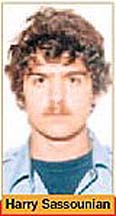 |
|
Hampig
Sassounian
at time of arrest |
INMATE SASSOUNIAN: “The American With Disability
Acts is a law to help people with disabilities. Disabilities are problems that make it
harder for some people to see, hear, breathe, talk, walk, learn, think, work, or take
care of themselves than it is for others. Nobody can be kept out of public places or
activities because of the disability. If you have a disability you have the right to
ask for help, to get ready for your Board of Parole Hearing, get to the Hearing, talk,
read, forms or papers, and understand the learning process. BPH will look at what the
you ask, excuse me, what you ask for to make sure that you have the disability that is
covered by the ADA and that you have asked for the right kind of help. If you do not
get help or if you don’t think you got the kind of help you need ask for a BPH 1074
Grievance Form. You can also get help to fill it out.”
PRESIDING COMMISSIONER DAVIS: Very well, thank you. And according to our records, on
August 2, 2006, together with staff in the institution you reviewed and signed a Form
1073, indicating that you do not have any disabilities that would qualify under the
Americans With Disabilities Act?
INMATE SASSOUNIAN: That’s true, sir.
PRESIDING COMMISSIONER DAVIS: All right. And has anything changed since that time?
INMATE SASSOUNIAN: No sir.
PRESIDING COMMISSIONER DAVIS: All right. You were able to read that without glasses?
INMATE SASSOUNIAN: Yes.
PRESIDING COMMISSIONER DAVIS: Do you normally wear glasses?
INMATE SASSOUNIAN: No.
PRESIDING COMMISSIONER DAVIS: Good for you. And you can hear me all right?
INMATE SASSOUNIAN: Yes sir.
PRESIDING COMMISSIONER DAVIS: And you walked here today, you got here under your own
steam?
INMATE SASSOUNIAN: Yes.
PRESIDING COMMISSIONER DAVIS: You feel healthy and ready to go?
INMATE SASSOUNIAN: Yes sir.
PRESIDING COMMISSIONER DAVIS: All right. Is there any reason that you can think of
that you would not be able to actively participate in this Hearing?
INMATE SASSOUNIAN: No sir.
PRESIDING COMMISSIONER DAVIS: All right. Counsel, are you satisfied with that?
ATTORNEY GERAGOS: I am.
PRESIDING COMMISSIONER DAVIS: All right.
ATTORNEY GERAGOS: I do have an objection to observers being present during the --
PRESIDING COMMISSIONER DAVIS: We’ll get to the objections in just a moment, we’ll
let you raise that point. This Hearing is being conducted pursuant to Penal Code
Sections 3041 and 3042 and the rules and regulations of the Board of Prison Terms
governing parole consideration hearings for life inmates. The purpose of today’s
Hearing is to consider the number and nature of the crimes for which you were
committed, your prior criminal and social history, and your behavior and programming
since your commitment. We’ve had the opportunity to review your Central File and you
will be given an opportunity to correct or clarify the record as we proceed. We will
reach a decision today and inform you of whether or not we find you suitable for
parole and the reasons for our decision. If you are found suitable for parole the
length of your confinement will be explained to you. Because this is your first time
to have an opportunity to appear before the Board, before the Panel, and this is the
first time I’ve had the opportunity to see you, I do want to cover just a couple of
things, just to emphasize something. This is your first Hearing.
INMATE SASSOUNIAN: Yes sir.
PRESIDING COMMISSIONER DAVIS: And as we’ve said, it’s being tape recorded and
there will be a transcript produced as a result of this. No matter what happens after
today -- should you receive a date, then certainly this Hearing forms the foundation
for all further review.
INMATE SASSOUNIAN: Yes.
PRESIDING COMMISSIONER DAVIS: If you shouldn’t receive a date, and we’re certainly
a long way away from making either decision, then this would form the basis for all
future Hearings. So it’s just important that you be candid and honest with the
Panel.
INMATE SASSOUNIAN: I will.
PRESIDING COMMISSIONER DAVIS: As we’ll cover in a moment, you do not have to admit
your offense or discuss your offense, and again we’ll cover that more in a moment.
But whatever you do choose to talk to the Panel about we just want you to be candid
and honest, all right?
INMATE SASSOUNIAN: Yes sir.
|
| |
PRESIDING COMMISSIONER DAVIS: Very well. Nothing that happens here today will change the
findings of the court. We are not here to retry the case, we are here for the sole purpose
of determining your suitability for parole. Do you understand that, sir?
INMATE SASSOUNIAN: Yes.
PRESIDING COMMISSIONER DAVIS: The Hearing will be conducted in basically two phases. First I
will discuss with you the crime for which you were committed as well as your prior criminal
and social history. Following that Commissioner Mejia will discuss with you your progress
since your commitment, your Counselor’s Report, your psychological evaluation, parole
plans, and any letters of support or opposition as they may exist. Once that’s concluded
the Commissioners, the district attorney and then your attorney will have an opportunity to
ask you questions. Questions that come from the district attorney will be asked to the Chair
and then you will respond back to the Panel with your answer. Before we recess for
deliberation the district attorney and then your attorney will be given the opportunity for
a final closing statement, followed by your statement, which should focus on your
suitability for parole. The California Code of Regulations states that, regardless of time
served, an inmate shall be found unsuitable for and denied parole if, in the judgment of the
Panel, the inmate would pose an unreasonable risk of danger to society if released from
prison. Now, you have certain rights. Those rights include the right to a timely notice of
this Hearing, the right to review your Central File and the right to present relevant
documents. Counsel, are you satisfied that your client’s rights have been met to date?
ATTORNEY GERAGOS: I am.
PRESIDING COMMISSIONER DAVIS: Thank you. You have an additional right and that’s to be
heard by an impartial Panel. You heard Commissioner Mejia and I introduce ourselves today.
Do you have any reason to believe that we would not be impartial?
INMATE SASSOUNIAN: No sir.
PRESIDING COMMISSIONER DAVIS: All right. Counsel, you’re in agreement with that?
ATTORNEY GERAGOS: I am.
PRESIDING COMMISSIONER DAVIS: You will receive a written copy of our tentative decision
today. That decision becomes effective within 120 days. A copy of the decision and a copy of
the transcripts will be sent to you. The Board has eliminated it’s appeals process. If you
disagree with anything in today’s Hearing you have the right to go directly to court with
your complaint. Once again you are not required to admit your offense or discuss your
offense. However, again, the Panel does accept the findings of the court to be true. All
right, Mr. Mejia, are we going to be working with anything from a confidential file today?
DEPUTY COMMISSIONER MEJIA: Let me make sure. He does have confidential information but I don’t
think we’ll be using any for today.
PRESIDING COMMISSIONER DAVIS: All right. If we do end up using any confidential information
during deliberation or elsewhere we’ll inform you of that. And I’m going to pass a
checklist of documents to both counsels. And if you’d take a look at that and make sure we’re
operating off the same list of documents please.
ATTORNEY GERAGOS: Okay. This looks right, yes.
DEPUTY DISTRICT ATTORNEY SEQUEIRA: And I’ve received the documents on the checklist as
well, thank you.
PRESIDING COMMISSIONER DAVIS: All right, thank you. We’ll mark the -- (inaudible)
(recording abruptly stops for approximately 15 seconds, then re-starts)
UNKNOWN VOICE (assumed to be Attorney Geragos): (inaudible) for them to be here.
PRESIDING COMMISSIONER DAVIS: Observers are allowed under Title 15 if they are approved by
the Executive Officer and these two observers have been approved by the Executive Officer
and they will not be, they have no speaking role and are here for observation only and will
not detract from the Hearing itself. So I’m going to overrule your objection. Anything
else, counsel?
ATTORNEY GERAGOS: No.
PRESIDING COMMISSIONER DAVIS: All right. Will your client be speaking with us today?
ATTORNEY GERAGOS: Yes.
PRESIDING COMMISSIONER DAVIS: All right. Will you raise your right hand, sir? Do you
solemnly swear or affirm that the testimony that you give at this Hearing will be the truth,
the whole truth, and nothing but the truth?
INMATE SASSOUNIAN: Yes sir, I do.
|
|
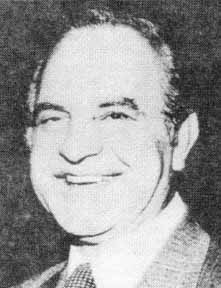 |
|
Kemal
Arikan (1928-1982) |
PRESIDING COMMISSIONER DAVIS: All right. Without
objection we’re going to incorporate by reference a Court of Appeals document, pages
five through 31, and refer to the summary of the crime on the September 2006 Board
Report, starting on page one under “summary of crime” where it states:
“The victim was Kamil (phonetic) Arikan,
A-R-I-K-A-N, who was the Counsel General of the Turkish Consulate assigned to Los
Angeles. He was murdered on 1/28/82 at 9:50 a.m. at the southwest corner of Wilshire
Boulevard and Comstock Avenue and was murdered while en route to his office in a private
car. Cause of death was due to multiple gunshot wounds. Shortly after the murder a
telephone call was received at the office of United Press International in Los Angeles,
where the [caller] asked for the news desk, then made the following statement, quote:
‘I’m calling on behalf of Justice Commandos of Armenian Genocide. We just shot a
diplomat in Los Angeles. The revolutionary struggle began in 1975 with an attack against
Turkish diplomats, starting in Vienna and Paris. We have carried out 14 operations and
today we claim the responsibility of the attack in Los Angeles. These attacks are to
demand justice for genocide crime in Turkey in 1915. Our sole struggle, we are the
Justice Commandos of Armenian Genocide’ close quotes. This organization is described
as a covert group of young people of Armenian heritage who engage in assassination of
Turkish officials around the world and have claimed responsibility for assassinations in
Los Angeles, California, Boston, Massachusetts, and Lisbon, Portugal. Investigations
disclosed that two males were responsible for the homicide, one later identified as the
prisoner. Following the murder the suspects had entered a Chevrolet, license number
534EER. It was learned that the car was registered to the prisoner. Several hours after
the murder Pasadena police officers saw the car being driven by the prisoner at which
time he was taken into custody. Pursuant to a search warrant a number of items were
recovered from the car, including a .357 caliber bullet and a four page Armenian
Federation roster. The prisoner made no statement following his arrest. Since his arrest
he has admitted his participation in the murder to the jail inmates and reported that,
although he was the only suspect arrested, he was involved with two others. In a
statement to another County Jail inmate the defendant said he had been ordered to kill
the victim, who was the Turkish Consul General, by the Justice Commandos. He said that
he and his accomplices had checked out the victim prior to the murder and watched him to
obtain information on his daily routine. It was then decided to kill him and the
prisoner had remarked that they had quote ‘filled him full of bullets’ close quotes.
He said that he and another suspect were on the ground level and a second suspect was on
the building roof and the victim was killed while at the intersection in a car. Prisoner
told the inmate that the killing was done because the Turks had killed a lot of his
people and he wanted to get publicity for revenge for his people and would do it all
over again in the same manner. He used a nine millimeter pistol in the crime. Under the
prisoner’s version it states, quote ‘when I went back to court in 2002 I fully
admitted my role in the death of Kamil Arikan. I apologize for it. I was 19 years old at
the time and I am completely against violence. I deeply regret what I did and I wish I
could change everything, but unfortunately I can’t. Violence never pays and never
solves problems. During my incarceration I have learned that diplomacy is the way to
solve problems between people and countries.’”
So, did you commit this crime?
INMATE SASSOUNIAN: Yes, I did.
PRESIDING COMMISSIONER DAVIS: And did you commit it in roughly the way that it’s
described in the reports?
INMATE SASSOUNIAN: Everything that inmate, jailhouse inmate, that’s absolutely all
false. I never confessed to that inmate. You know, it’s, everything that he said, I
never met that -- I think he uses Jeffrey Bush (phonetic) -- I never met that guy. It’s
completely false. It’s absolutely a lie. But I did confess. I do admit that I did
this. And I didn’t admit it in court and yes, I did do this crime.
PRESIDING COMMISSIONER DAVIS: Did you do this by yourself?
INMATE SASSOUNIAN: No, me and one other person.
PRESIDING COMMISSIONER DAVIS: And has that other person ever been arrested?
INMATE SASSOUNIAN: No, no.
PRESIDING COMMISSIONER DAVIS: Who is the other person?
ATTORNEY GERAGOS: The other person was identified as a Krikor Saliba (phonetic) and was
reported to have been killed in Lebanon approximately a year, or about two years after
the offense. [0] The gentleman, the portion of that
that you read, was a quote from a gentleman by the name of Jeffrey Bush, who was later
discredited as one of these jailhouse informants. There was a grand jury investigation
that was done subsequent to that to show that this use of informant testimony in LA
County was discredited. A number of the things that he had claimed Mr. Sassounian had
told him were not only physically impossible but he was not even in the same area as Mr.
Sassounian. That having been said, as Mr. Sassounian said, he’s not denying
culpability, it’s just -- and we’re not trying to re-litigate it -- it’s just that
there was an awful lot of litigation done on this and I think demonstrably shown that
this guy was trying to curry favor to get out.
INMATE SASSOUNIAN: It says in there that I told him that I used a nine millimeter. I did
not use a nine millimeter, I used a .45 Wahdi (phonetic). But as far as I remember he
got, he’s even, his cellie came to court and said that they had a fight or two on
which one to tell on me because they got all my case from the newspapers.
PRESIDING COMMISSIONER DAVIS: Okay, well, let’s start with what you did do. So, how
did you plan this?
INMATE SASSOUNIAN: Well, I cannot -- is it okay if I tell you why I did it before I, I’ll
get to the point before, how I did it?
PRESIDING COMMISSIONER DAVIS: Well, why don’t you go ahead and start and then we’ll
see where that goes. Go ahead.
INMATE SASSOUNIAN: Well, basically the reason was that ever since I was a child I had
heard of what the Turks had done to my people and the genocide and they butchered one
and a half million of my people because they were Christians and because they could not
convert my people, Armenian people, into Turks and Muslims. And they burned and
butchered one and a half million people. [1] But that
genocide in 1915, to me, at the time to 1982, was that the Turks still denied the
genocide and they will not confess and they completely took our properties, their
properties, their homes, their churches, and their businesses, and their bank accounts
--
PRESIDING COMMISSIONER DAVIS: Okay, so you had a long history of that. I’m familiar
with all that, so you had a long history of that. And so what brought you to, were you
actually a part of this organization that’s described here?
INMATE SASSOUNIAN: Well, okay, the only thing I know was me and my friend, you know,
that it was just me and him. As far as the organization, I had no idea that we were part
of any organization, I had no party. After I was arrested, when I read in the paper that
there was a phone call made I was like, shocked, I had absolutely no idea about no
organization, no phone calls, and that’s the honest truth. You know, all I knew, it
was me and my friend, you know, my crimee, we planned this, nobody told us what to do,
how to do it --[2]
PRESIDING COMMISSIONER DAVIS: But you, when did you and your friend begin this planning
process?
INMATE SASSOUNIAN: Well, I could be off by a couple of weeks but I would say, like two,
three four weeks before it happened, I would say.
PRESIDING COMMISSIONER DAVIS: And what made you select this particular victim?
INMATE SASSOUNIAN: Okay, what me and my friend, my crimee, were thinking, were actually
going to Europe to do this because most of the crimes, the assassinations, were taking
place there. But what took us, our attention from there to Arikan, to the victim, was
that, like, few weeks before this happened Arikan had made a statement somewhere that
the genocide did not happen, that it was all lie. And like, we were going this way, he
just completely pulled us, you know, like brought us to him [3], you know, like he was, like, thumbing his nose at us and at
everybody, all these victims, our grandmothers and our mothers and --
PRESIDING COMMISSIONER DAVIS: Did you know the victim in any way?
INMATE SASSOUNIAN: No, absolutely no.
|
| |
PRESIDING COMMISSIONER DAVIS: So you never met him. How did you learn of the statement that
he’d made?
INMATE SASSOUNIAN: I think I, I either heard it from my crimee or I read it in the paper,
one of the two, I’m not sure.
PRESIDING COMMISSIONER DAVIS: So you didn’t attend a speech or anything like that, you
read it in the paper or you heard it from someone?
INMATE SASSOUNIAN: Yes. I heard it, I think, if I’m not mistaken, like he had a meeting
with some people or -- maybe even with the Armenian community somewhere where he publicly
came out and said, you know, it’s all a lie, that these people are a bunch or liars, that
they’re making this genocide up and that Turks never did anything bad to Armenian and,
something like that, you know, and that, we just completely turn our attention to him when
he said that.
PRESIDING COMMISSIONER DAVIS: All right, but you’d already reached a decision that you
were going to do what when you went to Europe?
INMATE SASSOUNIAN: That we probably were going to attack a diplomat over there.
PRESIDING COMMISSIONER DAVIS: So you were going to commit some crime in Europe?
INMATE SASSOUNIAN: Yes, yes.
PRESIDING COMMISSIONER DAVIS: When you say “attack” did you have a plan, a thought of
what that attack was?
INMATE SASSOUNIAN: It was, it was all like a beginning, we didn’t know what, you know, we
was just thinking what to do. We felt --
PRESIDING COMMISSIONER DAVIS: You thought Europe would be more appropriate because that’s
where, from your point of view --
INMATE SASSOUNIAN: Yes, everything was, yes, excuse me, everything was happening there and
we weren’t sure what we were doing yet. We were just, like thinking, you know, we were
thinking like these people spat at our face for, like 100 years or whatever, you know. As
the sons of Armenian people and all the disrespect, the humiliation that these people had
caused us, we felt like we should do something to these people back to show them that, you
know, hey, you know, you done all these inhuman things to our people that, we gonna, you
know, we gonna do something back to you, you know. [4]
PRESIDING COMMISSIONER DAVIS: You were forming this plan because of historical grievances
going back over 100 years, you say?
INMATE SASSOUNIAN: Well, yeah, what, what ticked me off, sir, is I knew the genocide and all
this horrible stuff, you know, before the assassination. What ticked me off was that, I
heard from that in the papers and I heard from friends that the Turks were bulldozing
Armenian churches and turning them into mosques and these were like, centuries old churches,
you know. And to Armenians, we were the first nation to become Christians, you know, and
these people will actually bulldoze a church that was like, that’s the complete insult to
us, you know, that these people, I mean, what kind of, we were thinking what kind of people
would bulldoze a church, you know. I mean, that’s like molesting a child, that’s like
the most peaceful and innocent thing that exists, you know, is a church, and these people
were just bulldozing them like, the hell with you, the hell with your country, the hell with
your churches, you know.
PRESIDING COMMISSIONER DAVIS: All right. And were you active in politics in any other way?
INMATE SASSOUNIAN: Not at all. I mean, I like politics, and I like history and I like being
knowledgeable about it, you know. [5]
PRESIDING COMMISSIONER DAVIS: Were you active in any kinds of organizations of any kind,
positive or negative?
INMATE SASSOUNIAN: I was a member of this youth organization called Armenian Youth
Organization which was, to me it was like a school because we did not, we were poor, you
know, when we came here we did not have enough money to go to Armenian school. So what we
did, there was Armenian club there with Armenian organizations and, to me it was like a
school, you know, -- [6]
PRESIDING COMMISSIONER DAVIS: It was a social sort of an organization?
INMATE SASSOUNIAN: Yes, of course, yes.
PRESIDING COMMISSIONER DAVIS: But it wasn’t a political organization?
INMATE SASSOUNIAN: No. Well, I wouldn’t say --
PRESIDING COMMISSIONER DAVIS: I guess what I’m getting to -- were you, you were offended
by these things that were happening?
INMATE SASSOUNIAN: Yes sir.
PRESIDING COMMISSIONER DAVIS: Were you writing letters to anyone to object to this or --
INMATE SASSOUNIAN: No, no, I barely knew how to write, sir, I barely knew how to write when
I was out there. Even my own language, I quit my school when I was in the 4th grade in
Armenian school and even my Armenian reading was terrible, you know.
|
|
PRESIDING COMMISSIONER DAVIS: All right, so you were angry over these past ills and what
was currently happening and then when you understood that the victim had made a
statement of some kind that further insulted you, that’s when you decided to focus on
the victim?
INMATE SASSOUNIAN: Yes.
PRESIDING COMMISSIONER DAVIS: About how long in advance of the murder was that?
INMATE SASSOUNIAN: Like, again, I can’t give you an exact time limit. It could have
been two weeks or it could have been six weeks but it was somewhere around there.
PRESIDING COMMISSIONER DAVIS: And what did you do?
INMATE SASSOUNIAN: Well, what, me and my friend talked about that. When the victim said
this we completely took our attention to him and we, we decided that, we knew that they
had a consulate in Los Angeles, you know, it was obvious that. And we had to decide,
like, what route he was taken. We learned from the paper how these assassinations was
mostly taking place in Europe, that it was happening on the way to work, you know. So
one day -- we knew also that he was crossing Wilshire somewhere, you know. So one day we
were, like just couple of days before this or it might have been the day before, I’m
not sure, we went down there and, what I did, I went to the corner of Wilshire and
Comstock. We knew that he was coming from that direction and turning on Sunset, I mean,
I’m -- forgive me, but I don’t remember the streets any more, you know. But the
next, it was like Comstock and then Wilshire and then there was another major street
further down, next block, my friend went to that corner, you know. And on the next block
the other way there was the Wilshire Hotel, I think. So what I did, I went to Wilshire
and Comstock corner and my friend went to the corner on the other side, which was a
bigger, more major boulevard. And I was there for like a half an hour or so when I saw
that, you know, I knew that he was driving a white, LTD I think. He came, you know, when
I saw him and I recognized his face, I had seen it somewhere in the papers or something
and I knew that it was him as soon as he came and turned the corner, you know. I went
back to the next boulevard and I said hey, he’s coming from this corner, you know,
that’s how I found him.
PRESIDING COMMISSIONER DAVIS: How many times did you scout the location?
INMATE SASSOUNIAN: I swear to God it was just one day, that was it.
PRESIDING COMMISSIONER DAVIS: You were able to see him coming there. How did you know he
would come that way again?
INMATE SASSOUNIAN: Well, we, I don’t know, I would hate to use the word luck but, you
know, when we saw him coming from that area we thought that was his regular route, you
know.
PRESIDING COMMISSIONER DAVIS: What did you do then?
INMATE SASSOUNIAN: Then we talked about it, should we do it, shouldn’t we do it? And
is it right to do it, is it not right to do it? And, you know, we thought that, with all
honesty, sir, we thought that these, you know, we thought that there was a big gap
between the Turkish government and mostly any other governments in the world, whether
they be American, French or English or whatever. We thought that, all these horrible
things that these people committed against our people, not just the genocide that, to
that day they were occupying chunks of Armenian territory, you know, like 70 percent of
Armenian --[7]
PRESIDING COMMISSIONER DAVIS: So you had a discussion abut the right or wrong of --
INMATE SASSOUNIAN: Yeah, yeah, me and my crimee talked about it and we talked, you know,
is it right to do it. And the subject came up that, if me and you had a conflict and,
let’s say, that suit you were wearing was mine and I could prove it that it was mine
and I went to the police and told them “hey, man, that suit is mine.” And he told me
to go to hell and I went to the Marines and to the, to everybody else, and they told me
to go to hell --. And I came to the point that, hey, I tried everything peacefully to
get that jacket [8] because it belongs to me, you
know. And you told me “you know what, to hell with you”, you know, “I’m gonna
keep it,” that, you know, of course in this case it wasn’t a jacket, this was our
homeland, this was our dignity --
PRESIDING COMMISSIONER DAVIS: So you had reached a decision that you were going to
commit this crime?
INMATE SASSOUNIAN: That these people, in all honestly, I thought at that time that these
people were less than humans [9], that, you know,
they were inhumane, and the Turkish government had no soul, that they had no honor, and
they had no conscience that they would do something to a small number of people, so --
PRESIDING COMMISSIONER DAVIS: I get it, that you were very angry about this and --
INMATE SASSOUNIAN: Yes, I was very, very angry, sir.
PRESIDING COMMISSIONER DAVIS: And this anger goes very, very deep.
INMATE SASSOUNIAN: Yes, it was.
PRESIDING COMMISSIONER DAVIS: So you reached a decision. Did you reach it that night?
INMATE SASSOUNIAN: You know, sir, I’m not going to, I don’t know the detail, to you,
I can barely recall details, you know.
PRESIDING COMMISSIONER DAVIS: Where did you get the weapon?
INMATE SASSOUNIAN: My crimee bought it.
PRESIDING COMMISSIONER DAVIS: And just the one, how many guns did you go armed with?
INMATE SASSOUNIAN: Before this, you know, I wanted to use a nine millimeter because I
had shot nine millimeters before. I had never used a .45 in my life. And when my crimee
brought a .45 I was unhappy. I said, you know, you want me to use this, it’s a heavier
gun, it has more power, and I didn’t like it and I was upset about it, you know. But I
didn’t say nothing but I just didn’t like it, you know. So he brought the gun to me.
PRESIDING COMMISSIONER DAVIS: So you don’t know where it came from? He just brought it
to you?
INMATE SASSOUNIAN: No, I -- it could have came from anywhere.
PRESIDING COMMISSIONER DAVIS: Where did you use a nine millimeter before? Where had you
used a gun before?
INMATE SASSOUNIAN: Well I, you know, we went target practicing before, you know.
PRESIDING COMMISSIONER DAVIS: Was the target practicing in preparation for this event?
INMATE SASSOUNIAN: No, not at all, this thing, sir, from beginning to end was, like at
the most, and again forgive me for, you know, not knowing the exact fact but it was -
PRESIDING COMMISSIONER DAVIS: It was right around six weeks.
INMATE SASSOUNIAN: Yeah, it could have been two months, it could have been two weeks,
and that’s the honest truth, I just don’t remember, but the shooting thing, it wasn’t
in preparation for nothing. It was just, you know, practice, just to know how to shoot
gun, you know. [10]
PRESIDING COMMISSIONER DAVIS: All right. So on the day of the crime what did you do?
INMATE SASSOUNIAN: Well, again, I don’t remember detail but I’m, you know, I woke up
and I call my friend or he call me, again I’m not sure, and I went and picked him up,
you know, and we, when I picked him up we went there and we were very nervous because,
we, you know, we never done anything like this before, you know, and we want to still
kind of think should we do it shouldn’t we do it, you know? But, you know, and we went
to Hollywood because we were so nervous. I think either me or, you know, I don’t drink
but I think it was he may have recommended that we took a small drink of some kind of a,
you know, a brandy or something, you know, I don’t drink so I don’t know nothing
about drinks, you know. And we went to a liquor store, I think it was the (inaudible)
behind Hollywood Boulevard. I think it was near that Capitol Records building; it was a
liquor store a couple of blocks away from there. We went and got a, two small bottles
like, this big -- little cute bottles, you know, I like the shape, I bought one just to
have one, you know. And he bought one too and he opened one and I took it, like small
sip, it barely even touch my lips because I don’t think, I don’t like nothing about,
I had drank a couple of margaritas in my life and that was it, you know. So I drank it
like, barely touch my, I didn’t like the taste, I think it taste sugary or something
and I didn’t like, and I gave it to him and he took, like, two very small sips, you
know, we weren’t intoxicated or even, not close to anything like that, you know. And
after we left there we went to the street, to Wilshire and Comstock, and I park my car
like a block away from there I think, you know. And we went to the corner and we waited
there, you know, I took one corner and he took another corner. When we went there, you
know, we had a few things in our mind, you know, that I can know full in detail that, we
talk about things like what if there was somebody else in the car? And the answer was
absolutely there was someone else in the car, we was not going to do this. We also
considered what if there was a cop car behind it. We weren’t gonna do it. We had it in
my mind, sir, that we were only there for one purpose and that was to assassinate Arikan.
We were not going to point our gun at anybody else or, anybody else besides him who, in
our mind, was innocent target. And even somebody pull out Uzi from a corner and start
shooting at us we were not going to shoot back to them because to us it was unforgivable
sin, you know, crime, to shoot anybody else except this government official of the
Turkish government. And we also had in mind that there was a good possibility that he
could have a bullet-proof vest on, you know, so we talked about that I remember, you
know. And also possibility of him having a bodyguard, you know, we talked about that,
what we’d do if there was a bodyguard, so, you know, we talked about this and we went
down there and we knew that, if there was bodyguard there would be Turkish bodyguards,
you know. At least we hoped it would be, you know. So when we went down there I took
that one corner and he took the other corner and we waited there, I don’t know, again
it could be couple of minutes, it could be 15 minutes, I don’t recall. I know we were
very nervous, we were very upset. And in my mind and I’m sure in his mind we kept
going should we do this, shouldn’t we do this? And to me --
|
| |
PRESIDING COMMISSIONER DAVIS: It wasn’t a conscious conversation, it wasn’t an out loud
conversation that you --
INMATE SASSOUNIAN: No, no, we weren’t talking back and forth, you know, this was in my
mind, you know. But we were looking at each other of course, like, you know, because he was
there across the street. Then I saw, a few minutes after we were there I saw him coming with
his car and I knew his face, you know, I, he was maybe, like 50 yards away and I knew it was
him and I did not see nobody else in the car, you know, and I had the gun in my belt here
and I turned around and pulled the gun out and kind of put it behind my back and when he got
close enough, I don’t know, maybe he hit the wall, I don’t know, I stepped outside the
curb, you know, like I was gonna walk across or something. And when he saw me he slowed
down, that’s when I pulled the gun and I think I shot like three shots, maybe four shots,
I don’t know. At the same time my crimee started shooting from across the street, which
would be like his side, the driver’s side, you know. And after I shot I went next to the
window, having in my mind that he might have a bulletproof vest on, you know, and I shot
like two, maybe three more shots from next to the door, next to the window from the
passenger side. And after that we ran behind the car and went up the street.
PRESIDING COMMISSIONER DAVIS: So you fired your first few shots and then -- did the car keep
coming forward or did you walk up to a parked car?
INMATE SASSOUNIAN: No, I think, when he saw me pull a gun out and point at him he hit the
brakes hard, you know, he hit the brakes pretty hard. And I think maybe the car stop like, I
don’t know, I’m just guessing again, 10, 15, 20 feet from me. This is, again, just a
guess, you know.
PRESIDING COMMISSIONER DAVIS: So you fired and then walked up and fired --
INMATE SASSOUNIAN: From the passenger side.
PRESIDING COMMISSIONER DAVIS: And your crime partner was also firing -- was he still firing
then?
INMATE SASSOUNIAN: Yeah, to be honest I barely, you know, I was so dazed out, I was so lost
that I don’t even, but I know, I saw him in the area but I don’t remember the exact
shots he took, I don’t remember what angles he took and stuff but I was, you know, I was
gone, you know.
PRESIDING COMMISSIONER DAVIS: So then did the two of you join up after that?
INMATE SASSOUNIAN: Yeah, we went, like, let’s say this was the car, and I went this side
and crossed the Comstock to the side of the street that he was, that side would be closer to
him, you know. We went back to that side and we started running and when we were running I
noticed that there was this car following us, you know, like, to me it sounded like a stick
shift, you know. And this car was following us, it was obvious, you know, because the car
was, you know, making a real effort to follow us and when I heard the car going like that I
almost said oh, man, it could be the bodyguard. And I went and bent down, like that, and I
was gonna shoot him, you know, thinking it was a bodyguard, but the guy looked like an
American guy, you know, and it was absolutely out of the question for me to shoot any
Americans or anybody innocent, you know, and it didn’t look like the guy had a gun or
anything so I just kept running. And I remember there was a particular, this young girl with
a baby carriage there too, you know, and I was, kept worrying about her before the incident
took place because I was saying in my mind ah, come on, girl, hurry up, hurry up, because I
did not want her to witness this, you know. And she was going up the street like, I was
worried about the angle that I might be shooting --
PRESIDING COMMISSIONER DAVIS: This was prior to the shooting?
INMATE SASSOUNIAN: Yes, prior to the shooting I was worried about this young girl, if she
was in the angle that I was gonna shoot I wasn’t gonna do it because I wasn’t gonna let
this young girl get shot, you know. But after she reached the point she was, like, way to
the side, and I knew she wasn’t going to be --
PRESIDING COMMISSIONER DAVIS: Let’s get back to what happened. After the shooting now, and
you’re running away?
INMATE SASSOUNIAN: Yeah, and this car, and I knew this guy was American and I just left him
alone and just kept running and we turned the street corner and there was, like, a couple of
streets away there was, I don’t know, there was a house there and we went out the front
yard and there was, like, grasses there and stuff, you know, and we took the guns and we
were wiping and I remember my crimee saying, “hey, Hampit” -- that’s my Armenian name
-- “that guy is looking at us, he’s writing something down”, you know. And he was like
standing to the side of me and the guy, he was right behind me so I couldn’t see it so I
turned around and I saw this olderly (sic) guy, you know, writing stuff down, you know, and
I just turned back and my crimee said “what should we do” and I said “we can’t do
nothing, what can we do, he’s an American, you know, we’re not going to shoot him, that’s
for sure, you know” so, and we just took our guns and we wiped it on our clothes, you
know, wiping the fingerprints off of course, you know, and we threw them out in the ivies,
in the grass, and we just jump in my car and we left.
PRESIDING COMMISSIONER DAVIS: Okay. And when you were arrested?
INMATE SASSOUNIAN: Okay. I went home and I knew I had to work that day. I used to, I work at
night, you know. And I went home and, I think I fell asleep, I’m not sure, you know, I
probably didn’t but I know I was in bed, you know, and -- again, I don’t remember what
time it was, maybe it was afternoon or something. I got up and I think I probably drank
coffee or something or a tea and got in my car and I was going to work. That’s when I saw
the CO, you know, cops, that surrounded me.
PRESIDING COMMISSIONER DAVIS: What did you and your crime partner talk about after the
killing?
INMATE SASSOUNIAN: The only thing that stand out in my mind, sir, that talk, you know, was,
you know, what we did, you know, was we happy with what we did, was it right to do it? And
with all honesty, sir, I can’t say that at that point that we regretted what we did. We
were just, like saying you know what, if these people keep think they can do all this shit
to us, you know, then they got this coming, you know. That’s what, I’m not going to lie
to you, that’s what I felt.
PRESIDING COMMISSIONER DAVIS: So at that time did you feel like you’d been successful?
INMATE SASSOUNIAN: Well, we didn’t know yet if he had died or not, you know, and I think
he turned the radio on and I think he went to the news station, you know. And on the news
they said that a Turkish diplomat had just been assassinated. And when the word “assassinated”
was mentioned that, you know, I think him or I, maybe, said that that means that he died,
you know, assassinated. They didn’t say he was shot, they said he was assassinated, that
means he was dead, you know. And, again, I’m not going to lie to you, at the time I
probably say you know what, we did not fail, you know, we succeeded, you know. And I’m not
going to lie to you at that time --
PRESIDING COMMISSIONER DAVIS: So at that time you were happy about what occurred?
INMATE SASSOUNIAN: Yeah, I would be lying if I didn’t. At the time I said you know what,
we succeeded in doing this, you know.
|
|
PRESIDING COMMISSIONER DAVIS: Did you talk with anyone else, communicate that to anyone
else?
INMATE SASSOUNIAN: No, I never talked about this until I was in court in 2002. Anybody
who said, old jailhouse snitches or anybody said I said anything -- I mean, I had
cellies for years who told me everything about their crime and everything and they would
literally tell me how come you don’t talk about yours? And I never told them.
PRESIDING COMMISSIONER DAVIS: So this occurred in 1982. And was it in 2002, that was the
first time you actually admitted to doing this?
INMATE SASSOUNIAN: Yes, I believe so, yes.
PRESIDING COMMISSIONER DAVIS: Why did it take so long?
INMATE SASSOUNIAN: Well, because, the key reason was the appeals, you know, and that, we
were still appealing the courts and my attorney, whether it was my appellate attorney or
his father, his father was originally attorney in 1982, you know, in court. As a
prisoner you just don’t talk about your case, you know, and that’s --
PRESIDING COMMISSIONER DAVIS: So those were your instructions from your attorney, not to
--
INMATE SASSOUNIAN: Well, my attorney but also I believed that, in prison, you just don’t
talk about it, you know. And pretty much everybody already knew my case, almost anybody
on the yard knew who I was in.
PRESIDING COMMISSIONER DAVIS: Did you just not talk about it or did you ever offer an
alternative story? Did you ever say --
INMATE SASSOUNIAN: No, sir, I do not lie, you know, because to me lying to you is
disrespecting you, you know. You may ask me something and I would not answer but if I,
whatever I answer I will not lie to you because it’s not in my nature to lie to
people.[11]
PRESIDING COMMISSIONER DAVIS: Did you ever offer an alternative story?
INMATE SASSOUNIAN: No, I just won’t talk about it.
PRESIDING COMMISSIONER DAVIS: All right. Are there any other details that we haven’t
talked about, in terms of the commitment offense, that you believe are important for
this Panel to understand, before we move on to other things?
INMATE SASSOUNIAN: Well, you mean, this is nothing to do how I feel about this now, this
is --
PRESIDING COMMISSIONER DAVIS: No, no, we’ll get to that here in a moment, yeah. This
is just about the details of the crime or anything that you think is important that you
want to clarify.
INMATE SASSOUNIAN: Nothing that stands out, no.
PRESIDING COMMISSIONER DAVIS: All right, if you think of something as we move along feel
free to offer that as well. All right, in terms of your prior arrests, when did you come
to the United States?
INMATE SASSOUNIAN: I think I was 13 and a half, maybe 14.
PRESIDING COMMISSIONER DAVIS: Were you ever in trouble in your home country?
INMATE SASSOUNIAN: No, no, I mean, I was just ditching schools and stuff, and that’s
it.
PRESIDING COMMISSIONER DAVIS: And no arrests as a juvenile in the United States?
INMATE SASSOUNIAN: No.
PRESIDING COMMISSIONER DAVIS: All right. And you have an arrest in 1981 that was
rejected by the prosecutor and then -- and that was in January of ’81 -- and then in
October of ’81 you were arrested for forged credit cards and you received 36 months of
probation and 20 days in jail. Why had you forged a credit card?
INMATE SASSOUNIAN: Okay, I’m going to tell you, sir. I had a friend from high school,
it was simple as this. He told me that he was using a stolen credit card and he
challenged me, hey, you want to go buy something? Like an idiot I said I did, you know,
I will. He challenged me, it was like a dare to me, you know. And I went to the arcade
to buy one or two shirts and I got busted. I never had forged anything in my life before
that, I never had a stolen card in my life, it was just that one incident, I swear to
God to you, and that was it.
PRESIDING COMMISSIONER DAVIS: Okay. And that’s what you bought was some shirts?
INMATE SASSOUNIAN: Yeah, I tried to buy a couple of shirts, I think maybe pants, I don’t
remember. But it was just $50 or $60 worth of stuff, I’m not sure, but it was a small
amount of money.
PRESIDING COMMISSIONER DAVIS: Okay. And personal factors say the prisoner was born, one
of several children. How many siblings do you actually have?
INMATE SASSOUNIAN: I have three brothers and two sisters.
PRESIDING COMMISSIONER DAVIS: And where do they live?
INMATE SASSOUNIAN: They live in Pasadena and Glendale.
PRESIDING COMMISSIONER DAVIS: So they’re all in the United States now?
INMATE SASSOUNIAN: Yes.
PRESIDING COMMISSIONER DAVIS: Do you keep in contact with them?
INMATE SASSOUNIAN: Yes.
PRESIDING COMMISSIONER DAVIS: You were born in Beirut, Lebanon.
INMATE SASSOUNIAN: Yes.
PRESIDING COMMISSIONER DAVIS: On January 1, 1963.
INMATE SASSOUNIAN: Yes. Well, that’s not exactly true about the date of the birth, but
I was born, I was born in a house and nobody wrote the date down but I think it’s
generally true. But I think I was actually born in the beginning of March somewhere.
PRESIDING COMMISSIONER DAVIS: Oh, okay. I’ll look at the file later on, but --
INMATE SASSOUNIAN: They all say January --
PRESIDING COMMISSIONER DAVIS: This is your official date of birth.
INMATE SASSOUNIAN: Yes, for some reason they gave me the news there, I don’t know why.
PRESIDING COMMISSIONER DAVIS: Okay. One of his paternal great-grandfathers was in a 1915
struggle between the Turks and Armenians and was killed, together with six of his
children. One of the survivors of the defendant’s paternal grandfather fled to
Lebanon. The family immigrated to the United States in 1977 and these events
crystallized the prisoner’s father’s political interest and his subsequent life. [12]His mother worked as a cook and the children were
provided supervision by the paternal grandparents and the family was described as
impoverished. It was also reported that the prisoner’s father is an alcoholic and was
physically abusive to members of the family. On 10/6/80 the prisoner’s brother Haroot
(phonetic) Sassounian firebombed the residence of Kamil Arikan [13], the victim in the present offense, the Turkish Consul General of
the United States. The victim and his wife were present at the time of the firebombing,
which occurred at about 4:00 a.m. Despite extensive damage no one was injured. The
prisoner attended Pasadena High School. Did you complete high school?
INMATE SASSOUNIAN: No, I quit at 10th grade.
PRESIDING COMMISSIONER DAVIS: 10th grade. Although he was said not to be a good student
at the time, the murderer was working as a security guard for an Armenian-run company
and was living with his parents. Is that accurate about your brother’s participation?
INMATE SASSOUNIAN: Well, he --
PRESIDING COMMISSIONER DAVIS: As far as you know?
INMATE SASSOUNIAN: Yeah, he was convicted of it, I guess it was true.
PRESIDING COMMISSIONER DAVIS: I’m just asking you, from your perspective?
INMATE SASSOUNIAN: Yeah, me and him never talked about it, me and my older brother, we
were completely, I mean we talked but we never hung around together or anything.
PRESIDING COMMISSIONER DAVIS: Did these actions influence you at all?
INMATE SASSOUNIAN: Well, he got arrested after me. As far as him doing that he never
told me he did anything like that. [14]
|
| |
PRESIDING COMMISSIONER DAVIS: All right. Was your father’s history an influence for you as
well?
INMATE SASSOUNIAN: You mean as far as being a drinker and stuff?
PRESIDING COMMISSIONER DAVIS: Yes.
INMATE SASSOUNIAN: No, I wouldn’t say it but, you know, I knew he was like, a loser, you
know, he was always --
[Thereupon, the tape was turned over.]
-- as far as my father goes, you know, I was never close to him and, you know, I have a lack
of respect for him because he’s, all his life he’s been a lazy man and been a drunk and
he’s been an embarrassment to the family.
PRESIDING COMMISSIONER DAVIS: What about the family history and so forth? Is that --
INMATE SASSOUNIAN: No, I’m not going to make no excuses. This act, you know, I’m not
going to blame nobody else, it was me and it was my decision and I was saying I made the
decision, you know.
PRESIDING COMMISSIONER DAVIS: Yeah, but I was talking about, because you were saying some of
the things that, the history of a part of this was your particular family’s history
especially influential for you as well?
INMATE SASSOUNIAN: Yes, it was, as far as the genocide, yes.
PRESIDING COMMISSIONER DAVIS: Anyone else in your family, aside from your brother, have any
problem with law enforcement?
INMATE SASSOUNIAN: Well, I think I heard that one of my oldest brothers was arrested for
trying to pick up a prostitute one time, I’m not sure.
PRESIDING COMMISSIONER DAVIS: Nothing serious outside of your other brother’s --
INMATE SASSOUNIAN: No, I don’t think so.
PRESIDING COMMISSIONER DAVIS: Okay. How did your father’s alcoholism manifest itself? Was
there any abuse?
INMATE SASSOUNIAN: The abuse was not physical. He never hit us, he never hit me or my
brothers or sister, he was just, you know, he’d yell and scream pretty much, that was it.
And he never brought any food to the table, he never worked, he never -- supposedly he was
supposed to be working for the government but he never went to work on anything, you know.
PRESIDING COMMISSIONER DAVIS: How many different places in the United States did you live
when you first came here?
INMATE SASSOUNIAN: When we first got here we lived with my grandfather, my father’s
father, for, I don’t know, a few months maybe, I’m not sure. Then we moved. We moved a
few blocks away to a Hill and Washington corner, in Pasadena. And after that we moved to
Hill and Walnut, I think, --
PRESIDING COMMISSIONER DAVIS: Virtually all of the time you spent was in the greater Los
Angeles area?
INMATE SASSOUNIAN: Yeah, it always was like a few blocks area. Always in Pasadena.
PRESIDING COMMISSIONER DAVIS: You went to public school?
INMATE SASSOUNIAN: Yeah, I went to John Muir High School.
PRESIDING COMMISSIONER DAVIS: When you came here did you speak English?
INMATE SASSOUNIAN: Yes, a little bit, yes. But in Lebanon I used to go to Armenian school
and we used to take English, and I knew, like, this is a chair, this is a table, how are
you, and stuff like that. But I understood more than I spoke.
PRESIDING COMMISSIONER DAVIS: And you said you had trouble writing in your own language --?
INMATE SASSOUNIAN: Yeah, I was not a good student, never have been, you know, and as far,
you know, well, of reading books and history and stuff, but as far as writing and as far as
studying I’m not good at it. I just, I lose interest, you know, like -- let’s say when I
did, homework to do, I’ll just lose, like 20 percent of the way I’ll just lose interest
in it, you now. I’ve always been, I love working, you know, tell me to knock down this
building or something or do this whole huge garden, you know, I love doing it, I just --
PRESIDING COMMISSIONER DAVIS: Physical labor better than the other part?
INMATE SASSOUNIAN: Yes, exactly sir, yes.
PRESIDING COMMISSIONER DAVIS: But you’re able to read -- well, I think your reading level,
as I recall, was 8.9 or something.
INMATE SASSOUNIAN: Yes, now I can, of course, it’s much better now that it used to be,
yes.
PRESIDING COMMISSIONER DAVIS: All right. Is there anything that we haven’t talked about,
in terms of your life prior to the incident offense itself, anything to do with the criminal
history, anything we’ve already talked about, any particulars about the crime that you
think is important for the Panel to understand that we haven’t covered?
INMATE SASSOUNIAN: Yes, one thing, sir. In that, one of the thing that I was sentenced for,
I think, there was a fighting there that says I had a weapon. There was no weapon, you know,
they --
ATTORNEY GERAGOS: I’m -- just prior to your incarceration.
PRESIDING COMMISSIONER DAVIS: Well, I think he’s talking about, there was an arrest in ’81
that was dismissed, so we’re not going to talk about it.
INMATE SASSOUNIAN: Yeah, it was reject. I saw it in the paper there was weapon. That’s
absolutely not true. The only thing I had in my paper was leaflets or some kind of papers,
you know.
PRESIDING COMMISSIONER DAVIS: Is there anything else that we haven’t talked about that you
feel is important for the Panel to understand?
INMATE SASSOUNIAN: No.
PRESIDING COMMISSIONER DAVIS: all right. If you think of something as we go along feel free
to say “I forgot about this” or something reminds you, let us know.
INMATE SASSOUNIAN: Okay.
PRESIDING COMMISSIONER DAVIS: Commissioner, do you have any questions?
DEPUTY COMMISSIONER MEJIA: Yeah, so I won’t forget it. We were talking about the
commitment offense. You actually took responsibility for your actions in 2002?
INMATE SASSOUNIAN: Yes, yes.
DEPUTY COMMISSIONER MEJIA: And I heard that, the issues why you were somewhat in denial of
the crime since 1982 because of the pending appeal and legal counsels and --
INMATE SASSOUNIAN: Yeah, I mean, I knew I did it and I was, you know, I know how I felt, I
just couldn’t talk about it.
DEPUTY COMMISSIONER MEJIA: What brought you to the conclusion to say hey, you know what, I’m
owning up to this, I’m going to take responsibility to the crime? What motivated you to do
that?
INMATE SASSOUNIAN: Well sir, with all honesty, once I passed the age 40 it’s like, I wasn’t
young man any more, you know, and I started, you know, my whole mentality of thinking,
pretty much about everything, about life, about politics, about family, about everything, it
just swung around, you know, and I was like, you know, I did not see things like I used to
think. Like ten years ago if you walked up to me and told me, you know, hey screw you, I
would probably hit you, you know. But now I don’t think like that anymore.
DEPUTY COMMISSIONER MEJIA: So when did you actually start thinking about taking
responsibility for the action?
INMATE SASSOUNIAN: Well, you mean when did I start feeling bad about it? I would say about
--
DEPUTY COMMISSIONER MEJIA: That’s close, yeah.
INMATE SASSOUNIAN: I would say about a good ten years ago, maybe more. But I just couldn’t
talk about it, you know, because of the pending appeals and stuff. I was just, you know, I
just wouldn’t talk about it.
DEPUTY COMMISSIONER MEJIA: So, do you still have the hatred that you had before, at the time
when you said --?
INMATE SASSOUNIAN: No, no. The hatred, sir, to me, I feel sorry for them, that’s what I
would say now. Because as far as the history goes, as far as the knowledge goes, I knew that
these people done that to Armenia and I know that they owe an apology for what they did and
I know by not them doing it. I just feel sorry for them that they would lie to their own
people about their own history, you know.
|
|
DEPUTY COMMISSIONER MEJIA: You were not somewhat influenced from some sort of -- I’m
not very familiar about how the court went, that you were, the overturning of the life
sentence without parole, possibility of parole, and it was changed to 25 years to life
with parole. Was that a motive for you to own up and take responsibility for the crime?
INMATE SASSOUNIAN: Well, I think I’d be lying if I said to you that it had absolutely
no effect on it, I’m sure it did. But it wasn’t the sole reason, I mean, maybe it
was like a third of it, and I’d be lying if I said no, you know. In other words, if I
had my prior sentence still and I was still appealing then I probably wouldn’t be
talking about it, you know, and I’d be lying to you if I said I would, you know.
DEPUTY COMMISSIONER MEJIA: No, you know, this is speculation but I’m thinking about,
we’re looking at insight and your -- so if this thing didn’t change and you were
still without possibility of parole, how would you handle this? Are you going to keep
silent or you just -- what are you going to do?
DEPUTY COMMISSIONER MEJIA: Well, as a human being, of course, life without means, you
know, you won’t get out, you know. As a human being, no matter who it is, I’m sure
that as a human being they would hope that one day they would walk out of prison, you
know. And in order to have their faith I know that, in prison I knew that I couldn’t
walk out with life without, I mean, of course, directly and indirectly I, of course that
crossed my mind that, you know, that if I still had life without I probably wouldn’t
confess to it, hoping that some day to have a hope of walking out.
DEPUTY COMMISSIONER MEJIA: So you’re not going to own up to it if nothing has changed
in your sentence? You were going to keep silent?
INMATE SASSOUNIAN: If it hadn’t changed I would, likely so, yes.
DEPUTY COMMISSIONER MEJIA: I appreciate your candidness, sir, I really do. [15]And the next thing is, what we’re looking at here is your relapse
prevention. Are you going to re-offend again if we cut you loose in the streets? And
what I want to find out from you --
INMATE SASSOUNIAN: I’m sorry, I didn’t get that part.
DEPUTY COMMISSIONER MEJIA: Relapse prevention, which means for you to re-offend and do
the same thing again.
INMATE SASSOUNIAN: Oh, then that’s not going to happen, sir.
DEPUTY COMMISSIONER MEJIA: And the question I’m asking from you, sir, is what would
guarantee me or the Commissioner here that if we let you go that you would no longer
practice whatever your politics is or --
INMATE SASSOUNIAN: Okay. I will tell you several of the reasons, sir. Most of all, the
Armenian, all political assassinations against Turks has stopped for 23 years now. The
last one I remember that I read that it happened was in ’83. [16] So nothing has happened since 1983. All political assassinations
against Turkish diplomats has ceased. That’s one. Second of all, I’m completely
against violence, because I have, you know, I have learned that hey, you know, if I beat
you up you’re going to beat me up, my son’s going to beat you up, your son’s going
to, your grandson’s going to beat -- it just doesn’t go anywhere, you know, it’s
just, it’s like a barbaric way of solving problems. It just doesn’t get solved, you
know. And I see on TV, you know, the Israeli conflict and every, you know, it just doesn’t
get solved, you know, the only way that we going to reach a settlement is peacefully,
you know. And again, the violence has stopped for 23 years. And plus when I was out
there, sir, Armenia, my country [17], was still in
the Soviet Union, so Armenian people had no president, they had no prime minister, they
had no foreign minister, we had nobody to speak for the Armenian nation, you know. But
now we have, Armenia has been independent since ’91, I believe, so we have a
president, you know what, it’s his problem, it’s not my problem, you know. Of course
I naturally care about my people, you know, but the problem is -- back then I thought it
was my problem. I thought as a son of Armenian people that I should step up and do
something to these governments but now, I’m tired now, I don’t, I’m against
violence, and this problem, sir, it’s Armenia’s problem now. They have a prime
minister, they have a foreign minister, they have a, you know, a president. Let them
worry about it. I’m tired, I’m way older than what I was and I, you know -- they
couldn’t drag me into this thing no matter what they tried, you know, I’m --
DEPUTY COMMISSIONER MEJIA: Even if there’s, if none of the -- your first reason was,
there’s no more assassination?
INMATE SASSOUNIAN: Yes, as far as the violence, yes.
DEPUTY COMMISSIONER MEJIA: It stops in 1983, right?
INMATE SASSOUNIAN: Yes, I believe so.
DEPUTY COMMISSIONER MEJIA: And that’s your reason, because it stopped -
INMATE SASSOUNIAN: No, no, my reason is because I’m against violence, that’s the
reason, you know.
DEPUTY COMMISSIONER MEJIA: So even if it starts again, are you going to get involved
with it?
INMATE SASSOUNIAN: No, hell no, I’m not getting involved with it. I learned my lesson,
man, I’ve been here 25 years, you know, I’ve learned my lesson. I’m not a 19 years
old idiot any more.
DEPUTY COMMISSIONER MEJIA: How do you feel abut the victim that you shot?
INMATE SASSOUNIAN: I feel bad for him. I feel terrible for him, and his family, you
know. I think he had a wife and a daughter, you know, two daughters. They lost their
husband and their father and, you know, it’s terrible, man. I mean, how would I feel
if somebody shot my Dad, you know. I would feel terrible. I mean, leaving aside my Dad’s
thing, you know. But of course, you know -- I have no excuses, man, it was a terrible
thing I did and it was a terrible, you know, and I feel real bad for his wife and
daughters, you know, and I wish I could do something to somehow repair, but there isn’t,
you know, what can I do except I can apologize, you know.
DEPUTY COMMISSIONER MEJIA: And -- well, if I remember -- go ahead.
INMATE SASSOUNIAN: I don’t know if this is relevant, sir, but I do have an immigration
hold, you know, like, I know most criminals that you guys let out, you know, they go
back to the street and the majority of them come back, you know. But I don’t know if
you know, it’s in the papers that I got immigration hold and I ---
DEPUTY COMMISSIONER MEJIA: Oh, no, it doesn’t --
INMATE SASSOUNIAN: Okay, I’m just saying, if --
DEPUTY COMMISSIONER MEJIA: I don’t view that as part of my deliberation in my mind,
whether I should give somebody parole or not. It’s not an issue to me.
INMATE SASSOUNIAN: Okay.
DEPUTY COMMISSIONER MEJIA: I’ll go through your post-conviction. This is actually your
Initial. If I remember everything, I will ask you some questions. So I will be covering
your institutional adjustment since you were accepted to the California Department of
Corrections. That was in 1984.
INMATE SASSOUNIAN: Yes.
DEPUTY COMMISSIONER MEJIA: And you were received at CIM Chino in 1984, June 29, 1984.
INMATE SASSOUNIAN: Yes.
DEPUTY COMMISSIONER MEJIA: And so I’ll look at your incarceration history, I’ll look
at your disciplinary history, your education, and all your post-conviction factors.
INMATE SASSOUNIAN: Okay, sir.
DEPUTY COMMISSIONER MEJIA: So we’re going to start with your housing. You were housed
in Folsom in 1984. In 1989 it was Tehachapi 4A; 1991, Tehachapi 4B; 1993 CSP-Lancaster;
1996 Tehachapi 4B; 1997 CSP-Lancaster; and 2006 you came in here.
INMATE SASSOUNIAN: Yeah, I think you left out San Quentin, I was in San Quentin.
DEPUTY COMMISSIONER MEJIA: You were in San Quentin, okay.
INMATE SASSOUNIAN: Yes. I was in San Quentin from ’85 to ’87. I was in Folsom for
just a few days and they didn’t want me there, they said you’re too young to be
here.
DEPUTY COMMISSIONER MEJIA: Yeah, in ’84 you went to San Quentin and then you went to,
in ‘89, to New Folsom.
INMATE SASSOUNIAN: Oh yeah, New Folsom, I went to New Folsom for two years, ’89 to ’91,
and then ’91 I went to --
DEPUTY COMMISSIONER MEJIA: In ’91 you went to Tehachapi, but you went there in ’89
too, right? Tehachapi?
INMATE SASSOUNIAN: Okay, excuse me, I was in San Quentin from ’85 to ’87, then ’87
to ’89 I was in New Folsom, then ’89 through ’93 I was in Tehachapi, from ’93 to
’97 I was in --
DEPUTY COMMISSIONER MEJIA: You got a good memory.
INMATE SASSOUNIAN: Yes.
|
| |
DEPUTY COMMISSIONER MEJIA: I’m looking at your paper record.
INMATE SASSOUNIAN: Yes, prisons have an effect on us.
DEPUTY COMMISSIONER MEJIA: Yeah, that is close, but that’s approximation. I’m going to
go with what it says here but you’ve got a good memory. I did miss San Quentin. It says
that you were in San Quentin 11/3/1984 and then you went to 1/20/87 you went to New Folsom
and then you went to Tehachapi in ’89.
INMATE SASSOUNIAN: Yes.
DEPUTY COMMISSIONER MEJIA: That’s, yes, I missed that, thank you for that. And then we’re
going to go to -- you have some assignments that you have been assigned to during those
years. Vocational Machine Shop; Vocational Sheetmetal; Vocational Landscaping; you were a
Clerk; you worked at the Industries; Culinary Porter; Vocational Masonry; Vocational
Electronics; Vocational Drafting with average work reports on file. So you had all those
work assignments?
INMATE SASSOUNIAN: I think, I remember pretty much everything except Clerk, I don’t
remember being a Clerk. I can’t type or -- I don’t remember that one.
DEPUTY COMMISSIONER MEJIA: You did have your GED in 1990, which is good.
INMATE SASSOUNIAN: Yes, I did.
DEPUTY COMMISSIONER MEJIA: You got it in prison on January 18, 1990. And you have, the
highest score that I’ve seen on your GPL is 10.1.
INMATE SASSOUNIAN: Yes.
DEPUTY COMMISSIONER MEJIA: You completed a Silkscreen in 1990.
INMATE SASSOUNIAN: Yes.
DEPUTY COMMISSIONER MEJIA: Is there any other vocation in the prisons that you’ve
completed?
INMATE SASSOUNIAN: You know, I don’t think I completed them but I was part of, few hours
either transfer or, I think they shut a couple of them down.
DEPUTY COMMISSIONER MEJIA: I got a couple here that says you completed it with A grades.
INMATE SASSOUNIAN: Yeah, I don’t, to be honest, I took those classes and, you know, it’s
been a long time and I can’t remember a lot of them.
DEPUTY COMMISSIONER MEJIA: Yeah, with custody level of Medium A and a score of, mandatory 28
score.
INMATE SASSOUNIAN: Yes.
DEPUTY COMMISSIONER MEJIA: So now, when it comes to your vocation, I know, I heard that you
were a security guard before you went to prison.
INMATE SASSOUNIAN: Yes, I think I worked for two, three, four weeks.
DEPUTY COMMISSIONER MEJIA: What other skills did you have before you went to prison? What
other skills do you have? In order for you to be employed and make money.
INMATE SASSOUNIAN: I worked gardening, I worked plumbing, I worked gas stations. I’m a
pretty quick learner and I love working. I’ve been working since I was eight years old and
I haven’t stopped working yet, even in prison, you know. And every --
DEPUTY COMMISSIONER MEJIA: The reason I’m asking you that, Mr. Sassounian, is if we give
you a parole we want to make sure that you’re able to provide for yourself, that you make
the money so you don’t commit crimes. So my question is, other than those experiences that
you had before you were incarcerated, were you able to prepare yourself on the streets and
in here in order for you to be able to be meaningfully employed?
INMATE SASSOUNIAN: Sir, I’m, coming from a poor family I’ve not only been working I’ve
been supporting my family since, as eight years old. Whatever I make I used to give half of
it to my Mom and I continued like that until I was arrested. And I’ve been working in here
all the time that I’ve been arrested.
DEPUTY COMMISSIONER MEJIA: Where are you assigned right now?
INMATE SASSOUNIAN: I’m assigned in shoe factory right now.
DEPUTY COMMISSIONER MEJIA: When did you start it?
INMATE SASSOUNIAN: I started three months ago.
DEPUTY COMMISSIONER MEJIA: Three months ago. Do you have your supervisor’s report?
INMATE SASSOUNIAN: Yes.
DEPUTY COMMISSIONER MEJIA: Okay, thank you. And you have satisfactory to above average work
report. That is good. You’ve been assigned there three months. Are you going to be staying
there for awhile, learn the trade?
INMATE SASSOUNIAN: Yeah, I love the job, sir, you know.
DEPUTY COMMISSIONER MEJIA: “Four months, requires minimum supervision, quiet, hardworking,
positive attitude.” That’s very good.
INMATE SASSOUNIAN: Thank you, sir. I also been taking all these classes --
DEPUTY COMMISSIONER MEJIA: Okay, good, I’m going to that. Because I’m looking at your C
File.
INMATE SASSOUNIAN: Yeah, and Mark, I think you got something too, right? I am also
participating in this, it’s called (inaudible) Convicts, reaching out to people in
Lancaster. And they used to bring troubled kids to us from Lancaster or from Watts and
everywhere else and we used to school these children what’s the, you know, criminal life
doesn’t pay, you know, they doing drugs and stuff, you know, we used to lecture them
against it. We can, you know, guide them differently, you know.
DEPUTY COMMISSIONER MEJIA: This record, there’s a chrono here 12/22/05 that you were, you
participated in the Convicts Reaching Out To People.
INMATE SASSOUNIAN: Yes.
DEPUTY COMMISSIONER MEJIA: The Youth Diversion Program. This is in Lancaster.
INMATE SASSOUNIAN: Yes sir.
DEPUTY COMMISSIONER MEJIA: From July 2005 to December 2005. Are you also on the Honor Yard?
INMATE SASSOUNIAN: Yes, I was on the Honor Yard for, like three years I believe, maybe more.
DEPUTY COMMISSIONER MEJIA: How do you become housed in the Honor Yard?
INMATE SASSOUNIAN: They came up with this program in Lancaster that older inmates who are
not gang members, who are not violent, they don’t have a violent history and who do not
use drugs, we had to sign a chrono that we want to go there and a lot of the convicts, in
other words the gangster, didn’t like the program, you know, they looked down on people
who went to that yard. And I wanted to be part of that because I’m not a gang member, I
don’t do drugs, I don’t drink and I don’t, you know, I went over there and we had to
agree that they could drug test us at any time they want, you know, and we had to sign
papers for that. And I loved it, you know --
DEPUTY COMMISSIONER MEJIA: Can you give this to us so that -- we’ll give it back to you.
INMATE SASSOUNIAN: Of course, you can keep, I got one more I think in the house.
DEPUTY COMMISSIONER MEJIA: Okay. And you have completed you’re Anger Management Course
offered by the California Men’s Colony Education Department at the Correctional Learning
Network on August 3, 2006.
INMATE SASSOUNIAN: Yes.
DEPUTY COMMISSIONER MEJIA: And you also took courses on Success From the Inside Out Series,
Transition, Life Skills, Anger Management.
INMATE SASSOUNIAN: Yes. And I also got this.
DEPUTY COMMISSIONER MEJIA: And also another CLN certificate of completion. This is almost
the same --.
INMATE SASSOUNIAN: I think one of them is the Victim Awareness.
|
|
DEPUTY COMMISSIONER MEJIA: From August 2006 and one was from July 2006. Okay, this was
two different classes here.
INMATE SASSOUNIAN: Yes.
DEPUTY COMMISSIONER MEJIA: Yeah, Victim Awareness, and the other was Life Skills and
Anger Management. So that’s one in August 2006, one in July 2006.
INMATE SASSOUNIAN: Yeah, I’m in several other ones right now, AVP and also Family
and Marriage.
DEPUTY COMMISSIONER MEJIA: You’ve been attending, have you finished them yet?
INMATE SASSOUNIAN: No, they canceled the AVP a while back, I’m starting AVP
tomorrow.
DEPUTY COMMISSIONER MEJIA: Okay, good. So you’re immersing yourself with self-help?
INMATE SASSOUNIAN: Yes, yes sir.
DEPUTY COMMISSIONER MEJIA: And when did you start attending self-help? You’ve been
down 22 years. When did you actually --?
INMATE SASSOUNIAN: I started in Lancaster with the (inaudible) and there was one other
one that I quit later because --
DEPUTY COMMISSIONER MEJIA: When was that?
INMATE SASSOUNIAN: In 2003 maybe.
DEPUTY COMMISSIONER MEJIA: 2003. I know you’ve been in and out, going to court,
fighting your appeals stuff and --.
INMATE SASSOUNIAN: Yes.
DEPUTY COMMISSIONER MEJIA: So why did it take you that long to start to do your
self-help?
INMATE SASSOUNIAN: Well, again, I’m not going to lie to you, sir.
DEPUTY COMMISSIONER MEJIA: We appreciate that.
INMATE SASSOUNIAN: The, like all these years in prison I heard about AA and NA and my
initial reaction is why should I go to AA and NA, one is a drug and the other one
alcohol and I don’t do either of them? That’s like taking on building a building
lessons when I’m not going to build a building, you know. To me it didn’t make
sense to be part of this, you know. I was naïve enough to think that, since I didn’t
do those that I had nothing to learn from it. But when I came here and people say hey,
man, you gotta go, man, you know. When I started going and I see all these people that
had these drug problems and alcohol problems and I’m learning from them.
DEPUTY COMMISSIONER MEJIA: 12 Steps.
INMATE SASSOUNIAN: Yes, and a lot of, as you guys know, CMC got a lot of programs. A
lot of the other prisons I’ve been, man, you know, like, I mean they were killing
people left and right, you know, they were stabbing people. And some people I, if I go
to NA and AA, you know, I mean, they gonna think, you know, well, you some kind of a
punk or something, you know.
DEPUTY COMMISSIONER MEJIA: So you actually started in 2003 and you’re actually, you
have actually bought into it which means that you actually believe that you will
benefit from it, is that what you’re saying?
INMATE SASSOUNIAN: Yes. Being on Honor Yard in Lancaster and knowing that if I go to
these programs nobody’s going to come from behind me and stick a shank in my neck,
you know, that it was safe to attend these people--
DEPUTY COMMISSIONER MEJIA: Have you attended --
INMATE SASSOUNIAN: You know, I remember one time I went to, in Tehachapi, I don’t
recall if it was NA or AA and that was it. And I know --
DEPUTY COMMISSIONER MEJIA: Did you hear about the 12 Steps program?
INMATE SASSOUNIAN: No, I didn’t know too much about them, I just know that one was
Alcoholics Anonymous and the other was Narcotic, I just, like, again, I just never
thought about it and I just didn’t want to endanger myself by attending anything
like that when, you know, I knew what kind of people I was on the yard with, you know.
DEPUTY COMMISSIONER MEJIA: You started really having, Mr. Sassounian, 1994 was the
last time you were on a Closed B. You know what a Closed B, you can get out when it’s
dark?
INMATE SASSOUNIAN: Yes, after dark, yes.
DEPUTY COMMISSIONER MEJIA: And then, 1995, you were in Medium A, Medium A, Medium A.
And then in 1998 you were placed in ASU. That’s a brief period of time, that’s,
two months almost. Okay. Now we’re going to go to your disciplinary history. Since
this is your Initial I will go with every, discuss every issue of discipline. I
counted 12 of them, and the last being in 2001. I’m going to start with the oldest
and I just want to, you know, put it on record, and then if you want to make any
statement you’re more than able to do so. But this is no longer hate --.
INMATE SASSOUNIAN: I know, it’s an old story.
DEPUTY COMMISSIONER MEJIA: You can’t make yourself un-guilty based on what you told
me now, okay, it’s a done deal.
INMATE SASSOUNIAN: I’ll be honest, I will not lie to you.
DEPUTY COMMISSIONER MEJIA: Refusing a direct order, March 25, 1985.
INMATE SASSOUNIAN: Yes.
DEPUTY COMMISSIONER MEJIA: That is actually --
INMATE SASSOUNIAN: In San Quentin, I think.
DEPUTY COMMISSIONER MEJIA: Yes. And you didn’t want to move to another cell block,
that’s what it is.
INMATE SASSOUNIAN: Oh, that one, I do not, the psych brought that up, I swear to God
to you I do not remember that at all. I thought it was a direct order, the other one.
DEPUTY COMMISSIONER MEJIA: Okay. And then leaving early from assignment, that’s in
2/21/1986. And it’s supposed to be, well, both of them are serious, it’s the
lowest serious 115, which is Division F. So, leaving assignment, March 12, 1986,
destroying state-issued sheets. Do you remember that?
INMATE SASSOUNIAN: I suppose so, yes. Guilty. I promise you I did it.
DEPUTY COMMISSIONER MEJIA: This is administrative, it’s not serious. So two of them
are serious. Then May 26, 1986, refusing a direct order, administrative 115. You
refused to complete your assigned duty as a block worker, (inaudible) the garbage can.
INMATE SASSOUNIAN: Yes, I remember that one, sir.
DEPUTY COMMISSIONER MEJIA: And then 10/5/86, disobeying orders. And actually you said
that -- it’s a work-related issue. You were ordered to assist in painting the alpine
gutter and you said no.
INMATE SASSOUNIAN: Yes, I remember that, that was in San Quentin, I think.
DEPUTY COMMISSIONER MEJIA: Let’s see, yeah, you’re right.
INMATE SASSOUNIAN: Yeah, I remember that. I can tell you the story but I’m guilty of
it.
DEPUTY COMMISSIONER MEJIA: Okay. And then you have one in 4B, maintenance building,
failure to come to class, on April 29, 1987.
INMATE SASSOUNIAN: I’m pretty sure it’s true.
DEPUTY COMMISSIONER MEJIA: February 22, 1989, a serious 115 for force and violence on
a cell fight. I’m concerned about this. Maybe you can --
INMATE SASSOUNIAN: Okay, I can tell you the story, sir. I mean, it’s kind of
laughable, I’m sorry to say.
DEPUTY COMMISSIONER MEJIA: Okay, well, summarize it.
INMATE SASSOUNIAN: Okay. This guy wasn’t getting along with his cellie, and I was
single celled. He was half white, half Mexican. I told him you can just move in with
me because I thought he was a good guy. And after he was a couple days in the cell I
was bird bathing, you know, we couldn’t get a shower that day. I was (inaudible).
This guy was making homosexual advances toward me, he goes “hey, you want to
flip-flop?” I go “what the hell is a flip-flop?” He goes “you do to me what
you want and I’ll do to you what I want.” When he said that, you know, I just, I
cussed him out and I’m pretty sure I probably went over there to hit him. And I ain’t
going to lie to you and that’s what happened.
DEPUTY COMMISSIONER MEJIA: Yeah, you admitted the guilt on this one. And another
4/6/89, force and violence, fighting again. That’s in CSP in C Yard. Do you remember
that?
INMATE SASSOUNIAN: Who was the fight with, is the name there?
DEPUTY COMMISSIONER MEJIA: Barros, inmate Barros.
INMATE SASSOUNIAN: Oh, that was in New Folsom?
DEPUTY COMMISSIONER MEJIA: Looks like CSP, yeah, New Folsom.
INMATE SASSOUNIAN: You know what, I remember that. We were playing chess and I was
beating him and he got angry and he hit my hand, you know, and after that we started
fighting. And once, if I can make a comment, I know it’s not over yet --
DEPUTY COMMISSIONER MEJIA: Yeah.
INMATE SASSOUNIAN: All these fights, sir, nobody was injured, none of these fights
lasted more than five seconds, you know. None of these fights had any weapons in it,
this was, you know, it was a couple of swings at him and him at me and it was over.
And nobody, you know, you could read the report and see that nobody was hardly
scratched in any of these fights, you know.
DEPUTY COMMISSIONER MEJIA: October 29, 1992, fighting with inmate Rhodes. That’s in
Tehachapi 4B.
INMATE SASSOUNIAN: Yes. Sir, I swear to God to you, we were horse-playing. That was
not a fight. He was a black inmate, we were horse-playing. And if you read -- I’m
sure you guys know it from your experience if two inmates fight they do not get
assigned back to the same work area. We were right back in the same work area the next
day.
DEPUTY COMMISSIONER MEJIA: No enemy concerns noted here.
INMATE SASSOUNIAN: Yeah, we was, it was horseplay, I swear to God, I ain’t gonna lie
to you, man.
DEPUTY COMMISSIONER MEJIA: Okay, now in 1995, 2/27/1995, participation in a work
stoppage or strike, CSP-Lancaster. What happened there?
INMATE SASSOUNIAN: Well, I believe that --
INMATE SASSOUNIAN: This is in Lancaster.
DEPUTY COMMISSIONER MEJIA: Well, Sacramento, I think, had just taken the family visits
away from the inmates and everybody on the yard said, you know what, we gonna protest,
we’re not going to work, you know. And everybody, whites, blacks, Mexicans, others,
they all say nobody’s going to work, period. And what can I do? I’m not going to
go out there to work, I’m not going to get stabbed, you know? So I didn’t go to
work the next day and I think it lasted one day.
DEPUTY COMMISSIONER MEJIA: Yeah, it was reduced to an administrative 115. And that
happens too, I believe that. Mutual combat, 5/24/98, another mutual combat, at CSP-Lancaster.
INMATE SASSOUNIAN: Margeta (phonetic)?
DEPUTY COMMISSIONER MEJIA: Yeah, you have a good memory, man.
INMATE SASSOUNIAN: I remember him. We were playing volleyball, he started cussing, we
were winning, he started cussing me out, you know, cussing my family, and I cussed him
out, and we started fighting right there. It’s as simple as that. And, you know, I’ll
take the blame, you know, I’m guilty.
DEPUTY COMMISSIONER MEJIA: Last one is 1/23/2001, participation in unlawful assembly.
INMATE SASSOUNIAN: Okay, I remember that too. What happened, I was basically on the
yard, sir, and again the inmates said all the Mexicans and the whites, we were going
in because one of the CO’s were giving the Mexican inmates a hard time and they said
they came to the whites, and they said if the whites would stay out with them. They
refused to lock up at 3:00 in the afternoon. And the whites told them okay and
somebody came to me and say hey, Harry, we not going in today. We protesting this and
we stand out here.
DEPUTY COMMISSIONER MEJIA: Who do you associate with?
INMATE SASSOUNIAN: I’m assigned as white, yes. In the beginning I was signed other
but I changed it in Tehachapi, I think, to white, you know, because I had an Armenian
cellie, he said hey, just change it to white, they can only cell you out with whites,
you know, and I changed it. So that’s what that happened, we stayed out until 9:00
that night I believe and there was no violence, there was nothing, and at 9:00 we all
went back in and I remember the Associate Warden came to the yard and say hey, you
know, just go in, I’ll take care of this problem tomorrow, and then we all went in.
DEPUTY COMMISSIONER MEJIA: So I would say the last act of violence you had was in
1998, getting into a fight?
INMATE SASSOUNIAN: Yes, I think so.
DEPUTY COMMISSIONER MEJIA: Okay. How old were you in 1998?
INMATE SASSOUNIAN: In ’98 I was 35, I think. Yeah, I’m 43 now, so 35.
DEPUTY COMMISSIONER MEJIA: 35. I’m trying to equate myself to that age. Normally at
35 you start getting mellow, start getting through. What do you think is the
explanation for it?
INMATE SASSOUNIAN: Well, again, you know, I’m guilty, I’m not making no excuses.
DEPUTY COMMISSIONER MEJIA: I know.
INMATE SASSOUNIAN: But in prison we have law, sir. If somebody calls you a punk,
somebody comes and swings at you, you better fight. If you don’t fight, the next day
they gonna deal with you, you know. There’s certain things you gotta do in prison,
you know, and out of all that, I’ll raise my hand and say I’m guilty of all of
them, you know, there’s no excuses for it and I’m ashamed of it. But more than
that, sir, I’m proud of what’s not in there, you know. And all these years I’ve
been locked up I never stabbed anybody, I never did drugs, I never joined the gang, I
never assaulted the staff and, you know, it’s not that, how many fights that I
stopped.
DEPUTY COMMISSIONER MEJIA: Okay, the reason I’m asking is that I’m still, I’m
thinking about your impulse control. You get out in the streets, you get into a sticky
situation, how you’re going to react to it?
INMATE SASSOUNIAN: I’m walking away from it. I’m not coming to jail, sir, you can
count on it. I’m done with it, you know.
|
| |
DEPUTY COMMISSIONER MEJIA: I know you’ve got a US INS hold, you may be going somewhere.
INMATE SASSOUNIAN: No, besides that, I’m too old, I’m too fat. You know, and every one
of those fights, again, if you look at the detail, there was nobody injured. It wasn’t
like something where I beat the guy to death or beat me to death or, you know, nobody was
even scratched out of any of these fights, you know. As far as I remember nobody was
bleeding, nobody was cut, nobody nothing, you know. It was -- ten year old kids would have
bigger fights, you know.
DEPUTY COMMISSIONER MEJIA: Let me put on the record your 128’s. From August 28, 1984 for a
128, which is a custodial counseling chrono -- you were (inaudible), 1984?
INMATE SASSOUNIAN: Yeah, that’s where I started, I hadn’t had the main line yet. I was
in high power in county jail too, you know --
DEPUTY COMMISSIONER MEJIA: Destruction of state personal property. Unauthorized absence,
10/29/1985. November 28, 1985, failed to remove cell covering from the bar cell. 1/21/86,
observed cell coverings on the cell. April 10, 1987, responsibility for count. And April 16,
1987, being out of bounds. June 3, 1987, work performance, failed to report to his job
assignment. August 17, 1988, passing contraband. And September 1, 1990 --
INMATE SASSOUNIAN: What contraband was it, does it say?
DEPUTY COMMISSIONER MEJIA: Well, it’s a 128 so I don’t think it’s a serious one.
INMATE SASSOUNIAN: Yeah, well, you know, most of these I have no idea about, sir, you know.
DEPUTY COMMISSIONER MEJIA: “Returning to cell, bent down and threw something under the
cell door.” It was a, let’s see, it might be food, state food.
INMATE SASSOUNIAN: I probably would have ate it.
DEPUTY COMMISSIONER MEJIA: September 1, 1990, kissing a female visitor in the -- visiting
misconduct, let’s say. 4/10/1990, out of bounds. 7/21/2001, covering cell door. 6/16/2004,
work performance. And then June 24, 2004 for failure to report to a work assignment. This
was a 115 that was reduced to a 128. Do you remember this?
INMATE SASSOUNIAN: 2004 -- yeah, I remember that. I was a kitchen worker. I had the flu, I
didn’t go to work that day. And then she, the free lady wrote me up. She loved handing out
115’s. And the Sergeant said “this is garbage” and threw it out.
DEPUTY COMMISSIONER MEJIA: Then 12/6/2005, failure to report to job assignment. And that’s
it. Then we’re going to go with your affiliation with any group, distracted group or
gangs.
INMATE SASSOUNIAN: No.
DEPUTY COMMISSIONER MEJIA: This is something that needs to be on record. It’s on the 812.
And if you have an issue with this you can file a 602. But it’s in here, I will read it on
record.
INMATE SASSOUNIAN: Okay.
DEPUTY COMMISSIONER MEJIA: Distracted group, (inaudible) number two submitted 4/6/1984,
Justice Commandoes for Armenian Genocide. And then we’re going to go to your psychological
report.
INMATE SASSOUNIAN: Yeah, I don’t know if this is relevant, sir, but most of these
write-ups, most of these 128’s, they don’t tell us they wrote us 128, you know.
DEPUTY COMMISSIONER MEJIA: They should be giving you copies and also --
INMATE SASSOUNIAN: 128’s?
DEPUTY COMMISSIONER MEJIA: Yeah, they should.
INMATE SASSOUNIAN: Maybe they give a couple of them. I’m talking now about when I’m
written up. They don’t even tell us they’re writing us up, but most of these 115’s,
sir, you know, if you look them up, I never wrote a 603 in 25 years I’ve been in prison. I
could have beaten most of these I just never fought them, I was a kid back then, I just, I
say, you know, I hate paperwork and my English is not too good --
DEPUTY COMMISSIONER MEJIA: Remember, the 115’s and any 128’s -- any documentation that
you get in this prison you’re entitled for a copy.
INMATE SASSOUNIAN: No, I know, they gave me copies of them. What I’m --
DEPUTY COMMISSIONER MEJIA: You should also, when you go to your Hearings, like this one, you
are given the opportunity to review your C File --
INMATE SASSOUNIAN: I asked for it. I did. I asked, they gave me copy and each copy looks
like this, like two sentences and then there’s another one on there. We can’t even read
them, you know, so they did not give me the full copies of them and I asked the counselor to
send my whole paperwork to my attorney so he could beat them, you know.
DEPUTY COMMISSIONER MEJIA: He can do that, because these are not confidential information.
It’s not in your confidential file, he can have it. So we’re going to go -- they only
did one, this is your one and only psychological report, July 27, 2006, by Dr. Cynthia
Glines G-L-I-N-E-S, staff psychologist here at California Men’s Colony. And I’m going to
go through your current mental status, which is, the doctor said that you denied any
symptoms of depression or of mania and that, during the interview your mood was, you were
embarrassed because of what you’ve done and “having to talk about it” quote unquote.
“Range of affect was broad and appropriate to context. Thought process was logical and
goal oriented and reality based, based on similarities, disability to abstract is within
normal limits. Memory and concentration did not seem impaired. Estimated cognitive function
based upon vocabulary and general fund of knowledge is within the average to above average
range. He did not appear to be responding to internal stimuli. There is no indication of
gross impairment or acute distress. Although there’s no supporting documents he stated he
has participated in AA and NA, Anger Management, and Marriage and Family Group. He said he
is currently on the waiting list for Alternatives To Violence Project. In addition, he may
benefit from participation in Alternatives To Violence Project and Correctional Learning
Network Victim’s Awareness courses” -- which you’ve already did.
|
|
DEPUTY COMMISSIONER MEJIA: Yes.
DEPUTY COMMISSIONER MEJIA: “No recommendation for therapy at this time.” And then it
describes your criminal history. And then we’re going to go to your risk for violence.
They gave you three instruments -- they gave you the psychopathy checklist revised PCLRR,
second edition; history of clinical risk-20, HCR-20; and violence risk appraisal guide.
“Both static and dynamic factors are considered, although the latter are given less
weight because of the substantial research and evidence supporting the efficacy of
historical factors in predicting future risk. On each instrument an individual may be
scored as low, moderate, or high. The outcome of the PCLR indicated that the level of
psychopathy was lower than that of the average male offenders. The two sub-factors of
this instrument were also scored -- interpersonal affective and social deviance. On both
sub-factors his score was below that of the average male offender. The result of the
VRAG fell within the low/moderate range of risk while the score on the HCR-20 was in the
low range. Thus, overall test results suggest that risk for recidivism on a violent
crime while in a fee community is within the low to low moderate range.”
That’s Dr. Cynthia Glines’ conclusions. And since I’m going to be discussing
parole plans I’m going to put on record what you told the psychologist about parole
plans:
“If granted release, Mr. Sassounian has stated that ‘I will be expedited to Armenia
or Lebanon. I prefer Armenia, even though I was born and raised Lebanon, I still feel
Armenian because that’s where my people came from.’ He believed he would have
sufficient support from relatives living in Lebanon to help him get established if he is
granted parole. He has pen pals from Armenia who have also indicated that they would be
willing to provide assistance. If he can provide letters of support then his parole
plans seem feasible.”
Do you have a letter of support from Armenia?
INMATE SASSOUNIAN: I was late on them. They’re preparing them from the job, from where
I’m going to stay and everything and we just, I just couldn’t get them here at this
time. [18]
DEPUTY COMMISSIONER MEJIA: Okay. You also have a job offer there that’s forthcoming.
ATTORNEY GERAGOS: Yes, he’s got a job offer. He communicated it to me orally and they’re
sending a typed copy of it.
DEPUTY COMMISSIONER MEJIA: Okay. We also sent 3042 notices and received responses from
several agencies. And we have one that we just received, from Nabi Sensoy (phonetic) --
ATTORNEY GERAGOS: Is that the Sheriff’s letter that arrived here this morning?
DEPUTY COMMISSIONER MEJIA: Hold on, let me change the --
[Thereupon, tape one, side two ended. Begin tape two, side one.]
-- okay, Mr. Sassounian, we’re continuing with post-conviction, and now we’re on
parole plans and 3042 notices. Let’s start with this letter from the Los Angeles
Police Department --
ATTORNEY GERAGOS: Right, I got that.
DEPUTY COMMISSIONER MEJIA: Dated August, 3, 2006, from William Bratton (phonetic),
signed by Greg Hall, Captain, Commanding Officer, Detective Support Division. And they
recommend that the parole be denied. “It is the Department’s position to adamantly
oppose the release of this inmate back into the community. Sassounian should remain
segregated from society.” We have one from, a letter from the, from David Salzman, an
opposing letter from the Republic of Turkey, that’s dated August 1, 2006. It’s a ten
page letter by Nabi (phonetic) Sensoy
S-E-N-S-O-Y. Opposing parole. It’s noted -- I’m just reading through this letter --
“All terrorism is vile and must be punished severely. In judging terrorists’ fitness
to return to society one must set aside rival accounts of generations of history and
events and peer into the both the deprived part of the criminal and the sad eyes of the
victims. Hampik Sassounian, a confessed terrorist, in a continuing danger to society at
large because he, despite a single insincere renunciation, remains committed to an
ideology, one of the cornerstones of which is ethnic violence. This ideology is nurtured
and maintained by the cadre of Sassounian supporters who even today argue for his
innocence and agitate for his release. Further, the facts of the crime Sassounian
committed, it’s violence and callousness, render him unfit to rejoin society. Indeed,
that Sassounian is not a U.S. national and may not be released into local community is
immaterial. If Sassounian is unfit to be released in one community he should be ruled
unfit to be released in any community, in any state, in any country. The California
Board of Parole Hearings has an important role to play in the punishment and prevention
of terrorism. I ask that you act decisively and aggressively against terrorism and
deliver a message that terrorism can never be forgotten or forgiven.”
And the attachment is some sort of flyer about Mr. Hampik Sassounian. And then, from
then it’s signed (inaudible) district, City of Los Angeles, dated July 21, 2006.
ATTORNEY GERAGOS: Excuse me. I think it probably should be identified that the last
letter that you read was from the Ambassador from Turkey.
DEPUTY COMMISSIONER MEJIA: Nabi Sensoy?
ATTORNEY GERAGOS: Yes. I think you mentioned Mr. Salzman. The letter is not actually
from Mr. Salzman, it’s from Ambassador Sensoy.
DEPUTY COMMISSIONER MEJIA: But Mr. Salzman represents the Turkish --
DEPUTY DISTRICT ATTORNEY SEQUEIRA: Yeah, Mr. Salzman, I believe -- I’ve got a copy.
Apparently he gets paid by the --
PRESIDING COMMISSIONER DAVIS: It’s on the record that it was from the Ambassador. He
mentioned that before he read the letter, he spelled the name and so forth so it’s on
the record.
ATTORNEY GERAGOS: Oh, thank you, I’m sorry, I didn’t get that.
DEPUTY COMMISSIONER MEJIA: But thank you for identifying who Nabi Sensoy is.
|
| |
ATTORNEY GERAGOS: Yeah, because I didn’t think you mentioned that he was the Ambassador --
DEPUTY COMMISSIONER MEJIA: He’s the Ambassador of Turkey. Okay. And then we’re going to
go to the City of Los Angeles. Denny Zine Z-I-N-E, Councilman, Third District. He said here
that:
“as this Parole Hearing might potentially cause the release of this international
terrorist I wanted to take this opportunity to strongly urge you not to grant parole to this
individual who has admitted to his terrorist goals and desires. I support his continued
incarceration and hope you will consider my letter when reviewing the body of evidence in
this case. Thank you for your consideration.”
Now, we have a letter written by the Minister of Foreign Affairs of the Turkish Government,
on July 11, 2006,
“To Honorable Condoleeza Rice, Secretary of State of the United States of America.” The
gist of this letter is they are opposing his release. And Abdullah (phonetic) Gul G-U-L,
that signed the letter. And he wanted his concerns to be communicated to the relevant
authorities. And we had an opportunity to read this letter. And another letter from the Los
Angeles Police Department, July 11, 2006.
PRESIDING COMMISSIONER DAVIS: Another one from LAPD?
DEPUTY COMMISSIONER MEJIA: Yeah, it’s the last one but, it’s one on August 3, 2006 and
there’s one for --
ATTORNEY GERAGOS: I believe, it looks to me that they’re --
DEPUTY COMMISSIONER MEJIA: July 11, 2006, by Los Angeles Police Department. It’s on the
last --
ATTORNEY GERAGOS: Okay. Is this also from Greg Hall?
DEPUTY COMMISSIONER MEJIA: This is from Kyle Jackson, Captain.
DEPUTY DISTRICT ATTORNEY SEQUEIRA: Yeah, I think they’re duplicate letters, they’re --
DEPUTY COMMISSIONER MEJIA: I don’t think, there’s two different signatures there.
ATTORNEY GERAGOS: Might be the same form letter.
DEPUTY DISTRICT ATTORNEY SEQUEIRA: Yeah, it’s the same letter. The one I have, the one
copy I have is signed and the other one’s not signed. So they may have sent two just to
make sure.
DEPUTY COMMISSIONER MEJIA: I have one that I first read, August 3, 2006, signed by Greg
Hall, Captain.
DEPUTY DISTRICT ATTORNEY SEQUEIRA: That’s the same one as the August 7. I’m looking at
it, it’s exactly the same.
DEPUTY COMMISSIONER MEJIA: I’m looking at July 11, 2006, by Kyle Jackson, Captain of
Commanding Officers, Robbery and Homicide Division.
DEPUTY DISTRICT ATTORNEY SEQUEIRA: No, that’s a different one, I’m sorry.
DEPUTY COMMISSIONER MEJIA: And you have this one, counsel?
ATTORNEY GERAGOS: I haven’t seen that one. I’ve got the August 3rd.
DEPUTY DISTRICT ATTORNEY SEQUEIRA: Yeah, I don’t believe I’ve seen the other letter as
well.
DEPUTY COMMISSIONER MEJIA: Do you have any of this on file?
ATTORNEY GERAGOS: I don’t have that one.
DEPUTY COMMISSIONER MEJIA: So, it seems like they, they don’t have this one, Commissioner.
PRESIDING COMMISSIONER DAVIS: Well, I think they’re adequately represented by the letter.
DEPUTY COMMISSIONER MEJIA: So I’m not even going to read it.
ATTORNEY GERAGOS: They all seem the same to me.
DEPUTY COMMISSIONER MEJIA: We have the Deputy District Attorney of Los Angeles County, Pat
Sequeira, that will enter his statements on appointed time. And this one from Nabi Sensoy,
which we just received August 24, 2006, did you get a copy of this also?
ATTORNEY GERAGOS: Yes, I have that.
PRESIDING COMMISSIONER DAVIS: Well, actually -- this letter was faxed to your office, Mr.
Sequeira?
DEPUTY DISTRICT ATTORNEY SEQUEIRA: Let me check, I believe that it was.
PRESIDING COMMISSIONER DAVIS: Yes. There’s an issue with the ten day notice but I think
the request was that, since we had exceptional -- to address the ten day notice, I think the
request coming from our office was that, since they were exceptional circumstances and it
came from another country and so forth that we would consider that as giving enough time.
Have you had enough time to consider the information contained in the letter?
ATTORNEY GERAGOS: Is this, could you give me the date on that one?
DEPUTY COMMISSIONER MEJIA: August 24, 2006.
ATTORNEY GERAGOS: Because I have -- and that was from?
DEPUTY COMMISSIONER MEJIA: Nabi Sensoy, the Turkish Ambassador.
ATTORNEY GERAGOS: Right. I had this one, which was August 1, 2006, which I thought was also
from Nabi Sensoy.
DEPUTY DISTRICT ATTORNEY SEQUEIRA: Yeah, I have the August 1st one.
ATTORNEY GERAGOS: I don’t think I got the second.
PRESIDING COMMISSIONER DAVIS: There have been several communications back and forth and
various requests.
DEPUTY COMMISSIONER MEJIA: Yeah, this is the one, I read the conclusion, it’s a ten page
letter.
ATTORNEY GERAGOS: Exactly, that’s why, I just looked at the back and I saw that it was
also Nabi Sensoy. I don’t know that I’ve got that one.
PRESIDING COMMISSIONER DAVIS: All right. Well, I think the interests have been adequately
represented. We’ll just put this one for the file as well then.
ATTORNEY GERAGOS: Thank you.
DEPUTY COMMISSIONER MEJIA: Okay. So that’s all the reading that I have on the 3042
opposing letters. And I would like to return this back to the Chair.
|
|
PRESIDING COMMISSIONER DAVIS: All right, thank you. It’s fair to say -- and I think
you have been very candid about this -- that really your efforts about rehabilitation
and so forth really began after your taking full responsibility for this. So we’re
really talking about in the 2000, 2002 era, right around that time?
INMATE SASSOUNIAN: Yeah, as far as discussing with a lot of people. Inside I’ve gone
through all this emotions but I just never shared it with anybody, you know.
PRESIDING COMMISSIONER DAVIS: Just to clarify, and just for clarification, your brother’s
activity that we talked about, you said that was actually after you were arrested?
ATTORNEY GERAGOS: As I remember, and it’s been a long time, I believe he was arrested
afterwards but I think the date of the offense pre-dated. [19]
PRESIDING COMMISSIONER DAVIS: Right, the date of the offense pre-dated.
ATTORNEY GERAGOS: But I don’t see the arrest and the prosecution was in full.
PRESIDING COMMISSIONER DAVIS: Okay, that’s the confusion then because --
ATTORNEY GERAGOS: Exactly.
PRESIDING COMMISSIONER DAVIS: Because the occurrence was prior to this occurrence so --.
INMATE SASSOUNIAN: I don’t know, that’s why, he never told me anything and I don’t
know --
PRESIDING COMMISSIONER DAVIS: All right. That was really the question originally, was
that any influence on you?
INMATE SASSOUNIAN: No, no, I wouldn’t say that, I wouldn’t say that. [20]
PRESIDING COMMISSIONER DAVIS: Now, in terms of your parole plans, it is your desire to
return to Lebanon?
INMATE SASSOUNIAN: Lebanon or Armenia, yes.
PRESIDING COMMISSIONER DAVIS: Okay. Although you have a lot of family here you’re not
going to -- I understand you have a US INS hold, but I also understand that can be a
complicated process sometimes and there are appeals.
INMATE SASSOUNIAN: I’m not fighting it, sir, I want to go. I’m not going to fight
the extradition.
PRESIDING COMMISSIONER DAVIS: And what do you plan to do for a living there, you said
you have a job offer.
INMATE SASSOUNIAN: Well, I don’t have all the papers at the --
ATTORNEY GERAGOS: He’s got multiple offers from people in Armenia who will put him to
work in construction. In Armenia right now there’s -- I was just over there about
three months ago -- there’s a Renaissance of construction and there’s a number of
construction jobs that are available to him. There’s also a -- I sit on the board of a
fund over there called Armenia Fund that does building projects village by village and
they would put him to work as well in doing, in going from village to village and doing
construction-type jobs.
INMATE SASSOUNIAN: I will never --
PRESIDING COMMISSIONER DAVIS: You understand you’re going to need some sort of letters
to support that?
INMATE SASSOUNIAN: Oh yes.
PRESIDING COMMISSIONER DAVIS: Who are you going to be living with?
INMATE SASSOUNIAN: I’m sure I’ll be living, you know, be getting my own apartment,
you know. We’re talking in Armenia, right?
PRESIDING COMMISSIONER DAVIS: Yes.
INMATE SASSOUNIAN: Yes, I’ll get my own apartment. Sir, getting a job will never be a
problem for me. I’m a hard worker and, like I said, I’ve been working since I was
eight years old and not only supporting myself, also supporting my family, you know. And
I have no doubt in my mind that I will never had any living problems out there, you
know.
PRESIDING COMMISSIONER DAVIS: We started to talk about this on a couple of different
occasions but I want to try and clarify as much as I can. What is the difference between
you today and the person who, in 1982, committed this crime?
INMATE SASSOUNIAN: The difference is huge, you know. Just like, you know, the difference
between a 17 year old guy who is drinking beer, not yet caring about nothing, or going
around breaking car windows, and the guy who is 37 years old who’s got a wife and a
kid to support. It’s huge, you know. Back then I had a complete different mentality,
you know, and the genocide and the Armenian and the Turkish governments, their point of
view over the disrespect of my people was huge on me, you know, and I took it upon
myself that it was partly my responsibility to deal with this. Now I don’t feel that
way, you know. I’m too old and, like I said, you know, I like politics, I’ll follow
politics on the news and by, you know, I read history books, I like it, but as far as --
I know it’s not me, you know. I know I’m not going to be a politician and I’m
completely against violence because it’s a fact that violence ain’t going to solve
nothing.
PRESIDING COMMISSIONER DAVIS: All the dynamic factors, all the history, all that remains
the same.
INMATE SASSOUNIAN: It’s not my problem any more.
PRESIDING COMMISSIONER DAVIS: What kinds of -- and I know that’s what you’re saying
-- what kind of tools, what kind of things have you learned, can you give me an example
of something that you’ve picked up from one of the classes that you’ve taken or some
of the classes that you’ve taken that have brought you to this decision?
INMATE SASSOUNIAN: Well, the decision, you know, it’s common sense that the violence
is not going to solve anything. The best way of solving any problems is --
PRESIDING COMMISSIONER DAVIS: Well, some people would argue that it wasn’t common
sense in 1982 as well. What I’m asking you, today, after all the courses and so forth
that you’ve taken, what is it about that that makes a difference for you, that you’ve
decided that this is not the way to do things?
INMATE SASSOUNIAN: Well, it’s this approach of maturity approach to all problems, you
know, whatever problems. Like again, I say, I don’t care about the conflicts between
Armenia and Turkey any more, I don’t care any more. All I want to do is get a house,
you know, get a wife, and go find a village to live in in corner of Armenia somewhere
and live life, you know. And I want to work and that, you know. And I’m completely
renounce violence, you know, is simple as is not going to solve anything, you know. And,
you know, with age you mature, you see differently. Like somebody, this is back here 30
years ago what I’m doing in here maybe. But now somebody just grab me I just walk away
from because I know, if I let him screw my program and dictate to what I’m going to
do, it’s not going to happen, you know.
|
| |
PRESIDING COMMISSIONER DAVIS: One of the conflicts with what you’re telling me, though,
and we’ve done quite a few of these, and many people are able to go through a prison
experience in many different prisons in California and never have one 115 and --
INMATE SASSOUNIAN: Well, and I’m, I envy them.
PRESIDING COMMISSIONER DAVIS: Listen to me.
INMATE SASSOUNIAN: Yes.
PRESIDING COMMISSIONER DAVIS: Never have one 115 and never have any for fighting. Yours has,
I think there’s three or four involving, not serious fighting, all right, I’ll grant you
that, no weapons, but still a lashing out as a result of someone disrespecting you.
INMATE SASSOUNIAN: And I’m guilty of them.
PRESIDING COMMISSIONER DAVIS: I understand that. Faced, back in the real world again, all
those same dynamic factors would be out there happening. How would you, what would be
different about how you would react to someone challenging you in the real world?
INMATE SASSOUNIAN: Walk away from it, I’m not going to let anyone -- if I get up in the
morning and I’m going to go to work and earn my money, I’m going to go to work and earn
my money. I’m not going to let nobody say hey, screw you, or cuss my mother, I’m not
going to let them change my program, I’m going to go do my job, I’m going to go earn my
money, I’m bringing home. I’m not going to let nobody change my program, you know. I’m
not going to let nobody get under my skin. It’s simple as that and that’s the honest
truth, you know. Few years ago, like, I’m here at CMC, you know, and all around me are
child molesters and rapists and baby killers, you know. Like, 15 years ago, people like
that, I hated their guts, I couldn’t stand them. And here I am living with them and they’re
not bothering me. I don’t care anymore, I just don’t care, you know. And if I can live
with these people here, if I can live, my next door neighbor or the guy across from me, he’s
a child molester and 15 years ago I would probably think about beating him up, you know, and
now -- if I can deal with these people here without getting violent with them, living with
you guys in society is like walk in the park, you know? Is no brainer, you know. If I can
survive here with these people around me I can, and then making 45 cents an hour, there’s
no doubt in my mind that I can fit in society, I can work, and I can be a good neighbor to
my neighbor, you know, I have no doubt about it.
PRESIDING COMMISSIONER DAVIS: Commissioner, do you have any other questions?
DEPUTY COMMISSIONER MEJIA: Yes. So you, based on what you told us, did you commit the crime
independent from the terrorist group that you’ve been associated with?
INMATE SASSOUNIAN: Sir, I had no idea that it was, if we were a part of an organization, the
Justice Commandos, I had absolutely no knowledge of it. It was just me and my friend, that’s
all I know. [21]
DEPUTY COMMISSIONER MEJIA: How old was your friend? How old was he?
INMATE SASSOUNIAN: I think he was --
ATTORNEY GERAGOS: Two years older.
INMATE SASSOUNIAN: Two years older, he was, I think he was two years older than me, yes.
DEPUTY COMMISSIONER MEJIA: He was 21?
INMATE SASSOUNIAN: Yes.
DEPUTY COMMISSIONER MEJIA: All right. I have no further questions. Thank you, Commissioner.
PRESIDING COMMISSIONER DAVIS: Does the district attorney have questions?
DEPUTY DISTRICT ATTORNEY SEQUEIRA: Yes. Could the Panel inquire of the inmate as to his
association with the AYF, the Armenian Youth Federation. Is that the same group that he was
talking about earlier?
PRESIDING COMMISSIONER DAVIS: It sounds to me like it is, but I’ll let him answer. What --
your affiliation with AYF?
INMATE SASSOUNIAN: Well, like I said, we were here and we didn’t have enough money to go
to Armenian school because it’s a pay, you got to pay them to go to Armenian, and to me,
they open this club down the street on Washington and Pasadena and, you know, from what I
knew was that they would teach Armenian history, Armenian language, you know, and I wanted
to keep Armenian friends, you know, so that’s why, you know. I’m not, I don’t know if
you’re aware, I also join the Boy Scout, the -- I don’t know what it’s called in
English, but it was a small, young Boy Scout thing and I joined that. It was like, both were
in the same club.
PRESIDING COMMISSIONER DAVIS: And how many years were you a member of that club?
INMATE SASSOUNIAN: I think I joined that in ‘77, maybe ‘78. I was member like, six
years, maybe seven years.
PRESIDING COMMISSIONER DAVIS: Was there an age requirement?
INMATE SASSOUNIAN: Yeah, there was like two clubs, there was like the junior group, it went
from, like five years old, whatever, until, something like that. And I remember
ATTORNEY GERAGOS: From five years old to 13, I believe.
INMATE SASSOUNIAN: Yeah, something like that. And I went from the junior group to the
teenage group, I remember.
DEPUTY DISTRICT ATTORNEY SEQUEIRA: Is that teenage group the Armenian Revolutionary
Federation, ARF?
INMATE SASSOUNIAN: No, no.
ATTORNEY GERAGOS: No. ARF is an umbrella organization. AYF is a youth organization that has
basketball leagues and volleyball leagues.
INMATE SASSOUNIAN: It’s like YMCA, you know, and add a school class to it, a history
class, you know, like. [22]
DEPUTY DISTRICT ATTORNEY SEQUEIRA: And what was the inmate’s association with the Justice
Commandos of the Armenian Genocide?
INMATE SASSOUNIAN: Absolutely zero. I have no -- like I said, when I read it in paper I was
like shocked, you know, who made this call, you know, what group is this, you know.
Actually, before I was arrested I had almost never heard of them. I heard of another group
called Lasala (phonetic) I think. I had heard of them but I never heard of Justice
Commandos.
DEPUTY DISTRICT ATTORNEY SEQUEIRA: With respect to the AYF, would it be correct that the
inmate at that time wore insignia clothing bearing AYF?
PRESIDING COMMISSIONER DAVIS: Was there some sort of a shirt or a patch or something --?
INMATE SASSOUNIAN: Yes, I did have a t-shirt, on here I think, it said AYF and the symbol of
the AYF on it. Yes, I did have it.
PRESIDING COMMISSIONER DAVIS: What was the symbol of AYF?
INMATE SASSOUNIAN: I think it was like, something like a circle with a lion on it and the
lion was like standing up and under the lion’s side, the side of the lion, it said AYF, I
think.
DEPUTY DISTRICT ATTORNEY SEQUEIRA: Does the inmate have any tattoos?
INMATE SASSOUNIAN: Yes.
DEPUTY DISTRICT ATTORNEY SEQUEIRA: And what is that tattoo?
PRESIDING COMMISSIONER DAVIS: Do you have tattoos?
INMATE SASSOUNIAN: Yes, I got like eagle here, it says “Armenian pride” on it. And I got
like an Armenian symbol here, with it says “Armenian” on the bottom with Armenian
letters.
PRESIDING COMMISSIONER DAVIS: Are those associated with anything, with any groups?
INMATE SASSOUNIAN: Well, the symbol up here is symbol of, I think the ARF, Armenian ARF. I
think that one is. But underneath it says “Armenian.”
PRESIDING COMMISSIONER DAVIS: Okay, and just for clarification, you have the one that you’re
pointing to, your left chest --
INMATE SASSOUNIAN: My left chest, yes.
PRESIDING COMMISSIONER DAVIS: And you said that that one is a symbol of the ARF?
INMATE SASSOUNIAN: Yes.
PRESIDING COMMISSIONER DAVIS: And the ARF would be what?
INMATE SASSOUNIAN: Armenian Revolutionary Federation. I had put this on in Tehachapi in ’91,
or ’89 or something -- no, in ’91.
PRESIDING COMMISSIONER DAVIS: In ’91. And why did you put that tattoo on?
INMATE SASSOUNIAN: Well, you want to know, it’s kind of laughable. I had a cellie, he was
a Mexican and he loved tattooing and he said “let me tattoo on you, let me tattoo on you”
for, like couple weeks. And I got tired of hearing him nag about me. And he goes “I don’t
know what you want to put?” And he said “don’t you have some Armenian pictures or
something in your papers that you get and stuff?” And I opened the papers and that’s
what it was in there and I said “just put this on” and just, you know, I just did it to
shut him up, I was tired of hearing him.
PRESIDING COMMISSIONER DAVIS: And what did you know that symbol to be when you asked him to
put it on your chest?
INMATE SASSOUNIAN: Well, the symbol, I know what it means, the symbol has like a sword, a
quilt and a shovel. And the sword stands for the defense of Armenia, the shovel stands for
labor and the quilt stands for history. And in the background there’s a flag with a
(inaudible), just like the American flag behind you. And that’s it, that’s it. And
underneath is written “Armenia.”
PRESIDING COMMISSIONER DAVIS: What does that group represent to you?
INMATE SASSOUNIAN: Well, as far as I know, ARF is like, you know, the Republican Party, is,
you know, depends, represents the poor, politically it represents the rights of Armenian
people around the world and the Armenian culture and the Armenian language and stuff. In
other words that political organization that fights against what, you know, to keep the
Armenian culture and Armenian history alive. [23]
|
|
PRESIDING COMMISSIONER DAVIS: Are there any other tattoos?
INMATE SASSOUNIAN: Yeah. It’s just me and my girlfriend. It says my name and her name
on there, that’s it.
DEPUTY DISTRICT ATTORNEY SEQUEIRA: Has the inmate posed in any pictures with other young
men brandishing machine guns and symbols of the ARF?
INMATE SASSOUNIAN: I think, yes, I do. Before I was arrested, in 1980 or ’81, I think
I got a couple of pictures like that, yes.
DEPUTY DISTRICT ATTORNEY SEQUEIRA: And was Krigor Saliba (phonetic) also in one of those
pictures with you?
INMATE SASSOUNIAN: I think I have one picture with Krigor Saliba but I don’t think he
was with any guns. I think he --
DEPUTY DISTRICT ATTORNEY SEQUEIRA: Yeah, I’m not asking if he’s in that picture.
INMATE SASSOUNIAN: Yeah, it was, we took one in Fresno, I believe, me and him together.
DEPUTY DISTRICT ATTORNEY SEQUEIRA: What is the significance of the picture you took with
the other young men, with the symbols of the ARF and the machine guns. What was the
purpose of that picture?
INMATE SASSOUNIAN: Well, like, sir, when I said before, when --
PRESIDING COMMISSIONER DAVIS: Sir, address your answers to the Panel here.
INMATE SASSOUNIAN: Okay, okay. When we were, before those pictures taken, and I think it
was several months before I was arrested, again we had no idea that we were going to do
this, I don’t even recall who was in those pictures. And I remember they were woman
and children used to be in their (inaudible). In Big Pines there is AYF camp up there, I
think. We used to go there and hang around and they, like a mile or something away there
was this place everybody used to go shoot guns. They were woman and kids that used to go
there. It’s like, I don’t think it was legally a shooting range, but it was not just
Armenians, a lot of different people used to just go there and shoot, you know. And back
then when I was going there we had no idea that we were, that I was going to take part
in this and like, again, I don’t recall if Krigor was in there or somebody else --
PRESIDING COMMISSIONER DAVIS: The question was not so much what was the relation to the
particular crime but what was the purpose of the picture?
INMATE SASSOUNIAN: I don’t think there was any purpose, it just, you know, like, in my
life I may have 20 pictures all my life, period, because we, as a kid I never had any
picture taken because we were too poor to have a camera. And even in United States I had
the -- if they bring all the pictures in my life they won’t be this thick because we
never had a camera to take picture. And one time somebody had a camera back there and
wanted to take pictures, so take ‘em, you know, I don’t care, you know.
DEPUTY DISTRICT ATTORNEY SEQUEIRA: Why were these associates of yours carrying or even
owning machine guns?
INMATE SASSOUNIAN: Well, I don’t know, they had guns, you know, and again I had no
knowledge that we were going to do this and I don’t know what the hell is even in
those pictures, you know. I know I was there and I believe a couple of times Koko
(phonetic) was there, you know. And, you know, there was no purpose of it, it was just
shooting guns and somebody took a camera and start taking pictures. [24]
DEPUTY DISTRICT ATTORNEY SEQUEIRA: The inmate described earlier a surveillance of the
victim in this case and indicated that he and his friend would, I guess stood out on the
corner and watched to see when the victim would drive by that particular intersection.
Is that all they did, in terms of surveillance, or was there anything else?
INMATE SASSOUNIAN: What else could there be? I mean --
PRESIDING COMMISSIONER DAVIS: I’ll ask the question, did you do anything else? Was
there any other research done?
INMATE SASSOUNIAN: No, we just, like I said earlier, we went there that one day and,
maybe day before or a couple days, and we found him in the corner and we went there that
day of the assassination.
PRESIDING COMMISSIONER DAVIS: Nothing in the residence or any other people related to
you?
ATTORNEY GERAGOS: Where he lived, you didn’t go to where he lived?
INMATE SASSOUNIAN: I didn’t know where he lived. I just knew he came from that street.
DEPUTY DISTRICT ATTORNEY SEQUEIRA: Was there any other people that might have been
involved in the surveillance or gave you information on his pattern of travel, to either
you or your crime partner?
INMATE SASSOUNIAN: Absolutely not, sir, it was just me and him. There was nobody else
involve and if there was I sure like to know because, there’s, if there’s something
else I’d like to know.
DEPUTY DISTRICT ATTORNEY SEQUEIRA: The reason I ask the question is, in looking through
the investigative reports there was a mention from a number of witnesses that, in the
period of time preceding the murder there was, they would see a white van parked out in
the intersection with a young male taking notes and just sitting in the van for long
periods of time. Was this the inmate or his crime partner or somebody else?
INMATE SASSOUNIAN: There was nobody else, sir. If there was somebody else I would sure
love to see his picture too. No, there was --
PRESIDING COMMISSIONER DAVIS: Know anything about a white van?
INMATE SASSOUNIAN: Absolutely no idea. It was just me and my crime partner, there was
absolutely nobody else. If there was please educate me, I’d like to know too myself.
DEPUTY DISTRICT ATTORNEY SEQUEIRA: Looking through the statement of facts and some of
the witness statements in this case, there was an indication that the inmate and his
crime partner were not only looking across each other in the street but they were also
looking up above, I guess towards the Beverly Comstock Hotel. Was there someone else up
in the hotel aiding in the surveillance or participating in some way in this case?
INMATE SASSOUNIAN: Like I said, sir, as far as I know, and I know it for a fact, there
was me and my crimee. If there was somebody on the roof please educate me, I would love
to know who it is. I have no idea. There was nobody else that I ever came associated
with. There was nobody else that was going there with us, it was just me and my crime
partner and that was it. [25]
|
| |
DEPUTY DISTRICT ATTORNEY SEQUEIRA: Now I know the inmate, at the time of the murder, was
following politics quite closely. Does that mean that the inmate was aware of the
firebombing of the Ambassador’s residence on 10/6 of 1980?
INMATE SASSOUNIAN: I’m sorry, can you repeat the question?
PRESIDING COMMISSIONER DAVIS: Were you aware of the firebombing in 1980? Of the victim’s
residence?
INMATE SASSOUNIAN: No, I was not. I was not at all. Like I said, when I was arrested, when
my brother was arrested for it I could not believe it, you know, I like, I had absolutely no
idea, I sure as hell didn’t participate in it and I found out about this from the
newspaper after I was arrested, what I read in the paper about it.
DEPUTY DISTRICT ATTORNEY SEQUEIRA: Did the inmate ever talk with his brother about their
feelings towards the Turks?
INMATE SASSOUNIAN: I’m pretty sure we had at the time, I’m pretty sure.
DEPUTY DISTRICT ATTORNEY SEQUEIRA: And what was the inmate’s brother’s attitude towards
the Turkish people?
INMATE SASSOUNIAN: Well, I just throw something in the air and see what falls down. I have
no idea. I don’t remember what conversation but I’m pretty sure I have, you know, so I
don’t know what it was or when it was or what was said, I have no idea.
PRESIDING COMMISSIONER DAVIS: You’re saying you don’t recall if he was angry like you
have described you were?
INMATE SASSOUNIAN: No, no, he was, I think he was less in to it than I was at the time, you
know. That’s what I was shocked that he would do anything like that because he wasn’t,
to me I thought he couldn’t care less about the whole problem.
DEPUTY DISTRICT ATTORNEY SEQUEIRA: I’m having a little difficulty understanding how this
inmate could be involved with this group, a very close-knit Armenian group, the AYF or the
ARF, I guess there’s two different groups, and not share his plans or any discussions of
what he was planning to do with people outside of him and his crime partner. Maybe the
inmate could explain why he wouldn’t tell anyone else that they were going to do this. [26]
INMATE SASSOUNIAN: I’m pretty good at keeping my mouth shut, you know. All these years I
hadn’t apologized or talked about this assassination until, what, three, four, five years
ago.
ATTORNEY GERAGOS: I think it was five years ago.
INMATE SASSOUNIAN: I just didn’t talk about it, simple as that. And what was me and my
crimee talking about, I know he wasn’t telling nobody and I wasn’t telling nobody. We
just decided one day that we were going to do this and we did it. And we didn’t ask nobody’s
permission, we didn’t take nobody’s opinion, we didn’t ask nobody how to do it or when
to do it or if we do it. We didn’t care, it was just me and him. And if there was some
other people involved, educate me, educate me, because I want to know who they are too, you
know.
DEPUTY DISTRICT ATTORNEY SEQUEIRA: Does the inmate think that the murder he committed
accomplished a purpose?
INMATE SASSOUNIAN: Hell no, it didn’t. Not even close.
DEPUTY DISTRICT ATTORNEY SEQUEIRA: The inmate doesn’t think that in some way this killing
of the Turkish diplomat, Mr. Arikan, in even a small way avenged the loss or the murder of
his people at the hands of the Turks?
INMATE SASSOUNIAN: Well, you know, it would be kind of idiotic or stupid to even think that
you can avenge a genocide when the genocide took place in 1915, you know. I mean, there is
no connection, there is no common sense there. The reason that we did this was not because
of genocide, it was because, it was a denial of the genocide. That’s one. And because to
that day the Turks had still occupied seventy percent of the Armenian territory and the
Turks would not, you know, peacefully sit down with the Armenians and say okay, we think
this land is yours? We massacred your people? Okay, show us, you know, let’s talk, like
human beings. [27] But they would not do this, they
would say screw you --
PRESIDING COMMISSIONER DAVIS: I think the question was do you think you accomplished
anything, and your answer was no, effectively, is that correct?
ATTORNEY GERAGOS: He’s asking if the --
INMATE SASSOUNIAN: No, that’s what I’m saying, you could not -- the point I was getting
to is it couldn’t be revenged because the man wasn’t even born at the time. But the
reason the assassination took place was because of their refusal, their denial for them to
say they were sorry for what we did. Just like Germany did to the Jews, you know. [28]
|
|
PRESIDING COMMISSIONER DAVIS: All right, then let me just follow up with that and try to
clarify. Are you saying that you did accomplish some purpose because of what you said?
INMATE SASSOUNIAN: No, no, at the time I was sure I did. At the time.
PRESIDING COMMISSIONER DAVIS: But now you don’t believe you did?
INMATE SASSOUNIAN: No, not even close.
DEPUTY DISTRICT ATTORNEY SEQUEIRA: Did you believe that now the situation has changed,
that the Turks have admitted sufficiently, in you opinion, that they committed genocide
against the Armenian people?
INMATE SASSOUNIAN: Like I said earlier, sir, I don’t care. It’s Armenia’s problem,
it’s Turkish -- that’s why we have presidents and foreign minister. Let them, I don’t
care nothing about it. I’m old, I’m tired, and I’m, you know, I’ve been locked
up 60 percent of my life. And it’s like the politics, even though I like politics it’s,
I don’t want to do nothing with it, you know, I don’t care, you know.
DEPUTY DISTRICT ATTORNEY SEQUEIRA: In your following of the politics, does the inmate
feel that things are better now?
INMATE SASSOUNIAN: Well, you know, we have government that can bring the issue up, that
means they can solve the issue peacefully now. Whatever -- of course it does, you know.
DEPUTY DISTRICT ATTORNEY SEQUEIRA: And what about the Turkish people, do you think they’ve
changed enough?
INMATE SASSOUNIAN: I don’t know nothing about Turkey, you know. I don’t know what
they’re thinking over there. I know that the government denies it, you know, and it’s
their problem, you know, I know that being a convicted murderer, being assassination
that I took part in, I know that there is no way absolutely that I can go change
anything out there because I’m, you know, I already made the huge mistake of
discrediting myself, that, hey, who’s going to listen to an old convict? But the one
thing I know I can help is when I go to Armenia I can help other kids over there from
thinking about things like this, you know, thinking, being in gangs or drugs or whatever
because, being in prison, I can see the results of it.
DEPUTY DISTRICT ATTORNEY SEQUEIRA: How does the inmate feel about being somewhat of a
hero to the Armenian community for his actions in assassinating the Turkish Consul
General?
INMATE SASSOUNIAN: Well, I’m aware that some Armenians, I don’t know if it’s the
word “hero,” but I know that a great majority of them believe that I have done
enough sentence, enough years in prison, for the crime that I’ve committed. And I know
that 99 percent of them believe that, or think that I should be released, that I’ve
been punished enough for this. And if you approach the average Armenian right now on the
street and say “what about Sassounian?” Automatically I’m sure they would say “Turks
butchered one and a half million of us, they haven’t done one day of sentence for what
they did and this guy killed one diplomat. He did 25 years already.” I’m sure that
would be their natural thing. But I don’t think I’m a hero. I don’t think anything
I did is a heroic thing. What I did was a dumb thing and I regret what I did but there
is nothing that I can do about it.
DEPUTY DISTRICT ATTORNEY SEQUEIRA: Do they have a perception that you are innocent
still?
INMATE SASSOUNIAN: Well, considering that for a long time I did not confess to what I
did and a lot of people did believe that I was innocent, yes. But my statement in court
was, I think was published in the LA Times and a lot of other papers and I think the
Armenian people in general know that I did do this, you know.
DEPUTY COMMISSIONER MEJIA: Are they still circulating this in the community?
ATTORNEY GERAGOS: That’s a very old --
INMATE SASSOUNIAN: What is that, can I see it?
PRESIDING COMMISSIONER DAVIS: Questions?
DEPUTY DISTRICT ATTORNEY SEQUEIRA: Has the inmate done anything to discourage people
from following in his footsteps and continuing in this conflict with the Turkish people.
INMATE SASSOUNIAN: No, I’ve never seen this one before.
PRESIDING COMMISSIONER DAVIS: Did you understand the question?
INMATE SASSOUNIAN: I’m sorry, I was distracted.
ATTORNEY GERAGOS: Do you discourage people from --?
INMATE SASSOUNIAN: I’d love to. I don’t know how to do it. Like I said, I’m not a
good letter guy, I’m not good, I can’t, I’m not good at writing, especially in
English. I mean, give me the tape recorder and let me go next door I will preach against
it, everything I got, you know. Of course I’m against it. And if you guys can use
these statements in public please use to help, I would love to get this out, you know,
let them hear it. [29]
DEPUTY DISTRICT ATTORNEY SEQUEIRA: The inmate mentioned that prior to the murder he was
working as a security guard. Was this for some type of Armenian company? Or who did he
work for?
INMATE SASSOUNIAN: What I knew, I don’t know who owned the company but I knew the guy
who hired me, I had met at some Armenian party or something and I was out of the job at
the time, I think for, like a week or two. And I think I ask him for a job or he ask me.
And he said he had, like night security guard, at this company chip place, whatever it
was, that, you know, we stayed overnight, just make sure that no burglars would come and
stuff. And I think it was three, four weeks, something like that, that I was working
there before I was arrested.
 |
|
Dikran Berberian |
DEPUTY DISTRICT ATTORNEY SEQUEIRA: What is the inmate’s
connection with Dirkram Berberian (phonetic)?
INMATE SASSOUNIAN: That’s the guy who hired me.
DEPUTY DISTRICT ATTORNEY SEQUEIRA: Mr. Berberian was also known as one of the LA Five,
is that correct?
INMATE SASSOUNIAN: I don’t know. It could be, I don’t know.
DEPUTY DISTRICT ATTORNEY SEQUEIRA: Was he involved in terrorist activities as well?
INMATE SASSOUNIAN: He was not my friend, sir, he was just, he gave me three or four
paychecks and that’s all I know about the guy.
DEPUTY DISTRICT ATTORNEY SEQUEIRA: You didn’t know if he was involved in any type of
--
INMATE SASSOUNIAN: I had absolutely no idea, I don’t know. Like I said, I never spent
five minutes with the guy outside the, I got my paycheck from him and when he came to
work or, maybe once or twice I met him at work. I don’t think it was shift change
because he wouldn’t be there when I got there. But I have absolutely nothing, I wouldn’t
even know his last name. I just know I got three, four paychecks from him for working
there. I have absolutely no idea, I don’t know nothing about the dude.
DEPUTY DISTRICT ATTORNEY SEQUEIRA: Have you heard at all about Mr. Berberians’
activities?
INMATE SASSOUNIAN: I’m sure you know about it much more than I do.
PRESIDING COMMISSIONER DAVIS: I think the question was have you followed his activities
at all?
INMATE SASSOUNIAN: No. I don’t even know if he’s alive or what country he’s in. I
have no idea. [30]
|
| |
DEPUTY DISTRICT ATTORNEY SEQUEIRA: I have no further questions.
PRESIDING COMMISSIONER DAVIS: Counsel?
ATTORNEY GERAGOS: No questions.
PRESIDING COMMISSIONER DAVIS: All right. Mr. Sequeira, closing?
DEPUTY COMMISSIONER MEJIA: You know what, let me turn this tape --
[Thereupon, the tape was turned over.]
-- the district attorney will start his closing.
 |
|
Dep. D.A.
Patrick Sequeira |
DEPUTY DISTRICT ATTORNEY SEQUEIRA: Thank you. I would ask
the Panel to find the inmate unsuitable for parole at this time for the following reasons.
First and foremost, the commitment offense in this particular case was done in a very
premeditated, planned manner. The inmate and his crime partner scouted out their victim, in
this case a member of the Turkish Consul General in Los Angeles, followed his pattern, armed
themselves, went to the location, and made an effort to stop the car, fired numerous times
into the car, striking the victim with numerous bullets. It was done in a cool and callous
manner. The crime itself involved great potential for violence not only with respect to the
victim who was killed in this case but also a potential for violence from a ricocheting
bullet or somebody being struck on the street. This was a crowded intersection in the middle
of the day, a number of people on the street, any of whom could have been struck by a stray
bullet. The motive for the crime, although in the inmate’s mind was not trivial, really
involves a representative of the Turkish government who supposedly, according to the inmate,
made a statement denying genocide, which of course happened before this Turkish victim was
born and before the inmate was even born. But what it does indicate, and the inmate was very
forthright in admitting this, is that there’s this longstanding feeling of hostility and
hatred in this inmate towards the Turkish people, with respect to the Armenian genocide. And
this of course is shown in the history of this particular inmate. I believe he mentioned
that this was something that he grew up with, his father had the same ill feelings towards
the Turkish people, his brother certainly did, his brother firebombed the same victim this
inmate killed, firebombed the house of the victim, two years before the inmate murdered Mr.
Arikan. So this is something that’s been instilled in this inmate and has persisted for
quite some time. The inmate’s been involved with a group that also shared the same
political views as him. He’s mentioned his tattoos, one of which he actually had put on in
prison, which further indicates his allegiance to not only his people but also to a
political cause which continues in its hatred of the Turkish people and the conflict between
the Armenians and the Turkish people as well. So the motive was really extremely trivial in
this case. It wasn’t trivial in the inmate’s mind but in terms of society it certainly
was not the solution. And this follows a pattern, as I mentioned earlier, of this hatred for
the Turks. Notice that the one arrest that the inmate received which, although it didn’t
particularly involve violence it did involve, apparently, distributing of leaflets, from
what I can tell in the reports, which indicates the inmate’s participation in this
political protest or this political activity aimed, and part of this conflict, between his
Armenian heritage and the Turkish people. It appears that there may have been some unstable
relationships with his father due to the father’s alcoholism. The inmate also showed some
instability at being a school dropout and not following a path of education, which also of
course led him to become involved with individuals who were involved in assassinating
Turkish officials throughout the world. In fact, the inmate has admitted that the original
plan was to travel to Europe to commit an assassination but then the plan changed, of
course, to the murder of the Turkish General Consul here in Los Angeles. I have a hard time
with some of the inmate’s responses during this Hearing. AI think he was candid in a
number of respects but I also believe that this inmate is very calculated in terms of what
he admits and what he doesn’t admit. I believe that the, it is more than coincidental that
a phone call was made claiming responsibility for the assassination. When this inmate claims
that he and his crime partner didn’t tell anyone about it, nobody else was involved in the
planning. This is a conspiracy and an assassination that, in my opinion, is much broader in
scope than what the inmate has admitted to during this Hearing. This is evidenced by the
fact that the inmate admittedly has received a lot of support in the Armenian community for
what he has done and that’s all, of course, adequately reflected in the letter from the
Ambassador of Turkey in Washington, D.C., Mr. Nabi Sensoy. I think that’s laid out very
adequately in that particular letter to the Board. The inmate’s performance in prison also
has been very poor. And that follows along on the same pattern of violence and hatred that
the inmate exhibited in the commitment offense itself. It also manifested itself in a lesser
form during his prison stay. He has a number of 115’s, four of them involved fighting and
mutual combat. He has a number of, I think I counted 26 128’s, and I may be wrong on the
exact number. I took that from the Board report, which indicates a real unwillingness to
follow the rules within the institution. He hasn’t participated in any vocational
upgrading. He did get his GED, to which he, you know, he should be commended. I don’t
believe his parole plans are firmed up at this point as well. And I don’t believe that
this inmate has made any turnaround in his particular attitude in terms of true remorse or
true insight into the crime. And I say that because it’s only been since 2002 that the
inmate has even admitted to being involved in the crime. And I understand the reasons for
remaining quiet while you are in prison but I also note that he really has done little in
the way of trying to make any type of amends for his crime, either by trying to discourage
the Armenian community, who view him as a hero in some quarters for his role in the
assassination, but also it seems that the only change he has made when he finally admitted
the crime was part of a plea bargain, so that he could avoid being re-tried on a special
circumstance allegation, which would have resulted -- if he had been convicted -- in a
minimum sentence of life in prison without the possibility of parole for the special
circumstances of murdering someone because of their national origin, which is exactly what
happened in this case. In fact that’s even admitted to by the inmate. So his only change,
in my opinion, is the fact that he now has a chance at parole. And so in 2002, after he pled
guilty and he’s now serving a sentence where he is eligible for parole, that he begins
trying to do what he feels is necessary to become suitable for parole or to at least appear
suitable for parole in front of a Hearing Panel. The inmate has not yet come close, because
of his institutional behavior and the gravity of this crime, to being considered not a risk
to society. And he remains, in our opinion, a risk not only to Turkish people throughout the
world but to society in general because of his hatred and his impulsiveness and his
willingness to resort to violence when he is unhappy with something. So for all those
reasons I would ask the Panel to find the inmate unsuitable for parole at this time and ask
that the Panel make it a five year denial. Thank you.
PRESIDING COMMISSIONER DAVIS: Mr. Geragos?
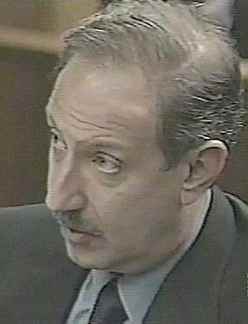 |
|
Mark Geragos |
ATTORNEY GERAGOS: Thanks. First, there’s the, I think
Mr. Sequeira probably misspoke when he says the motive is trivial. And he talks about this
idea that somehow this is, Mr. Sequeira at least, talks about it as an Armenian genocide. I
think what Mr. Sassounian told you here today was as candid as -- certainly I have not done
as many of these Hearings as you gentlemen have done and certainly not as many as Mr.
Sequeira -- but I don’t think that I’ve ever seen an inmate be as candid as to what
happened, what his motivations were, and frankly, when Commissioner Mejia asked the question
about was it coincidental that in 2002 you finally have said something, or copped out, or
made a statement, and did that come in conjunction. And he says “I’m not going to lie to
you, I’m going to tell you that, yes.” If he was trying to be, as Mr. Sequeira had
implied, calculating, the obvious answer would have been well, that was the end of the line
for my legal appeals and I didn’t have to talk anymore as opposed to well, no, part of the
calculus of this was I was, that I got a plea bargain to some degree that allows me now to
be eligible for parole. Well, obviously, I mean this whole system is set up with
carrot-and-stick type operation. That’s the capitalist system, it’s set up with the
carrot-and-stick type operation. And when the Commissioner was saying “have you taken
advantage of these programs?” We have these programs precisely because we want people to
be encouraged, to have a reason to go into them. And that’s precisely what was done. The
fact that it coincides with his aging process and with his maturation and with the end of
the line of his legal appeals, I think is somebody who’s telling you, or speaking, from
his heart. It is, I’m sure, to at least three or four of us in this room, myself not
included, it’s hard to understand what could have driven him in 1981 or 1980, leading up
to this assassination in 1982. I’m sure that Mr. Sequeira and, I don’t know you
gentlemen as well, maybe, that it’s unfathomable. How could this be? As Mr. Sequeira says,
it’s mind-boggling to him, how could it be that the Armenian community, maybe
overwhelmingly, views him as a hero. Why would that be? I mean it just seems kind of
mind-boggling. [31] Part of the reason is found in
your own paperwork here, that we’ve got here. The letters from the Turkish Ambassadors.
The letters from the Counsel General. In which you will find nowhere, anywhere, is the word
“genocide” used. It was never used. They always called it the Turkish-Armenian conflict
or other such euphemisms. When Mr. Sequeira uses the word “genocide” most
representatives of the Turkish government cringe. The reason for that -- and I’m Armenian,
even though I’ve got one of these names that’s kind of been bastardized and most people
think it’s Greek -- but the reason for that is because there isn’t a single -- well, I
shouldn’t say a single -- but there’s probably not two percent of the Armenian
population, and there’s upwards of a million of us in California [32], who didn’t come here as a result of the genocide. We didn’t
ourselves, I mean the number of survivors now is down to a very finite number. But every
single one of us, no matter who you are, grew up hearing the first-hand accounts from either
our parents or our grandparents. And they were awful, awful accounts. I remember my
Grandmother Baritza (phonetic) telling me about how she, as a nine year old girl, fled the
genocide, saw her older aunt who was pregnant have the Turkish soldiers slice her belly open
and spear her and shear her little child. And they’re awful stories, awful. [33]And you would hear about them and you would hear about them constantly
because it was part of what kind of tied the community together. [34] I mean the fact that for so many years the, the Armenians had to flee to
Syria or they would flee to Lebanon or to Paris and then eventually to America. [35]And we ended up here, starting in Fresno, and now in
Glendale and some of these other areas that have become Little Armenia’s. And it seems, I
guess the characterization that Mr. Sequeira made was “trivial.” But it wasn’t trivial
I think in the context of the 80’s, when there was no Armenia, when Armenia was part of
the Soviet Union, and when there was a denial, and there still continues to this day, a
denial of the genocide. Almost as if saying that if your grandmother tells you these things
that happened your grandmother is a liar, your parents are a liar, and everything else. [36] So I understand that, to the average person this
seems like an ancient blood feud so to speak that’s been brought over here and why has it
been brought over her, but it carries on, it’s been transmuted, into something that is
inherent in the culture. When Mr. Sequeria talks about the AYF and the ARF, with these
ominous sounding names, what the AYF and the ARF were, when they originally started because
in the Diaspora they were the missionary organizations that gave aid and comfort to the
orphans that were there and everything else. So you can make them out to be these kinds of
boogeymen, in terms of what they are, but the AYF and the ARF -- frankly, the AYF, at least
where I come from in Los Angeles, is one of the most active youth organizations, in terms of
keeping at-risk youth off of the streets. They are, they do God’s work, so to speak, in
terms of that. So this idea that somehow the AYF is kind of a training ground for future
terrorists just isn’t there. [37] As Mr. Sassounian
said, there has not been any violence towards Turks or members of the Turkish government in
over 20 years, that’s the historical fact. And the reason for that, I think, is fairly
simple, because as the Soviet Union disintegrated you got a Republic of Armenia and, as Mr.
Sassounian has said, all of that angst, all of that hostility, all of that community anger
towards the Turkish government was shifted. There was almost a cathartic release. You could
see, as Armenia came along and in to being, that the Armenian community was able to focus
more on building Armenia, which is what it does now, which is what most people in the
Diaspora do now, build Armenia, get Armenia going, and that’s kind of where the focus is. [38] And yes, to this day is there still every April 24th
a Genocide Resolution that deals with trying to force the Turks to recognize it? Absolutely.
Do the Turks still deny it? Absolutely. Is that an issue that’s up for discussion? Well, I
don’t think so. As an Armenian, I think it’s tantamount to people who deny the
Holocaust. But it’s a political discussion, it’s no longer connected to violence and it
has not been for almost a generation. So, against that backdrop, we’ve got him now. Well,
we’ve tried to, I think, and I think both of the Commissioners asked some really probing
questions, to see where he is now. And he’s almost, and it’s interesting, he’s almost
moved identically to where a large portion of the community has moved. A large portion of
this community had that kind of anger and hostility back in the 70’s and the 80’s. And I’m
not saying that a large portion of the community sanctioned violence, I don’t mean to even
remotely suggest that. [39] But there was this idea
that, without a country and with the Turks denying the genocide, as they continue to do
today, there was a great deal of anger. There was a great deal of how could this be? How
could the Holocaust be confirmed and the genocide not? But Mr. Sassounian has reflected,
along with the Armenian community, that kind of maturation process. They’ve got the
country, he wants to go back to that country, and what has he done, he’s, as recently as
five years ago -- and I don’t think that that’s, it’s not a recent revelation, five
years is a long time, it’s a half a decade, in his life, at 42, it’s almost one-eighth
of his life -- he admitted to it. And he didn’t have to admit to it. He had a lawyer, me,
who was perfectly content to try that case. In fact, when the case was reversed from the
Ninth Circuit and my father had tried it when I was in law school and it came back and I
kind of inherited the case, and I was perfectly willing to try it. We got one of the special
circumstances dismissed. He had the option, go to the trial, and the trial judge, Mr. Perry,
had indicated that he didn’t think that the prosecution could make the case on that one,
because it would have been just on the special circumstance, which was national origin, as
Mr. Sequeira said, but he had the option and he took the option, rather than to try the
case. If he wanted to be a hero, I can tell you, I was at every one of those court hearings,
those courtrooms were jam packed with Armenian youth and the very people that Mr. Sequeira
is talking about, the Armenian Youth Federation. Every single one of those court appearances
that we went to. And they were supporting him. [40]
There were people outside of the courtroom and everything else. When you ask how can we get
it, and the Commission asked the question but Mr. Sequeira was the person who suggested it,
well, he did get the message out there. Because what he chose to do -- if he wanted to
continue to be a martyr he had a very easy way to go, we were set for trial, he did not have
to take the deal. The judge, the trial judge had already indicated that he did not think
that the prosecution was going to make their case on the thing, on the special
circumstances. He could have gone to trial. He would have lost his option for parole but
frankly most people back, at least if you take yourself back to 2002, that was a political
milieu when nobody got paroled. I mean, if you had committed murder the expectation was don’t
ever take anything with the life off, it doesn’t matter, it’s just the same as having an
LWOP. But he made the choice, no, I want to do it, I don’t want to go through with it, and
I’m willing to make a statement. And he made that statement, in open court, in a packed
courtroom, with AYF members present, along with survivors present. There were a number of
people who had survived the genocide who were in that courtroom that day. He did it. That
was reported promptly. And that went, spread like wildfire throughout the Armenian
community. He doesn’t have any other way to do it except in a courtroom because that’s
all he’s, you know, he’s been basically a professional defendant for his entire adult
life, literally, save for one year this guy’s been a professional defendant. The one time
he had the option to go down and be the martyr of all martyrs, and go to trial, and let me
litigate, mind you, the national origin, special circumstance. I mean, if you want to be a
martyr and you want to show the cause and you want to carry the flag for the cause what
better way to do it than in a downtown LA courtroom, where your sole issue is was it done
for national origin. And to litigate the whole Turkish-Armenian struggle and what the Turks,
the genocidal brutality of the Turks. He could have done it and he didn’t. He chose the
other option. Now you can say well, that’s selfish, I mean, I think Mr. Sequeira’s
saying that’s selfish, he took the easy way out, well, I’d just suggest one more time
you gentlemen know as well as I do, nobody in 2002 was expecting that if you’re a first
degree murder convicted with a parole date that that’s meaningful in any way, shape or
form. We’ve moved somewhat, a little bit, since then, but certainly that was the remotest
of chances for him. And he took the option that Mr. Sequeira seems to suggest he didn’t
take, which was he stood up in that courtroom, when it was being reported by every Armenian
news organization, and he admitted involvement. [41] So
I have to categorically reject, because I was there, this idea that he hasn’t done
anything to stick a fork, so to speak, in that idea. What has he done since then? Well, you
know, it’s fine to cite platitudes and it’s fine to say it’s cold, it’s calculating,
this or that. But part of what we’re here to do, the awesome burden you gentlemen have, is
to make an evaluation. What are the likelihoods? Well, we’ve got the mental health
evaluation. It wasn’t somebody that I hired. It was, obviously, the person that you
gentlemen and this facility uses. And what do they say? They say that they’ve taken the
three instruments and that on each instrument he can be scored low, moderate or high. And
the overall test results suggest that the risk for recidivism on a violent crime, while in
the free community, is within the low to low moderate range. You don’t get much lower than
that, I guess, I mean, I guess you could just be in the low range. But low to low moderate,
there it is. This is a guy who has an enormous, enormous, ability to reflect on what he’s
done and come up with it. You know, the irony of this, so to speak, is that here’s
somebody who commits a single act of murder, who’s able, within 25 years, to talk about
it, admit his involvement, stand up in front of the community and admit it at great personal
sacrifice to whatever reputation Mr. Sequeira seems to suggest he was carrying. Whereas the
Turkish government, 90 years later, still won’t admit that they murdered a million and a
half and call it a conflict or blame the Armenians or this or that. There is a degree of
irony there. [42] But the fact of the matter is we’re
not litigating and you gentlemen are not deciding the genocide here, you’re deciding
whether or not this guy has the ability to be somebody who exists in free society. Well, the
other thing that I would point to -- and Commissioner Mejia, you went through it -- he hasn’t
been violent since 1998, and when Mr. Sequeira says he can’t get along well, you know, you
went through and you read every single one of those things, and like I say, I defer to you
gentlemen because you’ve seen a lot more of these, but for somebody who’s been in for 25
years and to not have something since 1998 and to have been in the laundry list of prisons
that he was in and do the kind of time that he did, that seemed to me -- and never used a
weapon, and everything, to be, what he characterized as a ten year old, I’ll call it a
fourth grade girl fight, doesn’t seem to me to be anything to kind of hang your hat on.
And if you can’t find anything violent since 1998, you know he still was on appeal until
2002. So there was a four year period before 2002 where there wasn’t anything of any great
moment. He’s also now gone and done these programs. He was on the Honor Yard prior to any
of this stuff and having any ability to do this and there’s nothing, nothing in all of
these records save a bunch of stuff that revolves around the crime itself. Well there’s,
as you well know, there’s nothing he can do about the crime itself. As you well know there’s
all kinds of litigation now, in the courts at least, as to whether or not that’s a
significant factor or the only factor or the determining factor. I would suggest that the
determining factor is that you’ve seen somebody who’s come to grips with it, who’s
dealt with it, who did the right thing and admitted the involvement, has come here and been
extremely candid with you today, has answered all of the questions without hesitation, even
when it was not in his best interest if he were calculating. I mean, if he were calculating
there’s a lot of ways --
(recording stops temporarily, apparent loss of electricity in room)
-- maybe that’s an omen, so I’ll close it up. The, as the lights go off all I’ll say
is that I think that this is a gentleman who would be a great candidate for parole, a
dynamite candidate for parole. I don’t see anything that I’ve seen or heard today or
anything that I’ve reviewed in the file that would suggest otherwise. And for those like
Mr. Sequeira, who worry that paroling him or that he’s become a hero, well, what I’d
tell you is keeping him in custody longer certainly does nothing to tarnish that. It would
have probably the opposite effect to let him out. [43]
When Mr. Sassounian says the average person -- not the average person because I think the
average person doesn’t know all that much about the Turks’ brutal genocide of the
Armenians -- but the average Armenian think that he’s done enough time, well, I don’t
know what the average Armenian would think. But I know that when I looked at the statistics
for the Department of Corrections I believe that the average amount of time for a first
degree murder inmate is 25.8 years, which is almost exactly what he’s got in. And as you
gentlemen well know, so much of crime is a product of the age group in which it’s
committed, and he’s past through that at this point. I don’t think that there’s any
risk, any whatsoever, that this gentleman is ever going to commit any other crime. I think
that the overwhelming odds, in fact I’d be willing to lay large odds on it, that the
overwhelming odds are that he’s going to go on to lead a quiet, productive life and nobody’s
going to ever see or hear from him again if he’s freed up. And I thank you and I’d
submit it.
|
|
PRESIDING COMMISSIONER DAVIS: All right, thank you. Mr. Sassounian, now is your
opportunity to address the Panel directly and talk about your suitability for parole.
INMATE SASSOUNIAN: Well, sir, I believe that I am, that I will not harm anybody in my
life, I am no doubt about it, you know, that I have, that I believe you’re not
looking at that 19 year old kid anymore on the street that was waiting go shoot
somebody. And I understand the damage I done to the victim and I know this is
something you hear all the time, but I wish if I could give my life to bring him back
I would, you know. And, but you hear that all the time and it’s, it’s not
possible, you know. But I feel the wrong I did, you know, and there’s no excuse for
it, you know. And I feel like an idiot. It’s, when the psych ask me how do you feel?
It’s embarrassing, you know, that everybody here, you know, you guys, the CO’s,
you guys, you know, you guys made it in life, man, you graduated, went to school and
college and graduated and made something out of your lives, you know. But I failed,
you know. And at the time the genocide thing was like somebody was pounding my head
with a hammer. It was, it had a devastating effect on my life, you know. And like I
said before, at the time I thought, you know what, if they could torture us we could
shoot, we could do it to them, you know. And that’s what I felt at the time. But I’m
not that 19 year old kid anymore. I’m 43 years old now. I’ve been locked up more
than 60 percent of my life. And I have learned that violence will not accomplish
nothing, man, not in on the streets, not in politics, not in prison. And I’ve seen
in prison violence. It doesn’t accomplish anything, you know. And the only way to go
is communication and apology and forgiveness, you know, that’s the only way it’s
going to work, you know, there’s no other way, you know. And I feel for the Arikan
family, you know, and I feel what his wife went through, what his daughter went
through, those daughters went through. And, you know, I took a man’s life, you know,
and I deeply apologize. It was something horrible I did and I sincerely regret it. And
I sincerely apologize to his family, you know. And as far as going outside I have no
doubt in my mind, sir, that there was no, absolute no way that it’s going to happen,
I will never be part of any crime, I will never be, you know, so much as spit on the
sidewalk. I’m tired of it, I’m old. I have dreams of one day getting married and I
might have my own family and I wouldn’t want nobody to harm my family, you know. And
again, I understand and I feel the suffering of the family, man, you know, and again,
I apologize to you and I apologize not only to the Arikan family but also to the
government of United States, also to the state of California that I did something like
that in the state, you know. And I love this country, I respect this country and I
love these ways, you know, and I learned tremendous things from United States, to know
that apology, acknowledgment and forgiveness, you know, that is part of life. I
understand that, you know. And I know that I will, you know, if you guys, if I was
lucky and you guys would grant me a parole or give me a date that I will never let you
down, not only you but my family and my friends and everybody. And I know that I will
be a decent citizen out there and a respectable human being. And I ask you guys that
give me a second chance and accept my apologize too. It’s sincere, if it wasn’t,
like I said, I will not lie to you, now or never, you know, and I’m not lying to
you. I feel the pain I suffered to the Turkish people and its family, the victim’s
family, and the law broking in the United States, in southern California. And I
sincerely apologize. And thank you. [44]
PRESIDING COMMISSIONER DAVIS: All right, thank you very much. We’ll now recess for
deliberation.
R E C E S S
--o0o--
CALIFORNIA BOARD OF PAROLE HEARINGS
D E C I S I O N
DEPUTY COMMISSIONER MEJIA: We’re now back on the record on the matter of the
decision of Mr. Harry Sassounian.
PRESIDING COMMISSIONER DAVIS: And let the record reflect that all those previously
identified in the room have returned. This is in the matter of Harry Sassounian, CDC
number C-88440. The Panel reviewed all information received from the public and relied
on the following circumstances in concluding that the prisoner is not suitable for
parole and would pose an unreasonable risk of danger to society or a threat to public
safety if released from prison. We come to this conclusion, first and foremost, by the
commitment offense itself. The offense was carried out in an especially cruel and
callous manner. The offense was carried out in a dispassionate and calculated manner;
this was an assassination. With regard to motive, it is not enough, the Panel
believes, to refer to the motive as either inexplicable or trivial. The Panel believes
that, in Mr. Sassounian’s mind, the motive was neither. His actions against Mr.
Arikan, however, were no more just, correct or excusable than the wrongs he thought he
was addressing. These conclusions are drawn from the statement of facts wherein the
prisoner, together with his crime partner, planned, scouted, and carried out an
assassination of the victim, who was the representative of a government for which Mr.
Sassounian held a historical and current grudge for the treatment of his people. The
victim, Mr. Arikan, and Mr. Sassounian had no personal contact. Mr. Arikan died
because of his ethnicity and his position. Given the location where the murder took
place we are truly fortunate that there were no additional victims. With regard to a
previous record we find that it consists solely of an arrest for forgery. There is a
failure, however, of a grant of probation and a failure to profit from society’s
previous attempts to correct his criminality, specifically adult probation and county
jail. With regard to institutional behavior we find that he has programmed in a
limited manner while incarcerated, that he has failed to develop a marketable skill
that could be put to use upon release, and failed to demonstrate evidence of positive
change. Misconduct while incarcerated includes 13 128A counseling chronos, the last of
which was in 12 of ’05; and 12 serious 115 disciplinary reports, the last of which
was in January of ’01, four of which were for violence. The last one for violence
was in 1998. With regard to the psychological report dated July of 2006 by Dr. Glines,
the Panel finds -- excuse me, let me go off the record for just one minute --
H. SASSOUNIAN C-88440 DECISION PAGE 2 08/31/06
[Off the record.]
DEPUTY COMMISSIONER MEJIA: Okay, we’re back on record.
PRESIDING COMMISSIONER DAVIS: All right. With regard to the psychological report dated
July of 2006 by Dr. Glines, G-L-I-N-E-S, the Panel finds the report inconclusive. The
risk is listed as low to moderate range. However, the Panel is concerned that the
report does not address Mr. Sassounian’s current feelings or belief regarding his
mental state as regards the use of violence to resolve political issues. It appears
that the inmate’s statements were reported rather than analyzed. With regard to
parole plans we find that there is a US INS hold. The Panel is concerned that, while
we have no doubt that Mr. Sassounian would have support in his country we do need to
have, however, verification. Specifically, parole plans need to be specific as to
where you’re going to live, what kind of a job you’re going to have --. It’s
hard to have too much in that area. Job offers should come on letterhead, signed by
the person who is authorized to hire you for that particular position and, if
possible, include generally what the type of work is that you will be doing so we can
see if that’s something that you have trained for and so forth, if it’s an
appropriate job. And, if possible, what kind of a salary range you would be making.
All the kind of things that you’re going to want to know anyway as you prepare. With
regard to 3042 notices we note that the district attorney from Los Angeles County is
here in person by representative and does oppose parole as does the Los Angeles Police
Department; the Los Angeles Police Department being the law enforcement agency
responsible for the investigation into this crime. As does the letter from the
Ambassador of Turkey and the Councilmember Zine. With regard to gains, we find that
the prisoner’s gains are recent and he must demonstrate ability to maintain those
gains over an extended period of time. I know there may be a variety of reasons for it
and you were very candid with your comments in this regard. But the majority of your
gains have come since 2002. Nevertheless, we do want to commend you for a variety of
things, not the least of which are receiving your GED in 1990, your CROP Program, the
Convicts Reaching Out To People, in 2003. Your access to the Honor Yard while being
housed in Lancaster. Your Anger Management course in 2006 over at CLN. Your Inside Out
Life Skills Anger Management, also over at CLN. And Victim’s Awareness, also over at
CLN, as well as your recent participation in AA in 2006 and your work in the PIA shoe
factory with above average work reports. However, these positive aspects do not
outweigh the factors for unsuitability. In a separate decision the Hearing Panel finds
that the prisoner has been convicted of murder and it is not reasonable to expect that
a Hearing would be granted during the next four years. We come to this conclusion
first and foremost by the commitment offense itself. The offense was carried out in an
especially cruel and callous manner. The offense was carried out in a dispassionate
and calculating manner, this was an assassination. With regard to the motive, it is
not enough to simply say that the motive, or to call the motive inexplicable or
trivial. The Panel believes that, in Mr. Sassounian’s mind, the motive was neither.
His actions, however, against Mr. Arikan were no more just, correct or excusable than
the wrongs he thought he was addressing. These conclusions are drawn from the
statement of facts wherein, together with his crime partner, he planned, scouted, and
carried out the assassination of the victim, who was a representative of a government
for which Mr. Sassounian held a historical and current grudge for treatment against
his people. The victim and Mr. Sassounian had no personal contact or personal
relation. Mr. Arikan died because of his ethnicity and his position. Given the
location where the murder occurred we are truly fortunate that there were no
additional victims. With regard to a prior record we find that the prior record
consists of one arrest and conviction for forgery, for which there was a failure of a
grant of probation as a result of the incident offense, and a failure to profit from
society’s previous attempts to correct criminality, specifically adult probation and
county jail. With regard to institutional behavior we find that you’ve programmed in
a limited manner, failed to upgrade and develop a marketable skill that could be put
to use upon release and failed to evidence a positive change. Misconduct while
incarcerated includes 13 128A counseling chronos, the last of which was in 12 of ’05,
and 12 serious 115 disciplinary reports, the last of which was in January of ’01.
Four of those chronos were for violence. The last one for violence was in 1998. With
regard to the psychological report dated July of 2006 by Dr. Glines we find that the
report is inconclusive. It lists the risk as low to low moderate range. However, the
Panel is concerned that the report does not address Mr. Sassounian’s current
feelings and beliefs regarding his mental state as regards the use of violence to
resolve political issues. It appears that his statements were recorded and not
analyzed. With regard to parole plans, we do find the parole plans are not sufficient
for all the reasons previously recorded into the first decision. With regard to 3042
notices we note that the district attorney from Los Angeles County is here in person
by representative and does oppose parole as does the Los Angeles Police Department by
letter, the Los Angeles Police Department being the law enforcement agency that’s
responsible for the investigation of the crime. There were also letters from the
Ambassador of Turkey and from Councilmember Zine. With regard to gains we find that
the inmate’s gains are recent, that he must demonstrate an ability to maintain these
gains over an extended period of time, the majority of the gains have come only since
2002. With regard to recommendations, the Panel recommends that you have no more 115’s
or 128’s; that as available you upgrade vocationally; and that as available that you
continue in your self-help; that you earn positive chronos; develop your parole plan;
and we are -- because of the time, we are going to ask for a new psychological report
and include in it all the standard language. We’re also going to ask that that
psychological report evaluate the inmate’s ability to maintain gains regarding his
resolution of political and historical grievances through non-violent means. Do you
have anything you’d like to add to this, Commissioner?
DEPUTY COMMISSIONER MEJIA: Yes. Mr. Sassounian, it appears that four years is a long
time. But you’re definitely on the right direction. I’m pretty much impressed with
your candidness. And you’re definitely on the right track, it’s just too recent,
2002. You need to continue your self-help. AA enrollment, NA, and start
reading books and give us book reports on what you’ve learned with regards to issues
about violence and how to resolve conflict. The ABP is good for you. Continue that,
and also give us a vocation, that you can show that you’ll be marketable on the
streets. It’s real important. You’re definitely on the right track. And good luck
to you, sir.
PRESIDING COMMISSIONER DAVIS: All right, and with that we wish you the best of luck
and we are adjourned.
--o0o--
PAROLE DENIED FOUR YEARS
THIS DECISION WILL BE FINAL ON:Dec.29, 2006
YOU WILL BE PROMPTLY NOTIFIED IF, PRIOR TO THAT DATE, THE DECISION IS MODIFIED.
H. SASSOUNIAN C-88440 DECISION PAGE 8 08/31/06
CERTIFICATE AND
DECLARATION OF TRANSCRIBER
I, Robert Tootle, a duly designated transcriber, VINE, MCKINNON & HALL, do hereby
declare and certify under penalty of perjury that I have transcribed tape(s) which
total two in number and cover a total of pages numbered 1 - 134, and which recording
was duly recorded at CALIFORNIA MEN’S COLONY-EAST, at SAN LUIS OBISPO, CALIFORNIA,
in the matter of the INITIAL PAROLE CONSIDERATION HEARING of HARRY SASSOUNIAN, CDC No.
C-88440, on AUGUST 31, 2006, and that the foregoing pages constitute a true, complete,
and accurate transcription of the aforementioned tape(s) to the best of my ability.
I hereby certify that I am a disinterested party in the above-mentioned matter and
have no interest in the outcome of the Hearing.
Dated NOVEMBER 27, 2006, at Sacramento County, California.
Robert Tootle
Transcriber
VINE, MCKINNON & HALL
|
| |
0. Is there corroborating
evidence for this information? If not, they could have come up with just any name, and the
story of his convenient demise. Could it be that Hampig's partner, or "crimee," is
being protected?
1. The conspiracy of too many Armenian parents, teachers and churches
to indoctrinate innocent Armenian youth
with thoughts of "genocide," in order to recruit soldiers for Hai Tahd (the
Armenian Cause), can produce nothing but hatred. Sometimes this hatred manifests itself in
physical destruction, as in the case of Hampig Sassounian, but the result always winds up
with violence, generally in the form of breeding further hatred.
2. For all we know, he could have been
telling the honest truth. But let's think about this for a moment. He's part of an Armenian
youth organization where he and the rest are being brainwashed to death; that is, these
youths are all part of a Dashnak network. Does it sound like he would have been acting
alone? We'll get back to this critical point.
3. In other words, these fanatics can be
so out of their minds with this "religious" and faith-based genocide
indoctrination, simple disagreement can invite the possibility of harm. Harm comes in many
forms; sometimes murder, sometimes the bombing of homes (as Prof. Stanford Shaw suffered a
few years before this event, also in California), and these days mainly in the form of
character assassination, or "Rufmord,"
which can sometimes be even worse than physical violence.
4. Many of the young fanatics today think
along the same lines, except these days lashing out thankfully stops short of bombs and
bullets. Yet thoughts of revenge constantly occupy the minds of these poor souls, and since
getting back at those who are in disagreement can't be countered with the pure historical
facts, these fanatics hit their victims in other ways that they hope will hurt... such as
trying to get "genocide deniers" fired from their jobs. We can see the evil
produced by genocide propaganda; to young Sassounian, it was only the Armenians who were the
victims, just as his false history taught him. In the next paragraph, he will talk about an
Armenian church getting bulldozed in Turkey. Maybe it happened, maybe not; but we can be
sure whatever Armenian newspaper he learned that from never mentioned the great number of
Armenian churches preserved in Turkey, any more than his propagandistic source would have
mentioned the hundreds of thousands of innocent Ottoman victims the Armenians slaughtered in a real systematic
extermination campaign.
5. The rules of honest history, of course, entail
examining all sides of an issue. When one looks at only one side, as Sassounian did and
obviously still does, then one would be dealing with "propaganda."
6. Unlike the Boy Scouts, these Armenian
youth organizations (the AYF, or "Armenian Youth Federation" in particular) are
breeding grounds for hatred and fanaticism. Here is a modern example, where innocent young children are taught to idolize
Armenian terrorists; if you click the link, you will learn that when asked which Armenian
hero these youngsters would most like to meet, one twelve year old replied, Hampig
Sassounian! (The reason? "[B]ecause to live in the U.S. today and to care
about his Armenian nation so strongly really amazes me and makes me proud to be
Armenian.")
7. Earlier Sassounian claimed that he
liked history, yet too bad he didn't take the trouble to learn that these lands were already
occupied before the Turks came in, by the Armenians' persecuting co-religionists, the
Byzantines. Beyond that, he would need to wonder who owned these lands to begin
with.
8. What exactly did he do before, to vent
his frustration? A few lines ago, he admitted that he didn't even write letters! So
obviously he did nothing "peacefully," and turning to murder was a first, and not
last resort.
9. And that, folks, is worth the price of
admission; indeed, Sassounian hit the nail on the head. With all of the hatred and prejudice
drummed into him and so many, many other Armenians, the Turks cease to become human beings.
This was the racist mentality their forefathers suffered from, enabling them to embark on
their systematic extermination campaigns. As an example, when returning German P.O.W. Otto
Fensher stayed in Erzerum and witnessed Armenian atrocities, he reported the rape and murder
of a Turkish girl to an Armenian policeman, who " just shook his shoulders and said: 'It
is no big deal. She was Turkish. All Turks
must be destroyed.'"
10. Sure; shooting guns is a normal
hobby for teenagers.
11. A beacon of truth! Brings tears to
the eyes, but then we must keep in mind what the missionary Cyrus Hamlin wisely instructed
(in an 1893 article, after conversing with a
Hunchak terrorist): "Falsehood is, of course, justifiable where murder and arson
are." First he tells us that he kept his lips sealed for over twenty years, which
is quite a feat. Then we had not one but two fellow cons who squealed on Sassounian. Why
would they have lied? (Let's say one had reason, but two?) It was around this time (the
early 2000s) that Sassounian's lawyer (bolstered by a fund-raising campaign which netted at
least $70,000; in the first trial, Armenians had pitched in a quarter-million dollars)
attempted to get the case dismissed, but then Sassounian suddenly confessed.
Note also how the judge tried to get out of Sassounian why it took so long for Sassounian to
confess, or to tell the truth, but Sassounian evaded the answer. All of these years, this
man who tells us he does not lie, was proclaiming his innocence.
12. The father was as much a genocide
nut job as his sons. This is a good example of how this mindless hatred is transferred from
one generation to the next. (After Sassounian's arrest, the father stated on television,
"I am glad that a Turk was killed, but my son did not do it.")
13. Let's make a note of that; brother
Harout Sassounian took a stab at killing Hampig Sassounian's very same victim earlier. Yet
Hampig gave the idea that his murderous plans was just between him and his "crimee."
Is it conceivable that the two brothers sharing the same goal never put their heads
together? (Incidentally, the hardcore activist-publisher of the California Courier
who bears the same name as Hampig's brother is probably unrelated.)
14. Brother!
15. There are points in this hearing
where Sassounian came across as being quite honest, and this was one of them.
16. Three assassinations took place in 1984, and Armenian terrorism continued for years beyond.
17. If he was born and grew up in
Lebanon, holding a Lebanese passport, wouldn't Lebanon be his country? I don't know if
circumstances prevented him from becoming a citizen in the United States (he will say later
that he has "immigration hold," which is the lot of permanent residents in
criminal custody, and could be subjected to deportation — that means getting booted
out of the country, unlike what happened to 1915 Armenians, relocated within the country),
but having spent six pre-murder years in the USA, could not the USA be his country? He never
even set foot in Armenia, so why is Armenia "his country"? (This is a rhetorical
question.)
18. Armenia has an excellent history of welcoming their terrorist
heroes with open arms and in supporting them, so Sassounian may not have too much to
worry about. In fact, later in the hearing the attorney will say that Sassounian has
"multiple offers from people in Armenia."
19. This Geragos is really on the ball,
isn't he? It was only at the beginning of this very hearing where the crime of Consul
General Arikan's house being bombed by Harout Sassounian was stated. Obviously, Arikan was
alive at the time, so this crime had to pre-date Hampig's. (Harout's crime took place in
Oct. 6, 1980.)
20. Have we got that now? More than a
year goes by after Harout attacks the same man Hampig will target, and Harout never said
anything to Hampig, nor did he serve as an influence.
21. So when the JCAG (which is an arm of
the ARF or Dashnaks, whose subsidiary, the AYF, was the group Hampig was a part of) made the
phone call to claim credit for the hit, why did the JCAG claim credit for the hit?
22. So perfectly innocent! The AYF was patterned after the Hitler
Youth, and its first name, Tzeghagron, meant "to make a religion of one’s race."
The key of Sassounian's statement to focus on is the "history classes" the AYF
would brainwash their impressionable youth with.
23. So the Republican Party is a
terrorist group? Our boy is being completely disingenuous here. Who knew that the ARF
was like Robin Hood, representing the poor? History tells us these greedy, sociopathic
Dashnaks sucked the blood of their people, and made the poor poorer. (Not only as they
worked to drive a wedge between Armenians and Muslims of the Ottoman Empire, but when they
ran the government of Armenia into the ground between 1918-20, a tradition the Dashnaks are
following today.) Sassounian goes and becomes a tattooed bulletin board for the ARF, and he
has no idea of the immense blood on the hands of the ARF. And he knows nothing about the
JCAG, which is the group created by the ARF, in response to ASALA, the other main terrorist
group siphoning off Armenian recruits. It's all so very innocent, isn't it?
24. This is really all too much. The
reason why these birdbrains posed with their machine guns is because they were emulating the
fedayees of the glorious terroristic old days. Sassounian is pathetically trying to
make it sound like machine guns were part of the shooting range. I don't know of any
shooting range that carries machine guns! Even if, by some lark, machine guns were featured,
it is doubtful the shooting range would have allowed their customers to take the guns away
some distance for the purpose of taking pictures. It's quite apparent these fanatics owned
these dangerous weapons. Then Sassounian tries to evade the issue by going for the sympathy
vote in classic Armenian style, weeping over how poor his family was to own a camera. Yet
another poor, innocent Armenian.
25. Perhaps Sassounian was inspired here
by the "daddy" of Turk-assassinators, Soghoman Tehlirian. Tehlirian also tried to make it seem he was acting entirely alone, when
in faact he was part of an elaborate hit squad.
26. Now we're getting to the crux of the
matter. It is doubtful, however, that we are going to get a sincere response.
27. Earlier, Sassonian acknowledged he
was an "idiot" when 19, but perhaps there has been a mild carryover effect. For
one so into politics, he should realize no country operates in such a fashion. America
is not going to tell their native people that the land is the Indians', and give the land
back. (And that is in a case where the land was directly taken from its original owners.
When the vicinity of that old geographic expression "Armenia" was conquered, the
Armenians weren't even in charge.) And for the record, Turkey did propose "Okay,
show us, you know, let’s talk, like human beings" to Armenia in 2005, with the
idea of sorting out the historical details. Predictably, Armenia wasn't going to go near
this one; are they crazy, to endanger their most successful and profitable scam going?
28. That may have been the reason why
Sassounian took part, but the real reason for the terrorism taking place was to put the
"Armenian Genocide" on the map of the world's consciousness.
29. This is another excellent question
by the Deputy District Attorney getting to the crux of the matter, and the real answer is
that Sassounian is not ready at all to build bridges to brotherhood. He is still genocide
crazy, and his Dashnak-instilled "Hate the Turk" mentality is alive and
well. He might have thought the message for him to bring to other impressionable
Armenians was not to be violent, but the real message for such a "former" fanatic
would be tell Armenians there was no genocide. Such would entail the wiping out of
the vicious propaganda that has played such an integral part in his crime, and to study
genuine history. But that would be a near-impossibility for someone as far gone as him.
30. Yet another masterful job of evasion
from our poor, innocent terrorist. The L.A.-Five's Berberian was also a member of the JCAG,
and yet as far as Sassounian is concerned (in full knowledge that the D.A.'s office has no
evidence to connect the two former genocide commandos), it is "Berberian who?" For
more on the L.A.-Five, click here.
31. Stay tuned; he is actually going to
attempt to justify this murder, in a sense, and take a terribly inapporpriate cue to spread
genocide propaganda. Talk about mind-boggling!
32. The number is less than 232,000, according to the latest
census. (At least he did not use the Armenians' favorite exaggerated number, "1.5
million.")
33. Yes, Turks also received their share
of horror stories from their grandparents, survivors of the Armenians' systematic
extermination campaign that claimed some half-million lives. (As opposed to about half a
million Armenians who died from all causes, not just massacres.) The difference is, the
Turks made the mature decision to move on, and not to instill hatred in each successive
generation. It would have been good for Geragos to have explained, by the way, that if the
Turks' aim was extermination, why did they stop with the murder of his grandmother's older
aunt, when the nine-year-old grandmother was so easy for the taking? And could the gruesome
tale of murder have been exaggerated? We know Armenian atrocity tales were not exaggerated,
because the ones reporting the hideous details were, for one, their own allies — serving
as firsthand witnesses. Talk about "awful, awful" stories that were real.
34. Big truth spoken here. Sadly, tales
of "genocide" and the perpetuation of hatred is precisely what still ties the
Armenian community together. Nothing like a common enemy made to appear as less-than-human
to tie a community together; Hitler knew this lesson well.
35. As quickly, we are back to
untruthful territory. Did these Armenians "flee"? Ones who were sent to the Arab
regions as part of the temporary resettlement policy decided to remain, and those who left
for countries like France and the USA took advantage of these sympathetic Christian nations'
open-door policies, and left by choice. The Patriarch tells us nearly one half of the
pre-war population of some 1.5 million stuck around
by 1921, and every Armenian who had left had the option of returning, if they so desired.
36. Not that such people would
necessarily be liars (although the Armenian knack
for invention through the ages has been recognized by many), but the memories of
nine-year-olds, particularly in a climate where Turkish demonization serves as cause for patriotism, can not substitute for
real history. In addition, as the book "Eyewitness Testimony: Civil and
Criminal" informs: "Under conditions of great stress people are poorer
perceivers, because stress causes a narrowing of attention."
37. The terrorist-glamorizing and
hatred-conditioning AYF has now been made into an organization performing "God's
work." Simply shameful.
38. Is that why Armenia has lost around
a million of its population in the last decade or so? If the focus is so much on building
Armenia (aren't there spots in the USA that can also stand rebuilding? Should Armenia always
come first in the eyes of Armenian-Americans?) why doesn't this fellow and other
California-Armenians move to Armenia? In addition, the fact that Armenia gained independence
through the fall of the Soviet Union was mere coincidence; the terrorism was on the way out
for a few reasons, one being that the word "terrorism" was being seen as
synonymous with "Armenian," and that was hugely counter-productive to the
sympathy-seeking cause. Furthermore, the goal was achieved; by utilizing the techniques
perfected by the Dashnaks in the 1896 Ottoman Bank takeover (terror as a means to gain P.R.),
the "Armenian genocide" became known throughout a good part of the world.
39. Why, perish the thought! Unfortunately, the respectable Armenian-American who
spoke out against terrorism was as rare as a honeybee in the pre-global warming North Pole.
40. The fact that Armenians support
their terrorists... is this supposed to come as a surprise? In particular, for the Dashnak
AYF to be supportive?
41. Let's get real, here. Nobody in that
crowd suspected otherwise. Yet the fact that Sassounian made his "involvement"
official only served to heighten his allure with his fans.
42. Does this man have no sense of shame
whatsoever? First, he pooh-poohs a lousy "single act of murder," as though that
should be meaningless. Next, he makes his client a hero for admitting his guilt after a mere
quarter-century. Finally, he makes the Turks the real villains of the story. Absolutely
incredible.
43. He should be let out because the
longer he stays in, the greater a hero he will become... real sound logic. Particularly
since he admitted to committing murder, which apparently will have no effect in diminishing
his luster.
44. In many ways, of course, Hampig
Sassounian was a victim as well. His mind was poisoned by his genocide-obsessed community,
allowing him to feel that he would only be following in the footsteps of that other great
Dashnak and hero-murderer, Soghoman Tehlirian. Unfortunately for Sassounian, unlike the
kangaroo court in Berlin that tried Tehlirian and set him free (thereby encouraging future
Armenian terrorists), the United States court followed the law.
|
|